Halal Collagen Supplement: How to Verify What You’re Actually Buying
A genuine halal collagen supplement is not a generic, lab-made powder with a certification sticker added at the end. It’s a product built with intention from the first decision, which animal, which farm, which slaughterhouse, which processing facility, all the way to what’s on the label. Most of the market works the other way around. This guide covers what real verification actually requires, what independent research says about collagen and third-party testing, and how to tell the difference before you buy.
✅ DIRECT ANSWER
A halal collagen supplement is hydrolyzed bovine or marine collagen independently certified by a named authority, covering the animal source, slaughter method, processing environment, and packaging. A real 2024 review of 59 collagen products found only 17% disclosed their source at all, and none carried third-party testing certification. Certification is what separates a verified product from a marketing claim. Shop Halal Collagen Bovine →
📋 KEY TAKEAWAYS
- A real 2024 study of 59 collagen products found only 17% disclosed their source, and zero carried third-party testing certification.
- Not every brand that says “halal certified” names who certified them, checking for a named certifying body takes 60 seconds and rules out most false claims.
- “Vegan collagen” isn’t collagen. Collagen is, by definition, animal-derived, plant-based versions are a different category entirely, with their own tradeoffs.
- Collagen itself has a strong safety record. The real risks come from what’s added to it, megadose biotin in “hair, skin, nails” formulas has caused documented, serious lab-test interference.
📋 TABLE OF CONTENTS
- What Makes a Collagen Supplement Genuinely Halal
- The Real Transparency Gap in This Industry
- Does the Brand Name a Certifying Body?
- What the Science Actually Says
- Powder vs. Gummies vs. Vegan “Collagen”
- Side Effects: Collagen vs. What’s Added to It
- Made With Intention, Not Generic and Lab-Made
- How to Use It for Real Results
- I Am Not Muslim. Does This Apply to Me?
- Frequently Asked Questions
What Makes a Collagen Supplement Genuinely Halal
Most people assume halal just means no pork. Genuine certification for a collagen supplement goes considerably further than that.
Collagen is derived from animal connective tissue, which means every stage of its journey from farm to bag is subject to halal compliance. Four requirements have to be met, not just one.
1. Permissible animal source. Bovine collagen is the standard for halal supplementation, providing Type I and Type III collagen, the two types most relevant to skin, joints, and connective tissue. Porcine collagen is haram and, unfortunately, not always clearly disclosed.
2. Halal slaughter (zabiha). Cattle must be slaughtered according to Islamic rites. This can’t be self-reported, it has to be independently verified by a certifier that audits the slaughterhouse directly.
3. Clean processing environment. Even halal-slaughtered collagen can lose its status during extraction. Alcohol-based solvents and shared equipment with non-halal products are common failure points a label alone can’t reveal.
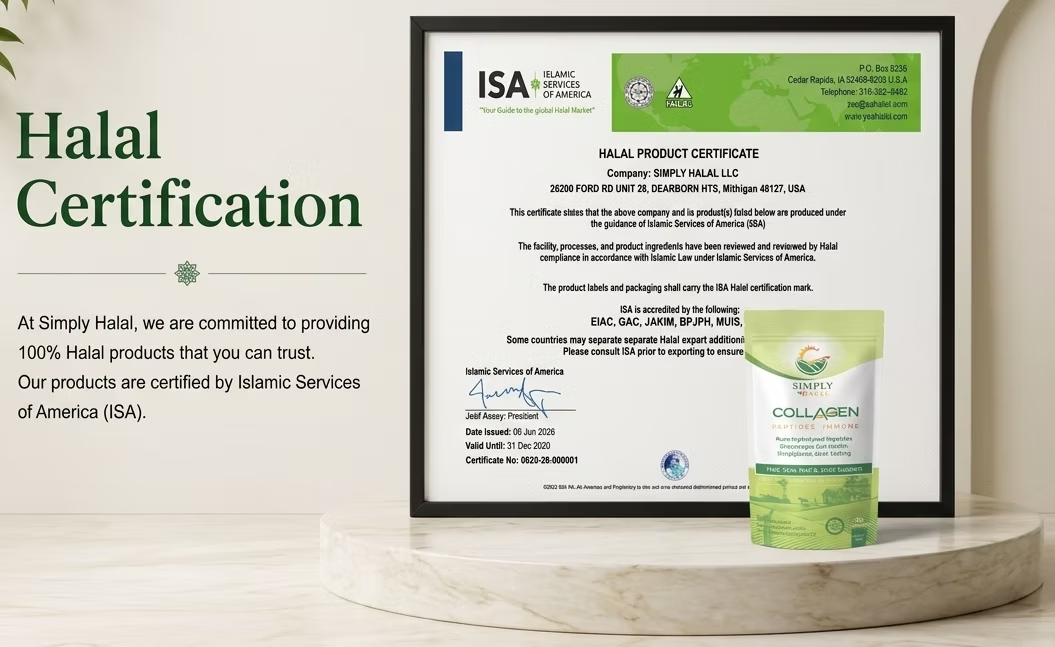
4. Third-party certification, named. A label that says “halal-friendly” without naming who certified it is a marketing claim, not verification. See how Simply Halal is halal certified.
The Real Transparency Gap in This Industry
This isn’t a claim, it’s a documented finding from an independent study of the actual retail market.
A 2024 review published in Practical Dermatology examined 59 collagen supplements collected from retail stores. Only 17% disclosed their collagen source at all. Among the products that did disclose a fish source, 90% lacked required allergen warnings. Not a single product in the entire study displayed third-party testing certification.
This is the gap genuine certification exists to close, not a religious formality layered on top of a product, but the actual, independently verified answer to “what is this, and where did it come from.”
⚡ QUICK ANSWER
A real study of 59 retail collagen products found 83% didn’t disclose their source at all, and zero had third-party testing certification. Halal certification, when it names a real certifying body, is one of the few verification standards in this category that’s actually independently audited.
Does the Brand Name a Certifying Body?
A “halal certified” claim and a named, checkable certifying body are not the same thing, and the difference matters.
We checked how several collagen brands present their halal certification, specifically, whether they name the authority behind the claim, not just the claim itself.
| Brand | Claims Certification | Names a Certifying Body |
|---|---|---|
| Simply Halal | Yes | Yes, Islamic Services of America (ISA) |
| Zaytun Vitamins | Yes | Yes, Islamic Services of America (ISA) |
| Shifaa Nutrition | Yes | Yes, Islamic Services of America (ISA) |
| Boxed Halal | Yes | Yes, Halal Food Standards Alliance of America |
| Various other collagen brands | Yes, prominently displayed | Not named on the pages checked |
Checked directly on each brand’s own website. A certification claim without a named body isn’t necessarily false, but it isn’t independently verifiable either.
The check itself takes under a minute: find the certifying body named on the packaging, go to their website, search for the brand. If it’s not listed, the certification isn’t verified.
What the Science Actually Says
Collagen is the most abundant protein in the human body, and production declines starting around age 25.
A 2026 umbrella review in the Aesthetic Surgery Journal Open Forum analyzed 16 systematic reviews covering 113 randomized controlled trials and nearly 8,000 participants, the most comprehensive synthesis of collagen research available. It found consistent, favorable associations between collagen supplementation and skin elasticity, hydration, and musculoskeletal outcomes. (Ravindran et al., 2026, DOI: 10.1093/asjof/ojag018)
For joint health specifically, a 2023 meta-analysis of 4 randomized trials in 507 knee osteoarthritis patients found collagen peptides produced a statistically significant reduction in pain compared to placebo. (Lin et al., 2023, J Orthop Surg Res)
One honest caveat worth knowing: not every study agrees on magnitude. A 2025 analysis in the American Journal of Medicine found that when isolating trials with no pharmaceutical or supplement industry funding, the measured skin benefit was smaller than in industry-funded trials. This doesn’t mean collagen doesn’t work, it means funding source is a real variable in this research area, and it’s worth knowing that going in rather than only citing the studies that favor a stronger claim.
Powder vs. Gummies vs. Vegan “Collagen”
Format changes the dose you’re actually getting, and “vegan collagen” doesn’t contain collagen at all.
Collagen gummies typically deliver 1g to 2.5g of collagen per serving, and some products run as low as 100mg. At that lower end, an entire 60-serving bottle can contain as little as 6g of total collagen, less than half of what a single 16g scoop of hydrolyzed collagen powder delivers in one dose. Convenience is real, but so is the dose gap.
“Vegan collagen” is a marketing term, not an actual product. Collagen is, by definition, an animal-derived protein, it cannot be produced from plants. Products labeled this way typically contain plant proteins, often fava bean or pea protein, along with vitamin C and biotin, intended to support the body’s own collagen production indirectly, not to supply collagen itself. These products also carry a documented downside: digestive discomfort, including bloating and gas, is a commonly reported side effect. Fava bean protein specifically contains natural anti-nutritional compounds (tannins, lectins) that can make it harder to digest than the amino acids in genuine hydrolyzed collagen peptides.
If a label says “vegan collagen” or “plant-based collagen,” you’re not buying collagen, and it’s worth knowing the substitute ingredients come with their own tradeoffs.
Side Effects: Collagen vs. What’s Added to It
Collagen itself has a strong safety record. The real risk in this category comes from what gets added to it.
Hydrolyzed collagen peptides on their own are generally well tolerated, with mild digestive discomfort in rare cases being the most commonly reported effect. The bigger risk comes from “hair, skin, and nails” formulas that stack collagen with megadoses of other ingredients. Biotin is the clearest example: supplements marketed for hair, skin, and nails can contain up to 20mg of biotin, more than 650 times the standard recommended intake. The FDA has issued a formal safety warning that high-dose biotin can cause falsely low troponin readings, the test used to diagnose heart attacks, and has linked at least one patient death to this exact interference. This isn’t a theoretical risk, it’s a documented clinical concern serious enough for a federal safety communication.
A single-ingredient collagen product avoids this risk entirely, not because collagen itself is riskier when combined with other things, but because there’s nothing else in the formula to interact with anything.
Made With Intention, Not Generic and Lab-Made
Most halal collagen brands are private label, a manufacturer produces a generic formula, a brand adds a logo, and it ships.
Simply Halal was not built by a supplement company. It was built by a chef and a family, after co-founder Fatima Hammoud resolved her family’s chronic sinus infections through homemade halal bone broth, guided by her grandmother’s conviction that healing starts in the gut. That experience became the standard behind every product: if it wouldn’t meet the bar for her own family, it wouldn’t go to market.
Chef Maher Fawaz spent three years and 160+ lab tests developing the formula before a single bag was sold. He personally verified the grass-fed bovine sourcing in South America rather than accepting a supplier’s word for it. The facility is GMP-certified and halal certified from production to bag, meaning the certification covers the entire production environment, not just the raw material.
✅ DIRECT ANSWER
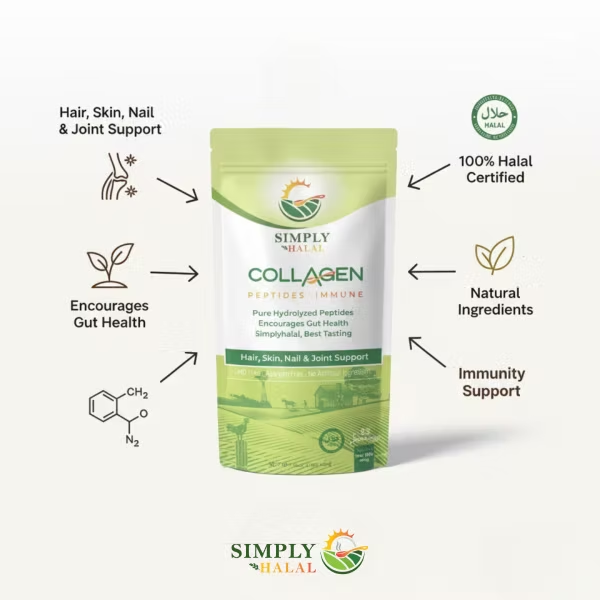
Simply Halal Collagen Bovine delivers 16g of hydrolyzed Type I & III collagen peptides per serving, halal certified from production to bag, with zero maltodextrin, zero MSG, and zero fillers. Shop Halal Collagen Bovine →
For the full sourcing story: Our Story and Halal Collagen Peptides: 7 Benefits for Skin, Hair and Joints.
“
You are not paying for marketing. You are paying for 3 years of carefully researched product development, hand-picked ingredients chosen to maximize your nutritional benefit, and grass-fed sourcing that most supplement brands avoid because it cuts into their profit margins. Simply Halal was built for your health, not our bottom line.
Chef Maher Fawaz, Founder
✅ READY TO START?
Shop Halal Collagen Bovine → Check simplyhalal.co for current promotions and shipping offers, ships worldwide. Explore the Halal Wellness Bundle for collagen and bone broth together.
How to Use It for Real Results
Dose depends on your goal, and consistency matters more than the exact timing.
Research supports 2.5g daily for skin benefits, 5g for bone density over the long term, 10g for joint comfort, and 15g for muscle and body composition goals. Simply Halal’s 16g serving clears every threshold in one scoop.
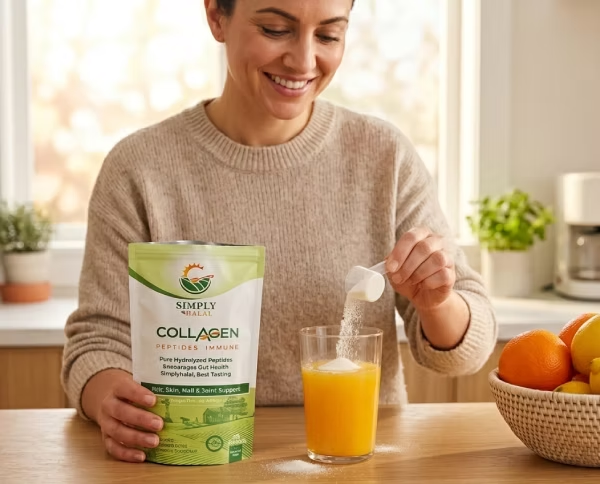
Pair with Vitamin C. A required cofactor for collagen synthesis, without it your body can’t fully convert the peptides into functional collagen. A squeeze of lemon or a Vitamin C source alongside your dose maximizes the conversion.
Consistency is the variable that matters. Skin improvements are typically reported within 4-8 weeks. Joint comfort takes longer, generally 8-12 weeks. Bone density support requires 6+ months of consistent daily use.
Stack with Halal Beef Bone Broth for gut and mineral support alongside the concentrated peptide dose. See the Recipes page for daily routine ideas.
I Am Not Muslim. Does This Apply to Me?
Is a halal collagen supplement still right for me?
Yes. Halal certification is not a religious restriction on who may use the product. It provides independent verification that the product meets the halal requirements covered by the certifier’s review. For anyone who values ingredient transparency and verified sourcing, that’s exactly the supply chain accountability most supplement brands can’t offer, regardless of religious background.
Frequently Asked Questions
How do I know a halal collagen supplement is genuinely certified?
Find the certifying body named on the packaging, not just a “halal” claim or logo. Go to that organization’s website and search for the brand. If the brand isn’t listed, the certification isn’t verified. This single check takes about 60 seconds and rules out most false claims in this category.
Is collagen good for knees?
Yes, there’s real evidence specifically for knee osteoarthritis. A 2023 meta-analysis of 4 randomized trials in 507 patients found collagen peptides produced a statistically significant reduction in knee pain compared to placebo. Effects build over weeks, not days, consistent daily use at an adequate dose is what the evidence supports.
Are there any side effects of taking collagen?
Collagen itself has a strong safety record and isn’t associated with serious adverse effects in healthy adults. The real risk comes from other ingredients often combined with it, especially megadose biotin in “hair, skin, nails” formulas, which the FDA has warned can cause falsely low troponin readings on heart tests. A single-ingredient collagen product avoids this entirely.
Is vegan collagen real collagen?
No. Collagen is an animal-derived protein by definition and cannot be produced from plants. “Vegan collagen” products typically contain plant proteins and nutrients intended to support your body’s own collagen production, not actual collagen. They also carry a documented tendency toward digestive discomfort.
Do collagen gummies work as well as powder?
Not gram for gram. Gummies typically deliver 1g to 2.5g of collagen per serving, some as low as 100mg, meaning a full bottle can contain less collagen than a single scoop of powder. Gummies can work for people who genuinely won’t take a powder consistently, but the dose gap is real and worth knowing before you buy.
Where can I buy a genuine halal collagen supplement in the USA?
Simply Halal offers halal certified collagen bovine powder sourced from grass-fed South American bovine, available directly at simplyhalal.co. Ships worldwide. For complete skin, joint, and gut support, the Halal Wellness Bundle combines collagen and bone broth at the best available price.
Related reading:
Sign up on simplyhalal.co with your email and phone number for exclusive coupon discounts.
You might also like
17 Oct 2026
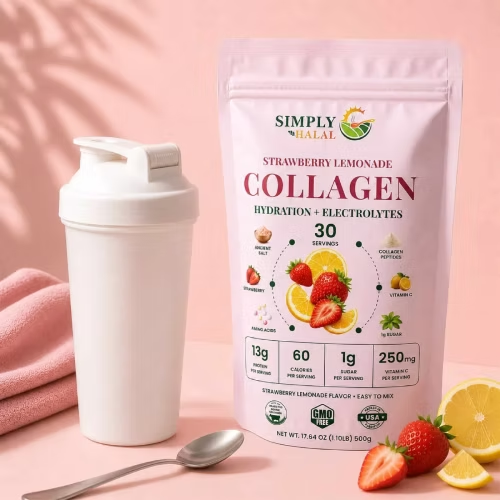
Collagen and Electrolytes: Can You Take Them Together?
Yes, you can take collagen and electrolytes together, and combining them in one drink
12 Aug 2026
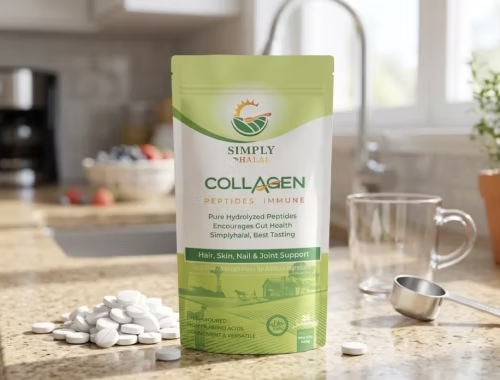
Halal Collagen Tablets vs Powder: Myth vs Truth
Are collagen tablets worth it? Rarely. A single scoop of collagen powder delivers more
1 Aug 2026
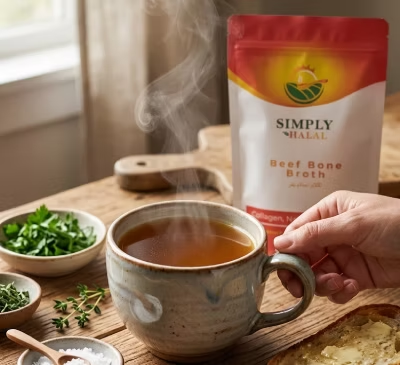
Is Bone Broth Halal? The Complete Answer
Is bone broth halal? Yes, but only when the bones come from an animal
25 Jul 2026
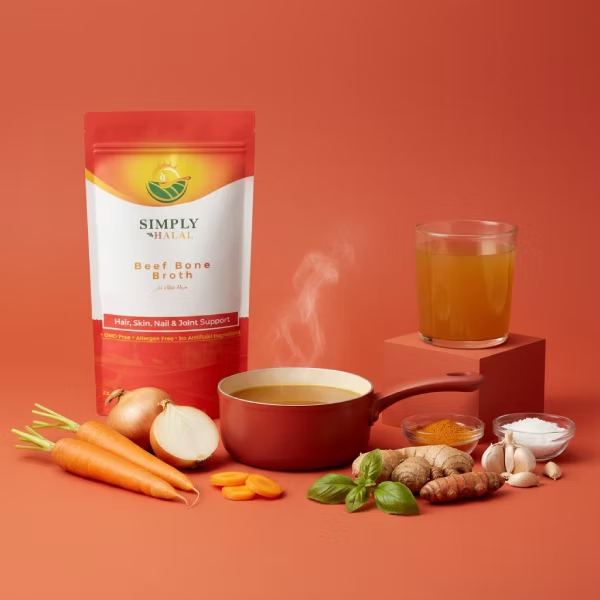
Why Simply Halal – The Chef-Crafted Halal Bone Broth Story
Most bone broth powders on the market start with the cheapest available raw material.
15 Jun 2026
Vitamin C and Collagen: Why Most People Get It Wrong
Vitamin C and collagen have to work together, and most people get this wrong.
13 Jun 2026
Is Bovine Collagen Halal?
Is bovine collagen halal? Yes, it can be. But that answer only holds true
24 May 2026
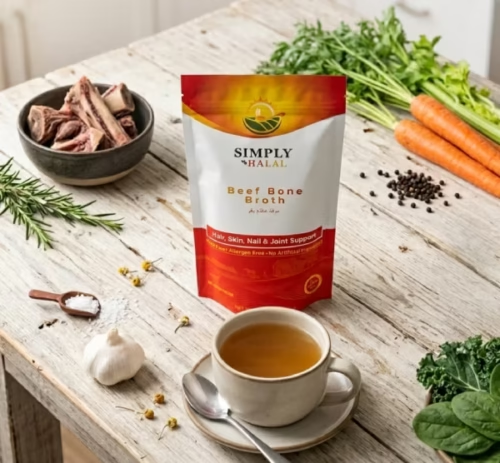
Best Halal Bone Broth Powder for Athletes
Athletes put more stress on connective tissue than almost any other population. Every training
4 May 2026
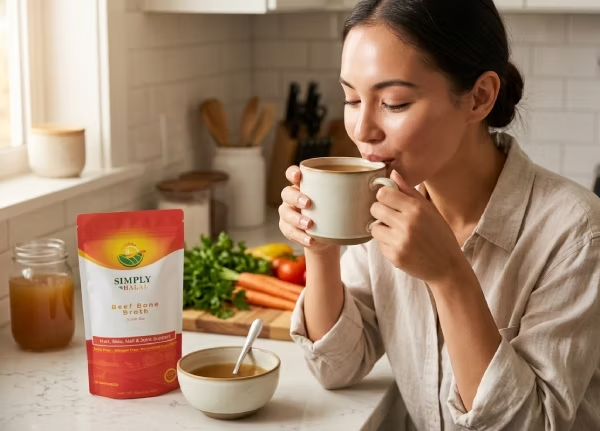
Best Halal Bone Broth Powder for Skin
Skin health supplements are one of the most crowded categories in the wellness market.
3 May 2026
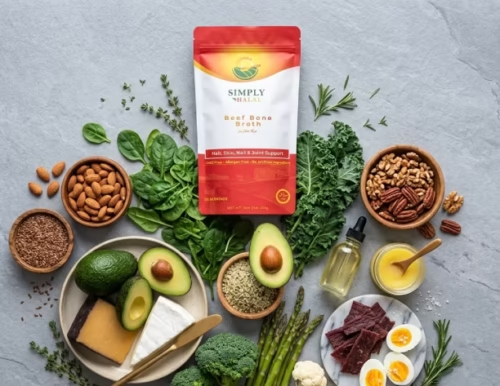
Best Halal Bone Broth Powder for Keto
If you are on a ketogenic or low-carb diet, bone broth powder is one
2 May 2026
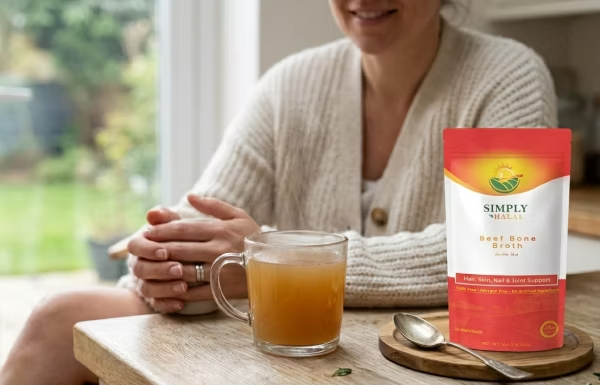
Best Halal Bone Broth Powder for Joints
Joint pain is one of those problems that announces itself slowly. A knee that