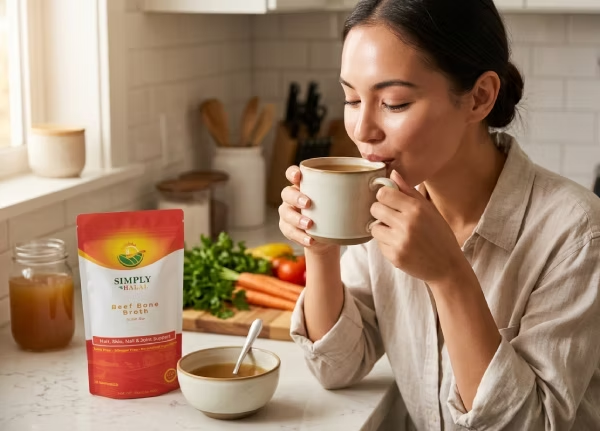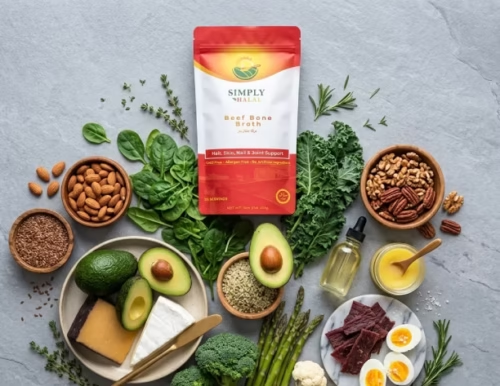
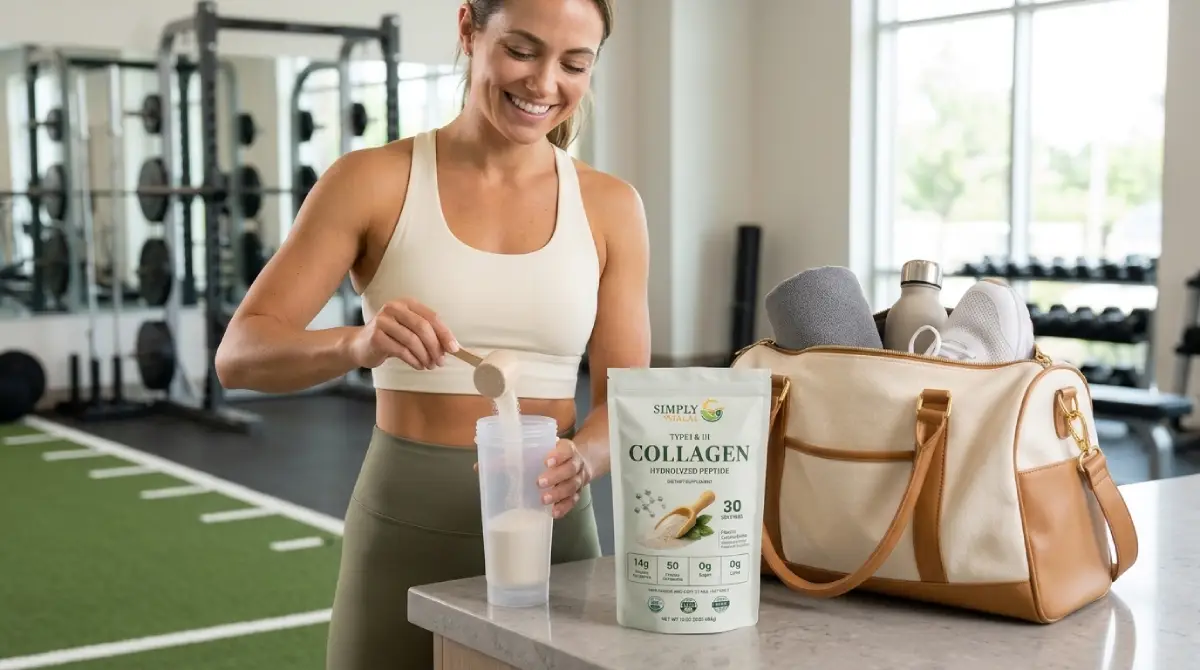
In the halal gelatin vs collagen question, yes, both come from the same starting material, but they are not made for the same job. Collagen peptides are broken down so your body can use them to support skin, joints, and connective tissue. Gelatin is not broken down the same way. It’s made for setting Jell-O and desserts, not for delivering collagen’s benefits every day.
Quick Answer
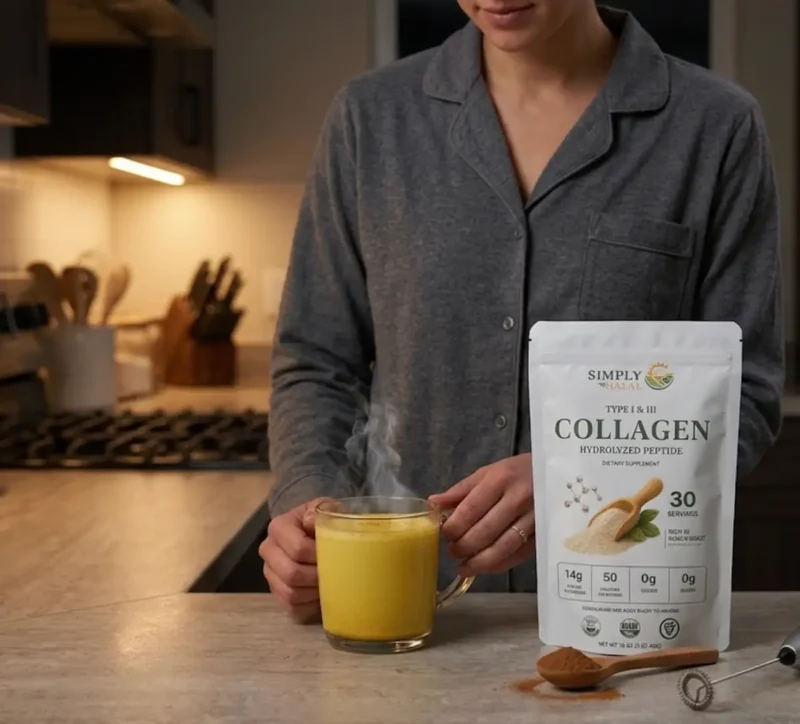
Gelatin and collagen peptides are both made from animal collagen, but they are processed differently. Collagen peptides are hydrolyzed into small pieces your body can absorb and use. Gelatin is not broken down the same way. That is why most studies on skin, joints, and bones use collagen peptides. Simply Halal Collagen Peptides is hydrolyzed grass-fed beef collagen with 14g of protein per scoop.
HALAL, CHECKED TWICE
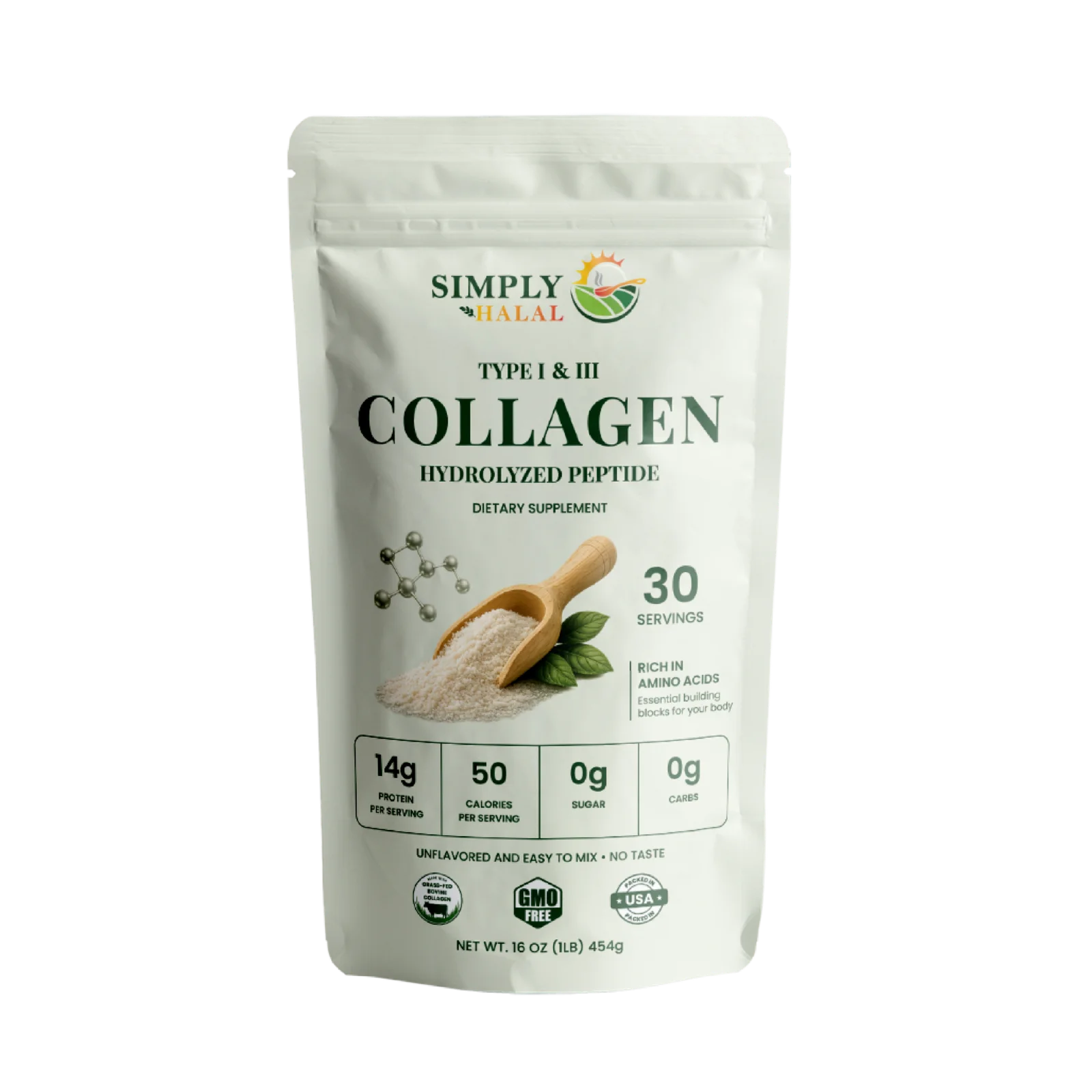
Halal Collagen Peptides
One ingredient: grass-fed beef collagen. No flavor, so it disappears into coffee, tea, smoothies, or water.
- ✓ 14g protein per scoop
- ✓ 50 calories, 0g sugar, 0g carbs
- ✓ Halal-certified from production to bag
- ✓ No fillers, gluten-free, keto-friendly
Key Takeaways
- Much of the gelatin sold is made from pig skin, so the source must be on the label.
- Some scholars accept gelatin after istihalah, but most halal certifiers require a halal source.
- Gelatin sets into a gel. Collagen peptides dissolve in hot or cold drinks.
- Simply Halal Collagen Peptides is broken down to about 2,000 Daltons and certified halal from production to bag.
In this guide
Is Gelatin Halal?
Gelatin is halal only when it comes from a halal source and a named certifier checks it.
Gelatin is made from the collagen in animal skin and bones. Much of the gelatin sold is made from pig skin, which is haram. Beef gelatin can be halal if the cattle were slaughtered the halal way, and fish gelatin is generally considered halal because fish is permissible.
Some Islamic scholars hold that if animal gelatin goes through a complete chemical transformation (istihalah), it becomes permissible. Many other scholars, and most halal certifiers, disagree and require gelatin from a halal source. Collagen peptides are different: they always need halal certification from the source. People often confuse the two. Learn more in is collagen halal.
How to Find Halal Gelatin
Read past the front of the package: the source animal and the certifier are what count.
Check any gelatin label
- Find the source animal: beef (bovine) or fish. If it just says “gelatin,” assume it may be pork.
- Look for a named halal certifier, not just a symbol.
- Don’t rely on a kosher symbol. Kosher and halal follow different rules.
- Check gummies, marshmallows, capsules, and yogurts. Gelatin hides in all of them.
Chef Maher’s kitchen tip: use certified halal beef or fish gelatin when a recipe needs to set, like desserts or gummies. For everyday nutrition, reach for collagen peptides instead.
Gelatin vs Collagen: What’s the Difference?
Gelatin and collagen peptides start from the same collagen. Processing makes them work differently in your kitchen and your body.
Gelatin is collagen that has been partly broken down with heat. It sets into a gel as it cools. Collagen peptides are broken down much further, into small pieces that dissolve completely in hot or cold liquid and never gel.
Which Is Better for Your Daily Routine?
For daily nutrition, collagen peptides win: the same building blocks, in a form you will actually take every day.
Both gelatin and collagen peptides give your body collagen’s amino acids, like glycine and proline. The difference is how easy they are to use and absorb. A 2019 study in Nutrients found that collagen broken down with enzymes is absorbed faster than collagen that isn’t.
Most studies on skin, joints, and bones used hydrolyzed collagen peptides. In a 2019 trial, women who took 2.5g of collagen peptides a day had more hydrated, firmer skin after 12 weeks. One 15g scoop of Simply Halal Collagen Peptides covers that amount and more. For the full research, read halal collagen peptides benefits.
Why Simply Halal Collagen Peptides
One ingredient, broken down to about 2,000 Daltons, and certified halal from production to bag.
Chef Maher Fawaz spent 28 years in professional kitchens around the world, so he knows gelatin well. For daily nutrition, he built something easier: collagen peptides that disappear into your coffee. He spent three years and more than 160 lab tests perfecting it. His rule is simple: if he wouldn’t feed it to his own kids, he won’t feed it to yours.
The Simply Halal Promise: We Check Everything, So You Don’t Have To
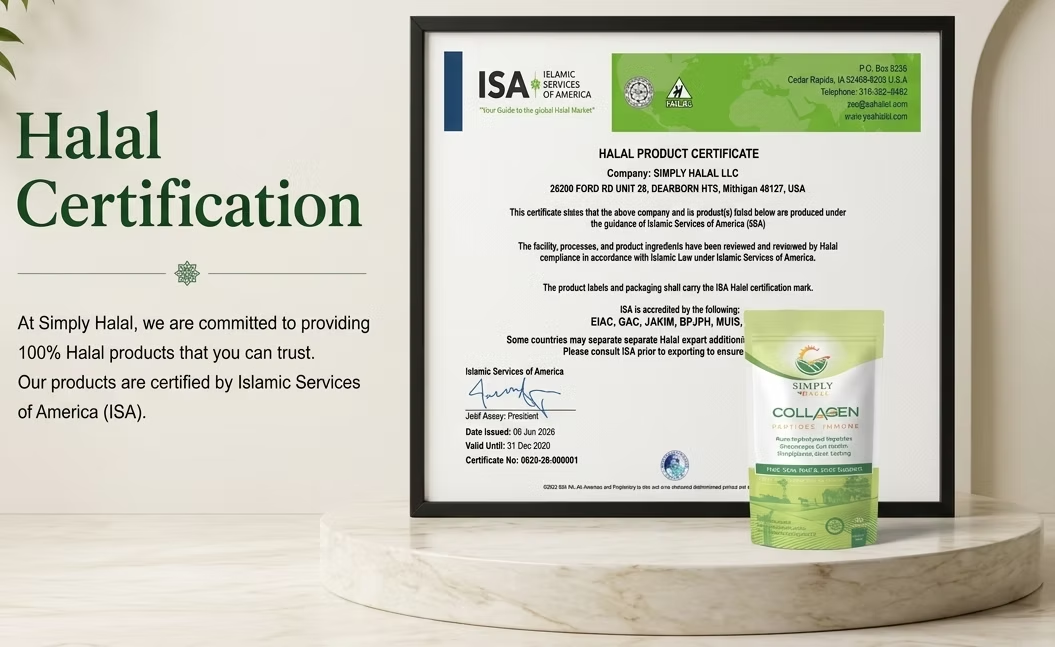
- Halal, checked twice. Certified halal where the collagen is made, then ISA Halal certifies it again, from production to bag.
- Your body actually uses it. Broken down to about 2,000 Daltons, 150 times smaller than normal collagen, so it melts in your coffee in seconds.
- A real person answers. Email or call and you’ll hear back fast, usually from Chef Maher himself.
Don’t buy collagen on a promise. Buy it on proof.
What customers say about Halal Collagen Peptides
★★★★★
“It dissolves quickly and no grainy texture. Highly recommend!”
Dalia, verified customer
★★★★★
“It has no smell and no taste so I mix it into my drinks, or even soup without noticing it’s there.”
Eman Ibrahim, verified customer
Check simplyhalal.co for current promotions and shipping offers. Sign up on simplyhalal.co with your email and phone number for exclusive coupon discounts.
Halal Gelatin FAQs
Quick answers on gelatin, collagen, and how to tell if they are halal.
Is gelatin halal?
It depends on the source. Gelatin from pigs is haram. Some scholars accept gelatin after a complete chemical transformation (istihalah), but many others, and most halal certifiers, require gelatin from a halal source. Beef or fish gelatin with a named halal certifier is the safe choice. Simply Halal Collagen Peptides is certified halal at the source and again by ISA Halal from production to bag.
What is halal gelatin made from?
Halal gelatin is made from the skin or bones of halal-slaughtered cattle, or from fish, and checked by a named halal certifier. Much of the gelatin sold is made from pig skin, so the source has to be on the label. For daily nutrition, Simply Halal Collagen Peptides is made from certified halal grass-fed cattle.
Is kosher gelatin halal?
Not automatically. Kosher and halal are different certifications with different rules. A kosher symbol does not confirm halal slaughter, so look for a named halal certifier. Simply Halal Collagen Peptides is ISA Halal certified from production to bag.
Is beef gelatin halal?
Beef gelatin is halal only when the cattle are slaughtered the halal way and a named certifier checks the process. Beef alone isn’t enough. Simply Halal Collagen Peptides is grass-fed beef collagen, certified halal at the source and again by ISA Halal.
Is fish gelatin halal?
Fish gelatin is generally considered halal because fish is permissible, but the processing still needs checking, so look for a named certifier. Simply Halal Collagen Peptides uses certified halal grass-fed bovine collagen instead.
Is gelatin the same as collagen?
They come from the same collagen in animal skin and bones, but they are processed differently. Gelatin is partly broken down and sets into a gel. Collagen peptides are broken down further, to about 2,000 Daltons in Simply Halal Collagen Peptides, so they dissolve in any drink and are easy for your body to absorb.
Which is better for skin and joints, gelatin or collagen peptides?
Both give your body collagen’s amino acids, but most studies on skin, joints, and bones used hydrolyzed collagen peptides, and peptides are easier to take every day. One 15g scoop of Simply Halal Collagen Peptides covers the amounts used in those studies and dissolves in coffee, tea, or water.
Can I use collagen peptides instead of gelatin in recipes?
Not for setting. Collagen peptides do not gel, so use halal-certified gelatin for desserts and gummies. For daily nutrition, stir Simply Halal Collagen Peptides into coffee, soups, or smoothies: it disappears without changing the texture.
How do I know a gelatin or collagen is really halal?
Look for the name of the certifier and a certificate that lists the exact product. In the US, there is no federal halal standard, so a logo alone proves nothing. Simply Halal Collagen Peptides is ISA Halal certified, and you can see the certificate on the Simply Halal certification page.
Is halal collagen only for Muslims?
No. Anyone can use Simply Halal Collagen Peptides. Halal certification does not limit who can buy it. It means an outside group checked that it meets halal requirements.
Last updated October 26, 2026, by Chef Maher Fawaz. Product facts match the current Simply Halal Collagen Peptides label.