
Clean Label Collagen — 6 Red Flags to Avoid
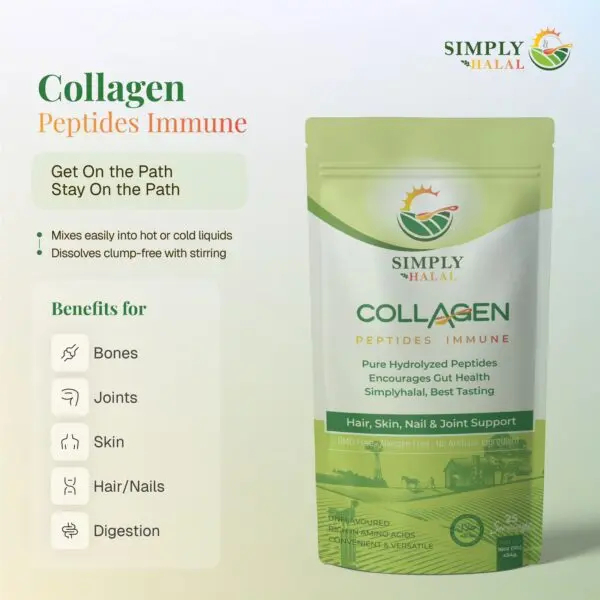
The clean label collagen market has a serious problem. Brands know that health-conscious consumers are reading labels more carefully than ever — so they have gotten more creative about hiding what they don’t want you to find. Maltodextrin disappears into “Natural Flavors.” Unverified sourcing hides behind vague claims like “premium bovine.” Self-declared logos replace independent certification. This guide gives you the exact framework to cut through the marketing and verify whether a collagen product is actually clean — before you buy it.
✅ Direct Answer
Clean label collagen is hydrolyzed collagen peptides from a verified grass-fed source, free from maltodextrin, artificial additives, and hidden carriers — with every ingredient fully disclosed and independently verified by a named third-party certifying body. Most products claiming to be clean label fail at least one of these standards. Here are the 6 red flags that tell you a product is not what it claims.
Table of Contents
- What Clean Label Collagen Actually Means
- What to Look For on the Label
- Red Flag #1 — No Named Certifying Body
- Red Flag #2 — Natural Flavors on the Ingredient List
- Red Flag #3 — No Country of Origin
- Red Flag #4 — Long Ingredient List
- Red Flag #5 — Price Too Low to Be Genuine
- Red Flag #6 — Unspecified Collagen Source
- Why Independent Certification Is the Only Real Standard
- Simply Halal — Pure, Additive-Free, Sustainably Sourced
- Frequently Asked Questions
What Clean Label Collagen Actually Means
“Clean label” is one of the most overused and least regulated terms in the supplement industry. There is no legal definition. No regulatory body enforces it. Any brand can print “clean” on a label without meeting any defined standard whatsoever.
What it should mean — and what genuinely clean label collagen delivers — is this: a short, fully transparent ingredient list with nothing that requires explanation, sourcing that is disclosed and verifiable, and independent third-party certification that covers the supply chain from the source animal to the finished product.
This standard matters for everyone who cares about what goes into their body — not just consumers with specific dietary requirements. When you choose a collagen supplement you are committing to taking it daily for months. The sourcing, processing, and ingredient integrity of that product accumulate in your body over time. A genuinely clean label collagen delivers the results the science supports. A product hiding fillers and unverified sourcing behind clean label marketing undermines those results.
⚡ Quick Answer
Clean label is not regulated. Any brand can use it. The only way to verify a collagen product is genuinely clean is independent third-party certification from a named authority whose database you can check online — combined with a short, fully disclosed ingredient list and verified grass-fed sourcing.
What to Look For on the Label
Before covering the red flags, here is the positive checklist — what a genuinely clean label collagen product should show:
Hydrolyzed collagen peptides as the primary ingredient. The first ingredient should be hydrolyzed collagen or collagen peptides. Not a blend of collagen with multiple fillers, carriers, and flavoring agents listed alongside or before it.
Grass-fed or pasture-raised bovine source. The label should specify the source animal and farming standard. Grass-fed bovine collagen from a named region provides the sourcing transparency that clean label requires. “Bovine collagen” without further detail could mean anything.
Disclosed country of origin. You should know where the source animal came from. This tells you the farming standard, the regulatory environment, and the supply chain traceability. Argentina and South America produce some of the world’s highest quality grass-fed bovine collagen. The majority of global collagen raw material comes from China — primarily corn-fed cattle with limited supply chain transparency.
Five ingredients or fewer. A genuinely clean collagen powder needs very few ingredients. The shorter the list the cleaner the product.
Named independent certification. The label should name the specific organization that certified the product — not just display a logo. You should be able to go to that organization’s website and verify the brand is listed in their certified database.
Now here are the six red flags that tell you a product claiming to be clean label collagen is not what it says.
Red Flag #1 — No Named Certifying Body
A certification logo without a named organization behind it is meaningless. Any brand can design a “certified” badge and print it on packaging. What matters is whether the certification comes from an independent third-party organization with a public database you can verify.
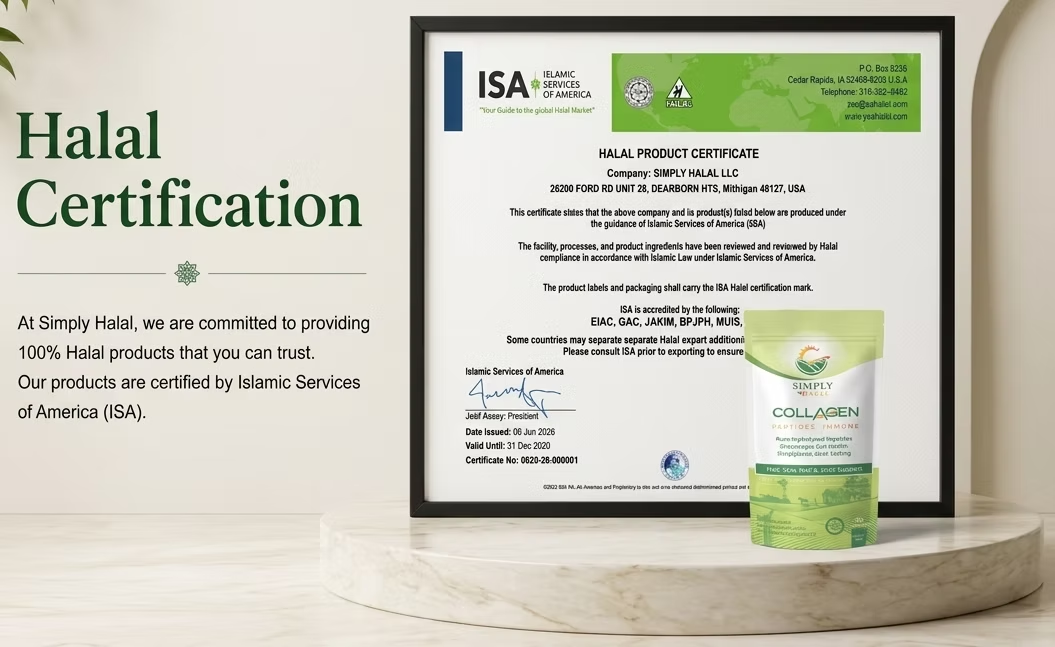
The most rigorous independent certification standard currently available for collagen in the USA is ISA (Islamic Services of America) certification. This may surprise non-Muslim consumers — but ISA certification is fundamentally a clean sourcing and ethical production audit. It covers the source animal, farming standard, slaughter method, processing facility cleanliness, ingredient integrity, and supply chain traceability. No prohibited additives. No cross-contamination. No unverified sourcing.
For health-conscious consumers who have nothing to do with religious dietary requirements, ISA certification means one thing: independent verification that the product contains exactly what it claims and nothing it doesn’t. That is the clean label standard at its highest level.
If a collagen product displays a logo without a named certifying body — walk away.
✅ Direct Answer
ISA certification is the most rigorous independent sourcing audit available for collagen in the USA. It was designed for halal compliance but functions as a clean sourcing quality standard — covering grass-fed sourcing, additive-free processing, and full supply chain traceability. For clean label consumers it means exactly what the certification says: independently verified purity.
Red Flag #2 — “Natural Flavors” on the Ingredient List
This is the most common way hidden fillers appear in supplement products that market themselves as clean. Here is how it works.
When a manufacturer adds flavoring to a powder — vanilla, chocolate, berry, or any other flavor — the flavor compound is typically spray-dried onto a carrier to make it shelf-stable. The cheapest and most widely used carrier is maltodextrin. The resulting “flavored maltodextrin” is then classified as an incidental additive under FDA rules — allowing the brand to list the entire thing simply as “Natural Flavors” without disclosing that maltodextrin is present.
This means a product can claim “no maltodextrin” on the front of the pack while still containing it embedded in the natural flavors system on the back. It is technically legal. It is exactly the kind of labeling practice that makes “clean label” a meaningless claim when it is self-declared.
Maltodextrin is not a neutral ingredient. Research shows it has a glycemic index higher than table sugar, disrupts the gut microbiome, and damages the intestinal mucus barrier. For a supplement marketed for gut health and collagen support, the presence of maltodextrin directly undermines the benefits you are taking it for. (PubMed: 23251695) For the full science: Side Effects of Maltodextrin.
A genuine clean label collagen product has no natural flavors from undisclosed carriers. If you see “Natural Flavors” on any flavored collagen powder, ask the brand directly: does your natural flavor system use maltodextrin as a spray-drying carrier? A clean brand will answer immediately and transparently.
Red Flag #3 — No Country of Origin for the Source Animal
Knowing where the source animal came from is not optional for a genuinely clean label product. It is the foundation of supply chain transparency.
The country of origin tells you the farming standard — whether the cattle were grass-fed on open pasture or corn-fed in a feedlot. It tells you the regulatory environment — whether the farming and processing operations are subject to meaningful oversight. And it tells you whether the sourcing story the brand tells on its website matches the reality of where the product comes from.
If a collagen brand cannot or will not disclose the country of origin for its source animal — the supply chain is not transparent enough to meet any reasonable definition of clean label.
Red Flag #4 — Long Ingredient List With Unfamiliar Compounds
A genuinely clean collagen powder needs five ingredients at most. Hydrolyzed collagen peptides. Perhaps a natural herb for flavor. A mineral like sea salt. That is it.
If the ingredient list fills multiple lines with preservatives, anti-caking agents, artificial flavors, sweeteners, emulsifiers, and unspecified carriers — the product is not clean label regardless of what the front of the packaging claims. Each additional ingredient is a question the label is not answering: where did this come from, why is it here, and what does it do to the benefits of the collagen you are trying to take?
Count the ingredients before you buy. If you cannot read and understand every item on the list, the product fails the clean label test.
Red Flag #5 — Price Too Low to Be Genuine
Genuine clean label collagen — grass-fed sourcing, independent certification, no maltodextrin, GMP-certified processing facility — costs meaningfully more to produce than factory-farmed, unverified, maltodextrin-based powder.
If a product claiming to be certified clean label collagen is priced significantly below the market rate for comparable products, the sourcing and certification claims deserve careful scrutiny. The economics of clean label production do not support deep discount pricing. A price that seems too good to be true is a signal that one or more of the clean label claims is not what it appears.
Red Flag #6 — Unspecified Collagen Source
If the label says “collagen peptides” without specifying bovine, marine, or another source — and without disclosing the country of origin — you cannot verify what you are actually consuming. This is particularly important for consumers avoiding porcine collagen for dietary, religious, or ethical reasons. But it matters for clean label consumers too: an unspecified source means an unverifiable supply chain, which means the clean label claim cannot be independently confirmed.
A clean label collagen product tells you exactly what animal the collagen came from, where that animal was raised, and how the certification covers that sourcing. Anything less is not transparent enough to earn the clean label designation.
For a broader guide to identifying hidden non-clean ingredients across all supplement categories, read: Non-Halal Ingredients in Supplements — What to Check For.
Why Independent Certification Is the Only Real Standard
Every red flag on this list comes back to the same root problem: “clean label” is self-declared. Without independent verification, a brand’s clean label claim is marketing language — not a sourcing standard.
The solution is independent third-party certification from a named organization whose certification covers the full supply chain and whose database you can check publicly. In the collagen market in the USA, ISA certification currently represents the most comprehensive independent audit available.
ISA certification is not just a religious compliance standard. It is a supply chain integrity audit that covers: the source animal and farming standard, the country of origin, the slaughter or processing method, the facility cleanliness and cross-contamination controls, every ingredient in the finished product, and the accuracy of the label. This is exactly what the clean label standard requires — and it is independently verifiable by anyone, for any reason.
For a complete explanation of what this certification covers: Is Collagen Halal? Your Complete Guide.
Simply Halal — Pure, Additive-Free, Sustainably Sourced
Simply Halal was built around one question: what does genuinely clean nutrition look like when you refuse to compromise on any of the standards that matter?
The answer required three years of R&D, 160+ lab tests, personal sourcing trips to Argentina, partnerships with the MSU Product Center Innovation, and ISA certification covering every stage of the supply chain — before a single product was sold in November 2025. Chef Maher Fawaz brought 28 years of culinary expertise to a supplement industry that had never applied real food standards to collagen production.
Every Simply Halal product passes every test in this guide:
Source: Grass-fed, pasture-raised bovine from Argentina — non-GMO, traceable, ISA-verified from farm to finished product.
Processing: GMP-certified halal facility — no cross-contamination, no alcohol-based solvents, no prohibited additives.
Ingredients: Zero maltodextrin, zero artificial additives, zero hidden carriers — fully disclosed, nothing to hide.
Certification: ISA-certified — independently verifiable at isahalal.com.
Price: Premium — because genuine clean label sourcing and certification costs more and is worth it.
The product range:
- Halal Collagen Bovine — 16g hydrolyzed Type I & III collagen per serving. Unflavored, pure, mixes into anything. The cleanest collagen option available.
- Halal Collagen Broth — 14g collagen with organic herbs and vegetables. Chef-crafted, clean label, ISA certified.
- Halal Beef Bone Broth — slow-simmered grass-fed beef bone broth powder. 13g protein, zero fillers, real food in a bag.
- Wellness Bundle — all three products at the best available price. Free shipping nationwide USA.
✅ Ready to Try Genuinely Clean Label Collagen?
Pure, additive-free, sustainably sourced. Grass-fed from Argentina. Zero maltodextrin. GMP-certified facility. Fully transparent ingredient list. Ships nationwide USA. Free shipping on bundles. Shop Halal Collagen Bovine → or Get the Wellness Bundle →
For the complete halal collagen guide: Halal Collagen: The Complete Guide 2026. For the science on collagen peptides: Halal Collagen Peptides: 7 Benefits for Skin, Hair & Joints. For the best collagen powder options in 2026: Best Halal Collagen Powder 2026 Guide.
Frequently Asked Questions — Clean Label Collagen
What is clean label collagen?
Clean label collagen is hydrolyzed collagen peptides from a verified grass-fed source, free from maltodextrin, artificial additives, and hidden carriers. Every ingredient is fully disclosed, the source animal and country of origin are stated, and the product carries independent third-party certification verifiable online.
What should I look for on a clean label collagen product?
Look for hydrolyzed collagen peptides as the primary ingredient, grass-fed bovine as the source with a disclosed country of origin, no maltodextrin or dextrin, no natural flavors from undisclosed carriers, five ingredients or fewer, and independent certification from a named third-party authority.
What are the red flags on a collagen label?
The 6 red flags are: no named certifying body, natural flavors without carrier disclosure, no country of origin, collagen from unspecified sources, maltodextrin or dextrin anywhere on the label, and a long ingredient list with unfamiliar compounds.
Is maltodextrin in collagen powder harmful?
Yes. Research shows maltodextrin has a glycemic index higher than table sugar, disrupts the gut microbiome, and damages the intestinal mucus barrier. It frequently hides under “Natural Flavors” on supplement labels. For the full breakdown: Side Effects of Maltodextrin.
Why is independent certification important for clean label collagen?
Clean label is not a regulated term — any brand can use it without meeting any defined standard. Independent third-party certification from a named authority such as ISA covers the source animal, processing facility, ingredient integrity, and supply chain traceability. It is the only way to verify a clean label claim independently rather than taking a brand’s word for it.
You might also like
12 Aug 2026
Halal Collagen Tablets vs Powder: Myth vs Truth
Are collagen tablets worth it? Rarely. A single scoop of collagen powder delivers more
1 Aug 2026
Is Bone Broth Halal? The Complete Answer
Is bone broth halal? Yes, but only when the bones come from an animal
25 Jul 2026
Why Simply Halal – The Chef-Crafted Halal Bone Broth Story
Most bone broth powders on the market start with the cheapest available raw material.
15 Jun 2026
Vitamin C and Collagen: Why Most People Get It Wrong
Vitamin C and collagen have to work together, and most people get this wrong.
13 Jun 2026
Is Bovine Collagen Halal?
Is bovine collagen halal? Yes, it can be. But that answer only holds true
24 May 2026
Best Halal Bone Broth Powder for Athletes
Athletes put more stress on connective tissue than almost any other population. Every training
4 May 2026
Best Halal Bone Broth Powder for Skin
Skin health supplements are one of the most crowded categories in the wellness market.
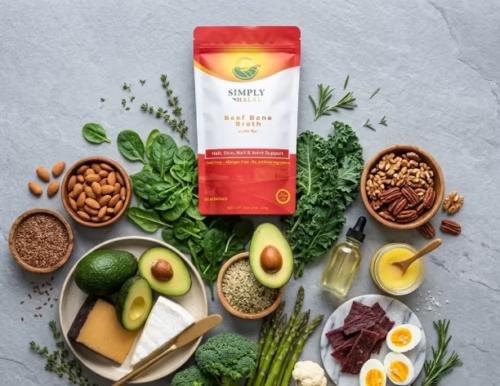
3 May 2026
Best Halal Bone Broth Powder for Keto
If you are on a ketogenic or low-carb diet, bone broth powder is one
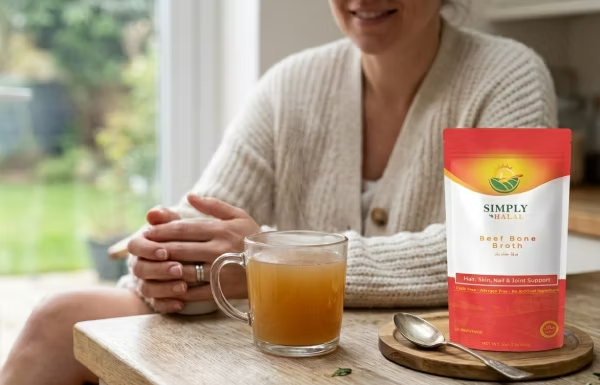
2 May 2026
Best Halal Bone Broth Powder for Joints
Joint pain is one of those problems that announces itself slowly. A knee that
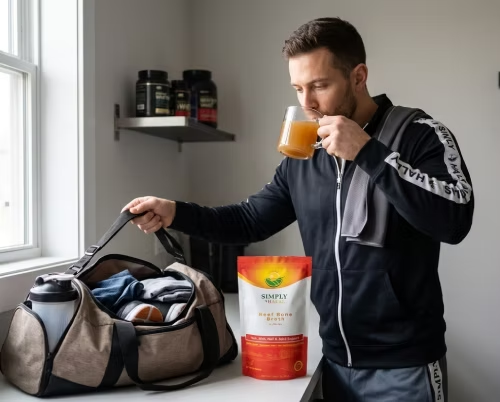
2 May 2026
Best Halal Bone Broth Powder for Weight Loss
The bone broth and weight loss space is full of dramatic claims. Detox diets.