
Benefits of Protein: The Clean Living Guide for 2026
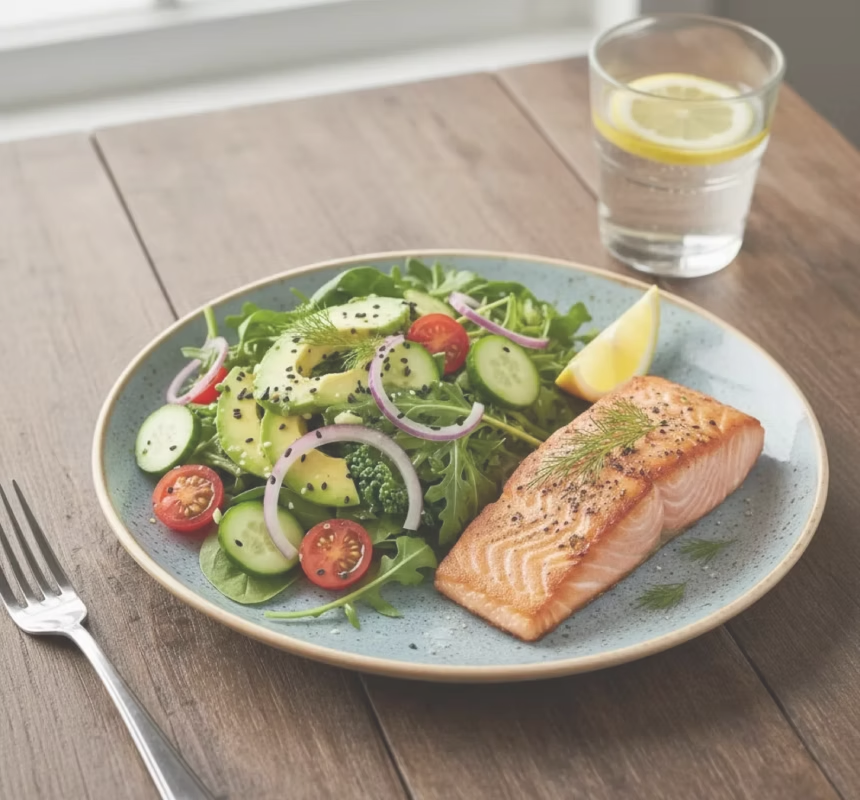
Understanding the full benefits of protein starts with source quality. The benefits of protein go far deeper than building muscle after a workout. Protein is the most structurally versatile macronutrient in the human body — it builds and repairs tissue, regulates hunger hormones, powers your immune system, and forms the structural foundation of your skin, joints, bones, and gut lining. For anyone committed to clean, intentional living — what Islamic dietary tradition calls tayyib — understanding protein is not just fitness advice. It is foundational wellness knowledge. This guide breaks down what the science actually says, how much you need, and how halal collagen fits into the complete picture.
✅ Direct Answer
The main benefits of protein include appetite control through hunger hormone regulation, metabolic support via its high thermic effect, muscle preservation against age-related loss, immune system maintenance, and structural repair of skin, joints, and connective tissue. For clean living, the source and purity of your protein matters as much as the amount.
What Protein Actually Does in Your Body
Protein is not a single nutrient — it is a category of molecules made from chains of amino acids, each with a different function depending on which amino acids are present and how they are assembled. Your body uses approximately 20 amino acids to build tens of thousands of different proteins, from the antibodies that fight infection to the collagen that holds your joints together to the enzymes that drive every metabolic reaction.
Unlike fat and carbohydrate, protein has no dedicated storage system. Your body cannot stockpile amino acids the way it stores glucose as glycogen or excess energy as fat. This means that your daily protein intake directly determines whether your body has enough raw material to maintain, repair, and rebuild the tissues that depend on it — skin, muscle, bone, gut lining, immune cells, and connective tissue included. When intake falls short, the body breaks down existing muscle tissue to meet its amino acid needs. This is the biological reality behind why consistent daily protein intake matters, not occasional high doses.
⚡ Quick Answer
Protein has no storage system in the body. Every day your intake falls short, your body breaks down existing muscle to meet its amino acid needs. Consistent daily protein — from clean, whole food sources — is non-negotiable for long-term health.
Benefit #1 — Appetite Control: A Core Benefit of Protein
Of all the macronutrients, protein is the most satiating — and the science behind why is well established. Protein directly regulates the hormones that control hunger and fullness. It suppresses ghrelin — the primary hunger hormone — while stimulating GLP-1, cholecystokinin (CCK), and peptide YY (PYY), the gut hormones that signal fullness to the brain.
A meta-analysis of 49 randomized controlled trials published in Physiology & Behavior found that acute protein ingestion significantly decreased hunger, reduced desire to eat, and increased fullness and satiety — while simultaneously lowering ghrelin and raising cholecystokinin and GLP-1 concentrations. These effects were consistent across protein sources and populations.
The practical consequence is significant. A landmark study published in the American Journal of Clinical Nutrition found that participants on a high-protein diet spontaneously reduced their daily caloric intake by an average of 441 calories — without being told to restrict food — simply because the protein kept them fuller for longer. Body weight decreased by an average of 4.9kg over 12 weeks with no deliberate caloric restriction beyond the protein increase.
For anyone following a clean eating approach, this has a direct practical application: building every meal around a quality protein source naturally reduces the likelihood of overeating, sugar cravings, and the energy crashes that come from carbohydrate-heavy meals without adequate protein to balance them.
✅ Direct Answer
Protein controls appetite by suppressing ghrelin and stimulating GLP-1, CCK, and PYY — the hormones that signal fullness. Clinical trials show high-protein diets reduce spontaneous daily caloric intake by 400+ calories without deliberate restriction.
Benefit #2 — Metabolic Support and the Thermic Effect
Protein has a significantly higher thermic effect of food (TEF) than either fat or carbohydrate. The thermic effect is the energy cost of digesting, absorbing, and metabolizing a nutrient — and for protein, this cost is 20–30% of the calories consumed. In practical terms, for every 100 calories of protein you eat, your body burns 20–30 calories just processing it. For fat, the thermic effect is 0–3%. For carbohydrate, it is 5–10%.
This means a high-protein diet has a measurable metabolic advantage over a diet of equivalent calories from other macronutrients. Over the course of a day, a protein-rich eating pattern burns meaningfully more calories through digestion alone — a genuine metabolic benefit that does not require additional exercise to realize.
For those following halal dietary principles, this reinforces the wisdom of building meals around clean animal proteins — grass-fed beef, lamb, chicken, eggs — rather than relying on processed carbohydrates to fill caloric needs. The metabolic cost of digesting a protein-rich halal meal is inherently higher, meaning the body works harder and more efficiently at a cellular level simply from eating well.
⚡ Quick Answer
Protein burns 20–30% of its own calories during digestion — compared to 5–10% for carbs and near zero for fat. A protein-rich diet has a built-in metabolic advantage that works even at rest.
Benefit #3 — Muscle Preservation: One of the Most Overlooked Benefits of Protein
After age 30, the human body loses approximately 0.5–1% of skeletal muscle mass per year — a process called sarcopenia that accelerates significantly after 50. Sarcopenia reduces mobility, increases fall risk, impairs metabolic health, and is independently associated with higher mortality. It is one of the most consequential and most preventable aspects of aging.
Protein is the primary dietary tool for combating it. A 2023 meta-analysis published in PMC, examining randomized controlled trials in older adults with sarcopenia, found that protein supplementation significantly increased skeletal muscle mass index, appendicular muscle mass, and grip strength compared to placebo. A separate 2025 systematic review confirmed that protein supplementation improved muscle mass and physical performance in physically inactive older adults even without a concurrent exercise program.
The research consensus is clear: the standard RDA of 0.8g of protein per kg of body weight per day is insufficient for adults over 40 who want to preserve muscle mass. The evidence supports 1.2–1.6g per kg per day for meaningful muscle preservation and body composition benefits. For a 150lb (68kg) adult, that is approximately 82–109g of protein daily — a target that requires intentional planning across all meals.
This is where collagen protein plays a complementary and underappreciated role. While complete proteins like meat and eggs provide all essential amino acids for muscle protein synthesis, collagen provides glycine, proline, and hydroxyproline — the specific amino acids required to maintain the connective tissue, tendons, cartilage, and gut lining that support your muscles and joints throughout life. For the full picture on what collagen specifically contributes, see our guide: Halal Collagen Benefits: The Complete Science-Backed Guide.
✅ Direct Answer
Adults lose 0.5–1% of muscle mass per year after 30. Research shows 1.2–1.6g of protein per kg of body weight daily — significantly above the standard RDA — is needed to meaningfully preserve muscle mass and protect against sarcopenia as you age.
Benefit #4 — Benefits of Protein for Immune System Support
Your immune system is almost entirely protein-dependent. Antibodies — the proteins your immune system deploys to identify and neutralize pathogens — are immunoglobulins made from amino acid chains. White blood cells, complement proteins, cytokines, and the enzymes that power inflammatory and anti-inflammatory responses are all protein structures that require a constant supply of dietary amino acids to produce and maintain.
Inadequate protein intake directly impairs immune function. Research consistently shows that protein deficiency reduces antibody production, slows wound healing, reduces the activity of natural killer cells, and impairs the gut’s mucosal immune barrier — the first line of defense against ingested pathogens. For adults managing busy lives, seasonal illness exposure, or periods of physical stress, maintaining adequate protein intake is one of the most foundational immune support strategies available.
The gut-immune connection is particularly important here. Approximately 70% of the body’s immune tissue is located in and around the gut. The gut barrier relies on structural proteins — including collagen — to maintain the tight junctions that prevent pathogens from crossing into the bloodstream. A diet that is both protein-sufficient and collagen-rich directly supports this barrier. Simply Halal’s Halal Collagen Broth provides both collagen peptides and the glycine content that supports gut barrier integrity — making it a practical daily addition to an immune-supportive diet.
⚡ Quick Answer
Antibodies, white blood cells, and the gut mucosal barrier are all protein structures. Inadequate protein directly weakens immune function — making consistent daily protein intake one of the simplest and most overlooked immune support strategies.
Benefit #5 — Structural Repair: The Long-Game Benefits of Protein
Beyond muscle and metabolism, protein is the literal building material of your body’s structural systems. Collagen — the most abundant protein in the human body at roughly 30% of total protein mass — forms the scaffolding of skin, cartilage, tendons, ligaments, bone matrix, and the gut lining. Keratin builds hair and nails. Elastin provides skin and blood vessel elasticity. Each of these requires a constant supply of specific amino acids to maintain, repair, and rebuild.
As collagen production naturally declines from approximately age 25, the structural consequences accumulate gradually: skin loses elasticity and hydration, joints become less cushioned, bones lose density, and gut barrier integrity weakens. The research on collagen peptide supplementation as a targeted intervention for these effects is well established — for a full breakdown by body system, read our guide: Halal Collagen Peptides: 7 Benefits for Skin, Hair & Joints.
The key insight for clean living is this: not all protein contributes equally to structural repair. Muscle-building proteins from meat and eggs are rich in essential amino acids for lean tissue synthesis. Collagen proteins from bone broth and collagen peptides are rich in the structural amino acids — glycine, proline, hydroxyproline — that conventional protein sources lack. A complete protein strategy for long-term health includes both.
Protein and the Tayyib Principle — Clean Source Matters
In Islamic dietary tradition, food must be not only halal (permissible) but also tayyib — pure, wholesome, and genuinely nourishing. This principle has direct nutritional implications. A protein supplement that is technically permissible but contains maltodextrin, artificial flavors, and synthetic carriers is halal in letter but not tayyib in spirit. The quality, sourcing, and purity of your protein source are part of what makes nutrition truly clean.
Simply Halal was built on this distinction. Every product — the Halal Collagen Bovine, the Halal Collagen Broth, and the Halal Beef Bone Broth — is sourced from 100% grass-fed bovine, ISA-certified halal, and completely free from maltodextrin, artificial flavors, and hidden additives. The protein you get is exactly what the label says — nothing more and nothing less. To understand the full story behind our sourcing philosophy, read Our Story.
How Much Protein Do You Actually Need — Practical Daily Targets
The practical question most people have about the benefits of protein is simple: how much protein should I be eating each day? Here is what the research supports, translated into daily targets:
- Sedentary adults (18–40): 0.8–1.0g per kg of body weight per day — the standard RDA minimum. This supports basic cellular maintenance but is not optimal for body composition or long-term muscle preservation.
- Active adults and those over 40: 1.2–1.6g per kg per day — the evidence-supported range for meaningful muscle maintenance, improved satiety, and metabolic benefit. For a 150lb (68kg) person, this is 82–109g daily.
- Older adults (60+): 1.2–1.6g per kg per day or higher, as anabolic resistance means older adults require more protein per meal to stimulate the same degree of muscle protein synthesis as younger adults.
To reach these targets from clean halal sources, build your meals around grass-fed meat, eggs, legumes, and dairy — and use Simply Halal collagen as a daily supplement to fill the structural amino acid gap that whole food proteins alone do not cover. Our Halal Wellness Bundle is the most practical starting point. For meal inspiration, visit our recipes page. And for a complete daily supplement routine built around clean halal nutrition, see our Halal Collagen Daily Routine 2026.
Frequently Asked Questions — Benefits of Protein
What are the main benefits of eating more protein?
More protein means better appetite control through hunger hormone regulation, higher metabolic burn through the thermic effect, stronger muscle preservation against age-related loss, better immune function, and more raw material for structural repair of skin, joints, and connective tissue. The key is consistent daily intake from clean, whole food sources — not occasional high doses.
How much protein do I need each day?
The standard RDA is 0.8g per kg of body weight, but research supports 1.2–1.6g per kg for adults over 40 and active individuals. For a 150lb (68kg) adult that means 82–109g daily. Collagen peptides from Halal Collagen Bovine contribute to this total while also providing structural amino acids that conventional protein sources lack.
Does collagen count toward my daily protein intake?
Yes. Collagen is a protein and contributes to your daily total. More importantly, it provides glycine, proline, and hydroxyproline — amino acids that are underrepresented in conventional protein sources and essential for skin elasticity, joint cartilage, gut barrier integrity, and connective tissue repair. For the full breakdown, see our Halal Collagen Peptides: 7 Benefits guide.
What is the best halal protein source?
Grass-fed beef, lamb, chicken, eggs, and legumes form the foundation of a clean halal protein diet. For structural protein specifically, ISA-certified halal collagen peptides from grass-fed bovine provide the amino acid profile that food sources alone cannot match. Simply Halal’s products are among the most traceable, cleanest-label halal protein supplements available in the US market.
What does tayyib mean for my protein choices?
Tayyib means pure and wholesome — not just permissible. Applied to protein, it means choosing sources that are ethically raised, cleanly processed, and free from fillers and synthetic additives. Halal certification verifies permissibility; tayyib is the standard that verifies genuine quality. Simply Halal products are built to meet both. To learn more, read why we never use maltodextrin.
You might also like
12 Aug 2026
Halal Collagen Tablets vs Powder: Myth vs Truth
Are collagen tablets worth it? Rarely. A single scoop of collagen powder delivers more
1 Aug 2026
Is Bone Broth Halal? The Complete Answer
Is bone broth halal? Yes, but only when the bones come from an animal
25 Jul 2026
Why Simply Halal – The Chef-Crafted Halal Bone Broth Story
Most bone broth powders on the market start with the cheapest available raw material.
15 Jun 2026
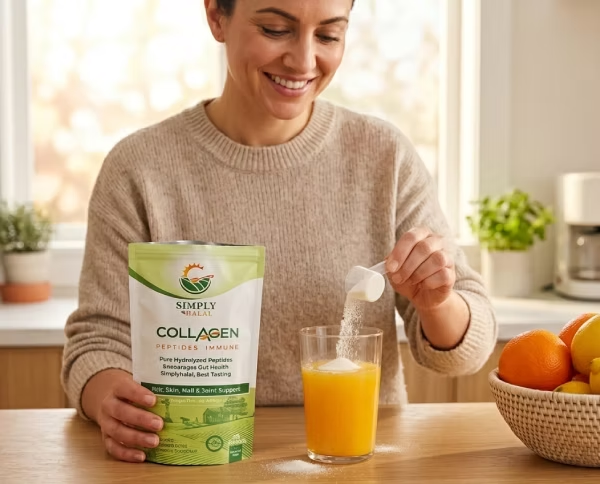
Vitamin C and Collagen: Why Most People Get It Wrong
Vitamin C and collagen have to work together, and most people get this wrong.
13 Jun 2026
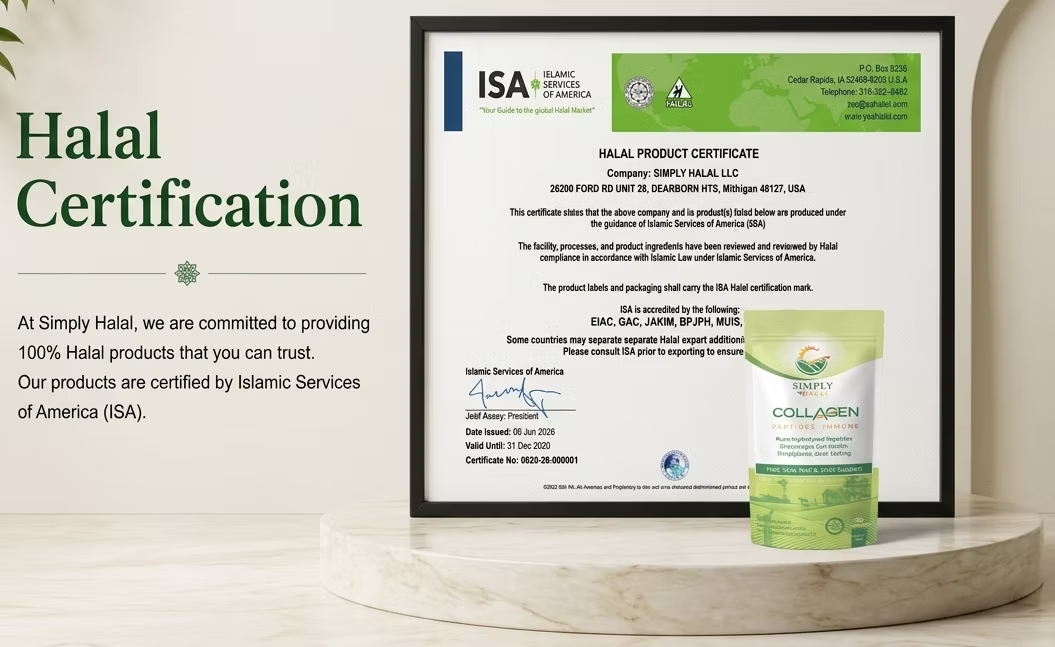
Is Bovine Collagen Halal?
Is bovine collagen halal? Yes, it can be. But that answer only holds true
24 May 2026
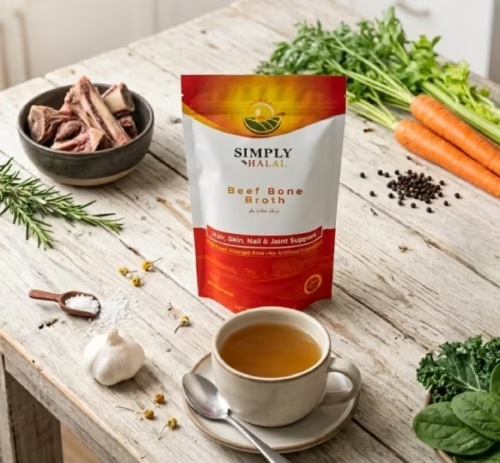
Best Halal Bone Broth Powder for Athletes
Athletes put more stress on connective tissue than almost any other population. Every training
4 May 2026
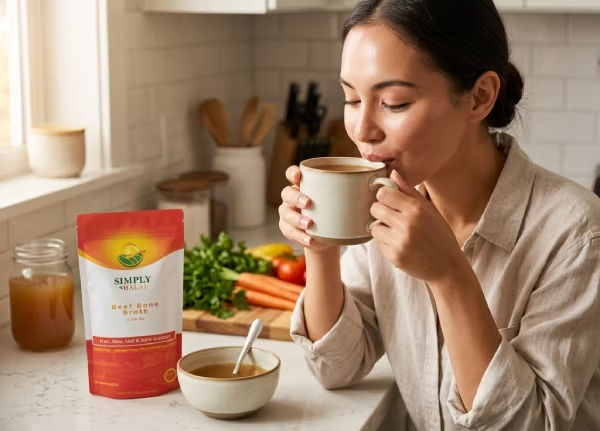
Best Halal Bone Broth Powder for Skin
Skin health supplements are one of the most crowded categories in the wellness market.
3 May 2026
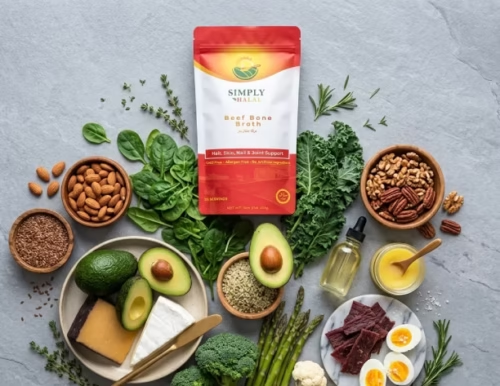
Best Halal Bone Broth Powder for Keto
If you are on a ketogenic or low-carb diet, bone broth powder is one
2 May 2026
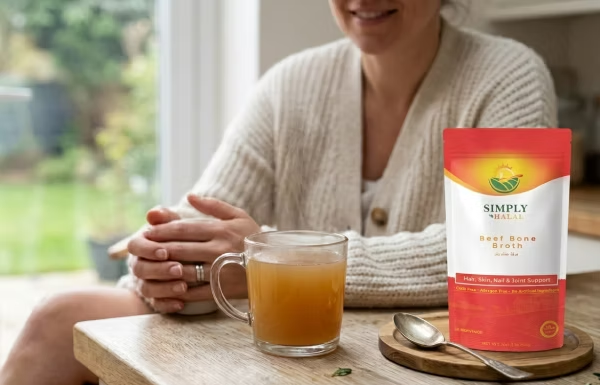
Best Halal Bone Broth Powder for Joints
Joint pain is one of those problems that announces itself slowly. A knee that
2 May 2026
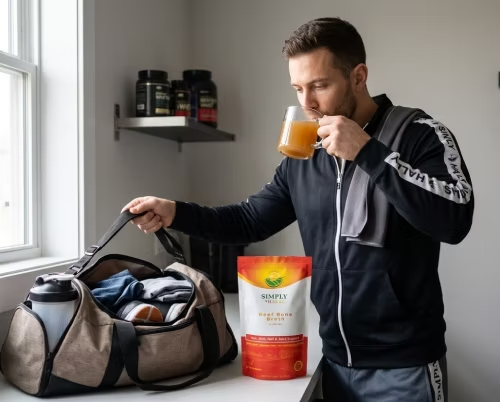
Best Halal Bone Broth Powder for Weight Loss
The bone broth and weight loss space is full of dramatic claims. Detox diets.