
Bovine vs Marine Collagen: Which Is Better?
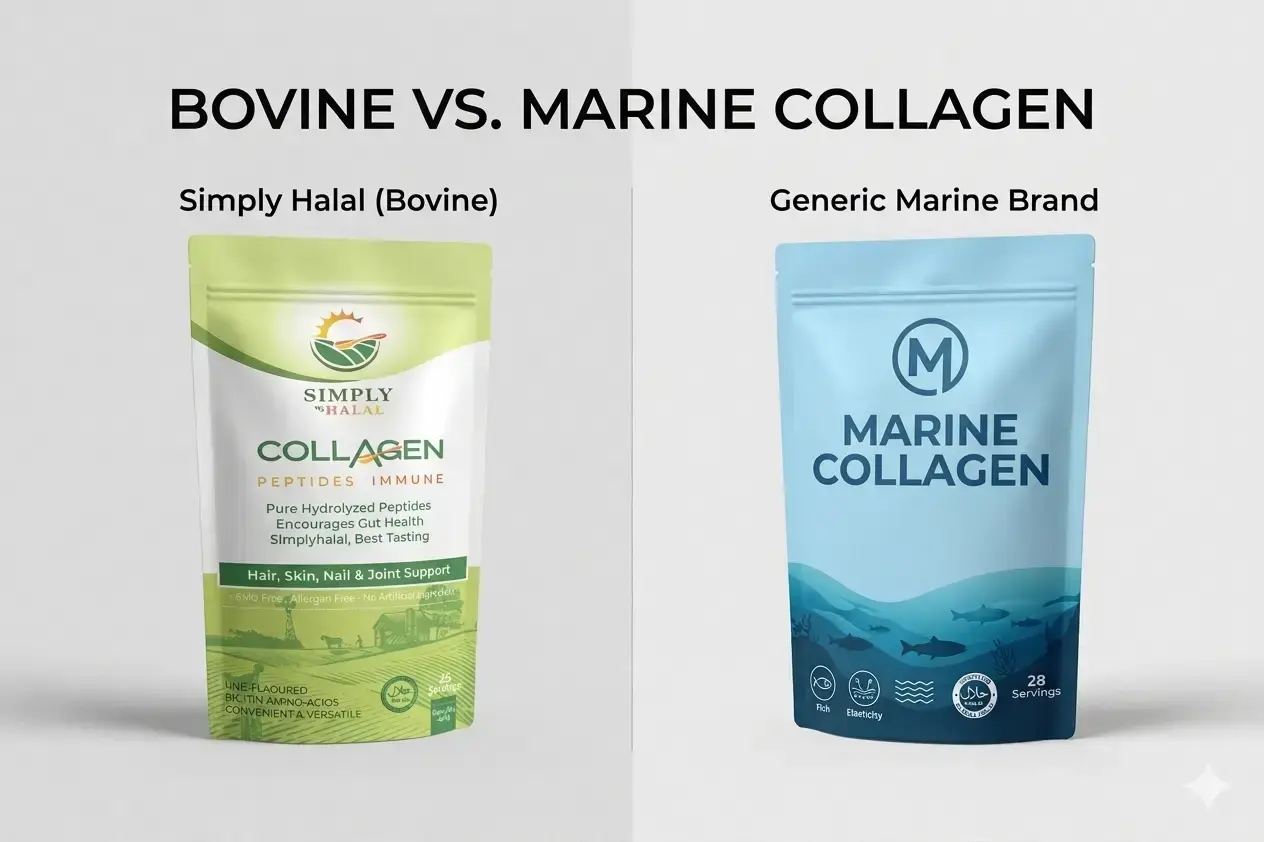
The debate between bovine vs marine collagen matters more for halal-conscious consumers than for anyone else, because the choice isn’t just about amino acids and bioavailability. It’s also about the complexity of halal verification, the reliability of the certification chain, and whether the product you’re taking truly meets the standard your values require. This guide gives you a complete, honest comparison across nutrition, science, halal compliance, and real-world daily use.
✅ DIRECT ANSWER
Bovine collagen is the stronger choice overall. Marine collagen absorbs faster due to its smaller peptide size, that’s real, not marketing spin. But absorption speed only matters for what’s actually being absorbed, and marine collagen delivers Type I collagen alone. Bovine collagen, once hydrolyzed, achieves strong bioavailability of its own, and delivers more total structural material per serving: Type I and Type III together, denser glycine, higher hydroxyproline. It also comes with a fully auditable halal certification chain that marine collagen, sourced from an undisclosed “category” of fish, cannot match. Shop Halal Collagen Bovine →
✅ READY TO START?
16g protein per serving · Grass-fed South American bovine · Zero maltodextrin · Zero fillers · GMP-certified facility. Shop Halal Collagen Bovine → Check simplyhalal.co for current promotions and shipping offers. Or explore the Halal Wellness Bundle.
📋 KEY TAKEAWAYS
- Marine collagen absorbs faster, that’s real. But speed only matters for what’s absorbed, and marine delivers Type I only, while bovine delivers Type I and Type III together.
- Bovine collagen achieves strong bioavailability of its own once hydrolyzed, and delivers more total structural material per serving than marine.
- “Marine collagen” is a category label, not a species. Most brands don’t disclose which fish was used or where it was farmed, bovine collagen is fully traceable.
- Contamination risk depends on sourcing and testing rigor. Simply Halal tests every lot; most marine collagen brands don’t publish this data at all.
📋 IN THIS ARTICLE
- What Is Bovine Collagen
- What Is Marine Collagen and Where It Actually Comes From
- Full Comparison Table
- The Amino Acid Advantage
- The Halal Verification Gap
- The Species Transparency Problem
- Safety, Contamination, and Real Lab Data
- Which Is Better for Skin
- Which Is Better for Joints, Gut Health, and Recovery
- The Simply Halal Position
- I Am Not Muslim. Does This Apply to Me?
- Frequently Asked Questions
What Is Bovine Collagen
Grass-fed sourcing produces a denser, more nutritionally complete collagen matrix than grain-fed alternatives.
Bovine collagen is derived from the bones, hides, and connective tissue of cattle. When sourced from grass-fed, pasture-raised animals, as Simply Halal’s products are, the bones are denser and the amino acid profile is more complete than from grain-fed feedlot cattle.
Bovine collagen contains primarily Type I and Type III collagen, the two most structurally important types in the human body. Type I is the most abundant collagen in skin, tendons, ligaments, and bone. Type III is found in skin, blood vessels, and the gut lining. Together, they provide structural support across every major connective tissue system.
When hydrolyzed, broken into smaller peptides through enzymatic processing, bovine collagen becomes highly bioavailable. The resulting peptides are absorbed in the small intestine, enter the bloodstream, and reach target tissues including cartilage, skin, and gut lining within hours of ingestion.
⚡ QUICK ANSWER
Bovine collagen provides both Type I and Type III collagen from a single source. For full-body structural support, skin, joints, gut, and connective tissue, bovine collagen covers more ground than marine collagen alone.
What Is Marine Collagen and Where It Actually Comes From
“Marine collagen” is a category label covering hundreds of species and supply chains, not a single defined source.
Marine collagen is typically extracted from fish by-products, skin, bone, cartilage, and scales. Industry sourcing analyses indicate tilapia and pangasius, both farmed freshwater fish, are among the most common wholesale sources for marine collagen peptides, frequently sourced from aquaculture operations in Vietnam and China. This specific sourcing claim is based on industry supply-chain reporting rather than a single peer-reviewed source, worth knowing as you weigh how much certainty it deserves.
Marine collagen contains almost exclusively Type I collagen, the same primary type found in human skin. Its smaller peptide size, typically 300 to 1000 Da compared to 10,000 to 300,000 Da for unhydrolyzed bovine collagen, gives it a genuine absorption speed advantage, research from Jafari et al. (2020) found it can be absorbed up to 1.5x more efficiently than bovine or porcine collagen due to this smaller molecular weight. (PMC7601392) But speed of absorption only matters for what’s actually being absorbed. A faster-absorbing product that delivers a narrower nutritional package isn’t automatically the better choice, it’s just the faster one.
Marine collagen is genuinely effective for skin hydration and elasticity. What most brands don’t disclose is which fish species was used, the source country, or farming conditions, and that lack of transparency creates a verification problem no certification body can fully audit.
Full Comparison Table
| Factor | Bovine Collagen | Marine Collagen |
|---|---|---|
| Collagen types | Type I + Type III | Type I only |
| Glycine content | Higher total dose per serving | Lower total dose per gram |
| Absorption | High when hydrolyzed | Genuine advantage, smaller peptide size |
| Best for skin | Strong, Type I and III | Strong, faster early absorption |
| Best for joints and gut | Stronger, Type III present | Limited, Type I only |
| Species transparency | Single species, disclosed | Rarely disclosed on-label |
| Halal verification | Clear, zabiha + certification | Complex, species and facility both matter |
| Simply Halal product | Halal Collagen Bovine | Not offered, by choice |
✅ DIRECT ANSWER
Bovine collagen wins for joints, gut health, and structural completeness. Marine collagen has a real absorption advantage, particularly for skin-specific use. For halal diets, certified bovine collagen offers a cleaner, more verifiable compliance chain.
The Amino Acid Advantage
The research favors bovine for total nutritional density, even though marine wins on absorption speed.
A study comparing bovine Achilles tendon collagen and fish skin collagen found bovine tendon collagen contains meaningfully more hydroxyproline than fish skin collagen, and bovine bone collagen contains roughly twice the hydroxyproline of fish skin collagen. Hydroxyproline is the amino acid most directly responsible for collagen fiber stability. (PubMed: 28687386)
Bovine collagen also provides higher concentrations of glycine, the most abundant amino acid in collagen. Glycine supports gut barrier integrity, collagen synthesis, and anti-inflammatory processes, and bovine sources deliver more of it per serving than marine sources.
Marine collagen’s real advantage is peptide size and absorption speed. But comparing total amino acid yield per gram, bovine’s denser profile means more structural building blocks per serving.
The Halal Verification Gap
Marine collagen is generally permissible under Islamic dietary law, but “generally permissible” isn’t the same as “fully verified.”
Most schools of thought don’t require ritual slaughter for fish, which is why marine collagen is broadly considered permissible. But the “marine” label covers fish skin, scales, and bones from dozens of species, sourced from operations across the world, sometimes processed in facilities that also handle non-halal animal products. Cross-contamination with non-halal processing agents can compromise the halal status of an otherwise permissible source.
Bovine collagen has a clearly defined halal compliance pathway: the animal must be slaughtered according to zabiha standards, the processing facility must be free from cross-contamination, and a recognized third-party certification body must audit the full chain. See how Simply Halal is halal certified.
Simply Halal doesn’t offer a marine collagen product, a deliberate choice. For the full scope of what halal certification covers: Is Collagen Halal?
The Species Transparency Problem
Most consumer labels say nothing more than “marine collagen,” with no species, source country, or farming conditions disclosed.
Without species disclosure, you can’t verify farming conditions, source country, or feed used. A halal certification body can audit a facility, but it can’t audit information a brand doesn’t provide.
Halal certified bovine collagen removes this ambiguity. The source animal is a single species, the farm location and slaughter method are documented, and every stage is independently audited.
Safety, Contamination, and Real Lab Data
Contamination risk comes down to sourcing and testing rigor, not species alone, and this cuts both ways.
A 2025 peer-reviewed study tested multiple marine collagen brands using ICP-MS, the gold-standard analytical method, and found arsenic was the most abundant contaminant detected, averaging 0.59 mg/kg. Importantly, these levels were generally within EU regulatory limits for seafood (0.5 to 1.5 mg/kg), though the researchers noted real variability between brands and flagged that cumulative exposure from multiple supplements warrants ongoing monitoring. (Cammilleri et al., 2025, Open Medicine)
This isn’t a marine-only issue. Independent testing of popular bovine-based collagen supplements has also found measurable heavy metal contamination in some brands, underscoring that testing rigor, not the source animal, is what actually determines safety.
Simply Halal Collagen Bovine is tested by lot. Real results from a recent batch (PEP-8136-25):
| Metal | Result | California Prop 65 Safe Harbor | Margin |
|---|---|---|---|
| Lead | 0.011 mg/kg | 0.5 µg/day | 22-44% of limit |
| Cadmium | 0.006 mg/kg | 4.1 µg/day | ~1-3% of limit |
| Arsenic | 0.006 mg/kg | 10 µg/day | Under 2% of limit |
| Mercury | 0.002 mg/kg | — | Trace |
Results from supplier lot testing, provided to Simply Halal and verified against California Prop 65 safe harbor thresholds. Every lot is tested before it reaches a customer.
This is what real testing looks like: specific numbers, specific batches, checked against a specific legal threshold, not a general claim that a product is “clean” or “safe” without data behind it.
Which Is Better for Skin
Both are genuinely effective for skin. Marine collagen’s absorption edge is real, but bovine isn’t far behind.
Marine collagen has a documented advantage for skin-specific supplementation, faster absorption and high Type I concentration matching the primary collagen type in human skin. Multiple clinical trials show measurable skin hydration and elasticity improvements within 4 to 8 weeks of daily use.
Bovine collagen also produces clinically documented skin benefits at comparable timeframes. The research doesn’t clearly establish marine as superior to bovine for skin outcomes, it establishes both as effective. For halal-conscious consumers, bovine delivers comparable skin benefits with a cleaner compliance chain. See: Halal Collagen Peptides Benefits
Which Is Better for Joints, Gut Health, and Recovery
This is where bovine’s advantage is clearest, Type III collagen is something marine simply doesn’t provide.
Type III collagen is a critical structural component of blood vessels, the gut lining, and the connective tissue surrounding joints. Without it, a collagen supplement is missing one of the two most structurally important collagen types in the human body.
For joint pain specifically, see: Best Halal Bone Broth for Joint Pain and Recovery
⚡ QUICK ANSWER
For joints, gut health, and recovery, bovine collagen wins clearly. It provides Type III collagen marine does not, and its higher glycine content directly supports gut barrier integrity and cartilage repair.
The Simply Halal Position
Three reasons Simply Halal uses bovine exclusively.
1. Nutritional completeness. Type I and Type III, a denser amino acid profile, higher hydroxyproline and glycine.
2. Full supply chain transparency. Halal certification means the animal source, slaughter method, and processing facility are all third-party audited. We know the species, the farm location, the slaughter method, and can trace every batch.
3. Clean label commitment, verified by testing. Zero maltodextrin, zero artificial flavors, zero hidden additives, and every lot tested for heavy metals before it reaches a customer.
“
You are not paying for marketing. You are paying for 3 years of carefully researched product development, hand-picked ingredients chosen to maximize your nutritional benefit, and grass-fed sourcing that most supplement brands avoid because it cuts into their profit margins. Simply Halal was built for your health, not our bottom line.
Chef Maher Fawaz, Founder
To understand why maltodextrin-free matters: Side Effects of Maltodextrin. Explore the full range: Shop or read Our Story.
I Am Not Muslim. Does This Apply to Me?
Does the halal sourcing debate between bovine and marine collagen affect me?
Yes, and more than most people realize. The species transparency problem with marine collagen affects every consumer, not just halal-conscious ones. When a brand won’t disclose the fish species, source country, or farming conditions, you have no way to verify what you’re actually taking. For anyone who values ingredient transparency and verified sourcing, the traceability that certified bovine collagen provides is a clean-label benefit that applies to everyone, not a religious one.
Frequently Asked Questions
Which is better for halal diets, bovine or marine collagen?
Certified bovine collagen from grass-fed sources offers the clearest and most verifiable compliance pathway. The “marine” label covers hundreds of species and supply chains, and most marine collagen supplements don’t disclose which fish was used. Without species transparency, full halal verification is difficult to complete.
Is marine collagen halal?
Generally, yes, in principle. Most schools of Islamic thought consider fish permissible without the ritual slaughter requirements that apply to land animals, which is why marine collagen is broadly considered halal as a source. But “generally permissible” isn’t the same as “fully verified.” The specific fish species, the processing facility, and whether that facility also handles non-halal ingredients all affect whether a specific marine collagen product is genuinely halal-compliant, and most brands don’t disclose enough information to check.
Is bovine collagen halal?
Only when it’s verified. Bovine collagen is halal when the source cattle are slaughtered according to zabiha standards and the collagen is processed in a facility free from cross-contamination with non-halal materials. Being bovine doesn’t automatically make a product halal, the same way being fish doesn’t automatically make marine collagen fully verified. Simply Halal Collagen Bovine is halal certified from production to bag, covering exactly this chain.
Is bovine or marine collagen more ethical?
Valid halal slaughter already requires the animal to be healthy, not diseased or dying, and the method itself is built to minimize suffering. A sick or abused animal cannot produce genuinely halal meat or collagen in the first place, humane treatment at the point of slaughter is part of the definition, not a separate ethics claim layered on top.
Is collagen vegan?
No, regardless of source. Collagen, whether bovine or marine, is always an animal-derived protein and cannot be vegan. Plant-based products marketed as “vegan collagen” or “collagen boosters” don’t contain actual collagen, they contain ingredients like Vitamin C and amino acid precursors that may support the body’s own collagen production, which is a different thing entirely.
What is the safest form of collagen to take?
The safest form is hydrolyzed collagen peptides, pure and lot-tested for heavy metals and contaminants, regardless of whether the source is bovine or marine. Contamination risk comes down to sourcing and testing rigor, not species alone. Simply Halal Collagen Bovine is grass-fed, halal certified from production to bag, and tested by lot, giving you a traceable, audited supply chain rather than relying on brand claims alone.
| Safety Factor | Bovine Collagen | Marine Collagen |
|---|---|---|
| Available hydrolyzed | Yes | Yes |
| Species transparency | Single species, disclosed | Category label, often undisclosed |
| Published heavy metal testing | Contamination reported in industry testing; source-dependent | Trace arsenic found, generally within EU limits, brand variability |
| Halal certification available | Yes | Not offered by Simply Halal |
| Absorption | High when hydrolyzed | Smaller peptide size |
Does marine collagen have better bioavailability than bovine?
Marine collagen absorbs faster due to its smaller peptide size, that’s real, verified science, not marketing. But absorption speed is only one part of the picture, it tells you how quickly something gets absorbed, not how much value it delivers once it is. Marine collagen’s faster-absorbing peptides deliver Type I collagen alone. Bovine collagen, once hydrolyzed, achieves strong bioavailability of its own, and delivers more total structural material per serving, Type I and Type III together, denser glycine, higher hydroxyproline. For most people, what matters more than a small head start in absorption speed is the completeness of what’s actually reaching your tissues.
Which type of collagen supports skin, joints, and nails as you take it consistently?
Skin hydration and elasticity typically improve first, within 4 to 8 weeks at daily doses around 2.5g to 10g. Joint comfort follows at 8 to 12 weeks, generally requiring higher daily doses around 10g. Nail and hair changes are commonly reported after 8 to 12 weeks of consistent use. Sporadic use will not produce these results, consistency at an appropriate dose is what the research supports.
What type of collagen is best for spinal discs?
The outer structural layer of the spinal disc, the annulus fibrosus, is composed predominantly of Type I collagen. Type III collagen is also present in normal human intervertebral discs, playing a role in organizing the pericellular environment of disc cells. (PubMed: 1791157) Since bovine collagen provides both types in a single serving, it’s the more complete choice for spinal disc support compared to marine collagen’s Type I only.
Why doesn’t Simply Halal offer marine collagen?
By deliberate choice. Most marine collagen supplements source from farmed fish without disclosing the species on the label. Without species transparency, no certification body can fully audit what a brand won’t disclose. Certified bovine collagen gives Simply Halal a single species, a traceable source location, a verified slaughter method, and a fully audited, lot-tested supply chain.
You might also like
17 Oct 2026
Collagen and Electrolytes: Can You Take Them Together?
Yes, you can take collagen and electrolytes together, and combining them in one drink
12 Aug 2026
Halal Collagen Tablets vs Powder: Myth vs Truth
Are collagen tablets worth it? Rarely. A single scoop of collagen powder delivers more
1 Aug 2026
Is Bone Broth Halal? The Complete Answer
Is bone broth halal? Yes, but only when the bones come from an animal
25 Jul 2026
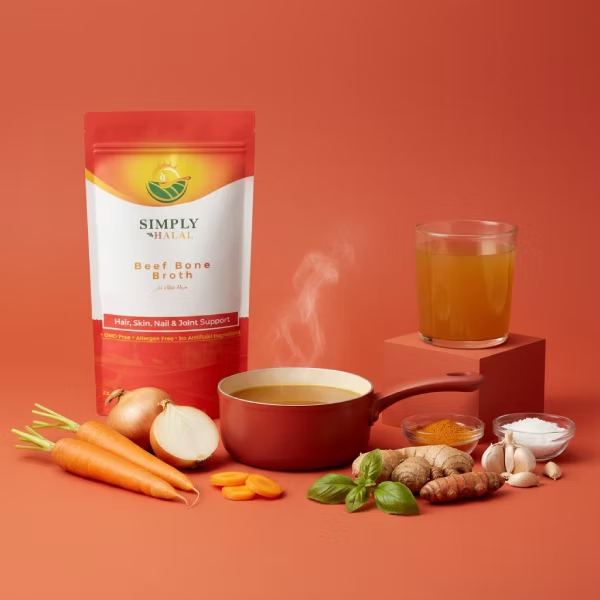
Why Simply Halal – The Chef-Crafted Halal Bone Broth Story
Most bone broth powders on the market start with the cheapest available raw material.
15 Jun 2026
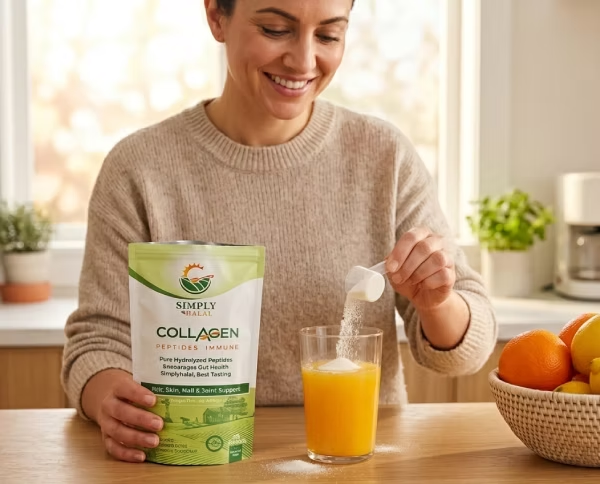
Vitamin C and Collagen: Why Most People Get It Wrong
Vitamin C and collagen have to work together, and most people get this wrong.
13 Jun 2026
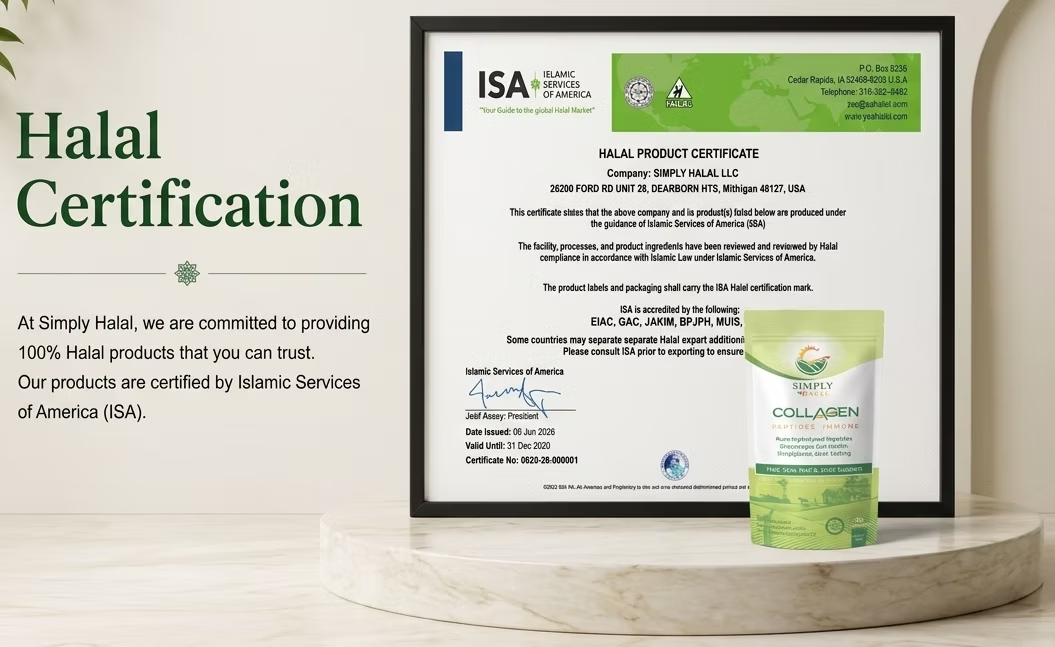
Is Bovine Collagen Halal?
Is bovine collagen halal? Yes, it can be. But that answer only holds true
24 May 2026
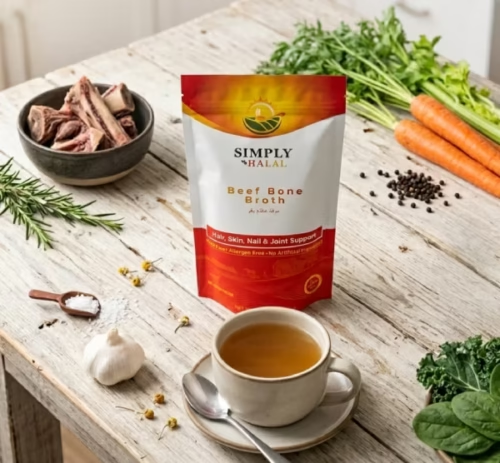
Best Halal Bone Broth Powder for Athletes
Athletes put more stress on connective tissue than almost any other population. Every training
4 May 2026
Best Halal Bone Broth Powder for Skin
Skin health supplements are one of the most crowded categories in the wellness market.
3 May 2026
Best Halal Bone Broth Powder for Keto
If you are on a ketogenic or low-carb diet, bone broth powder is one
2 May 2026
Best Halal Bone Broth Powder for Joints
Joint pain is one of those problems that announces itself slowly. A knee that