
Collagen Food Supplement vs Protein Powder: The Real Difference
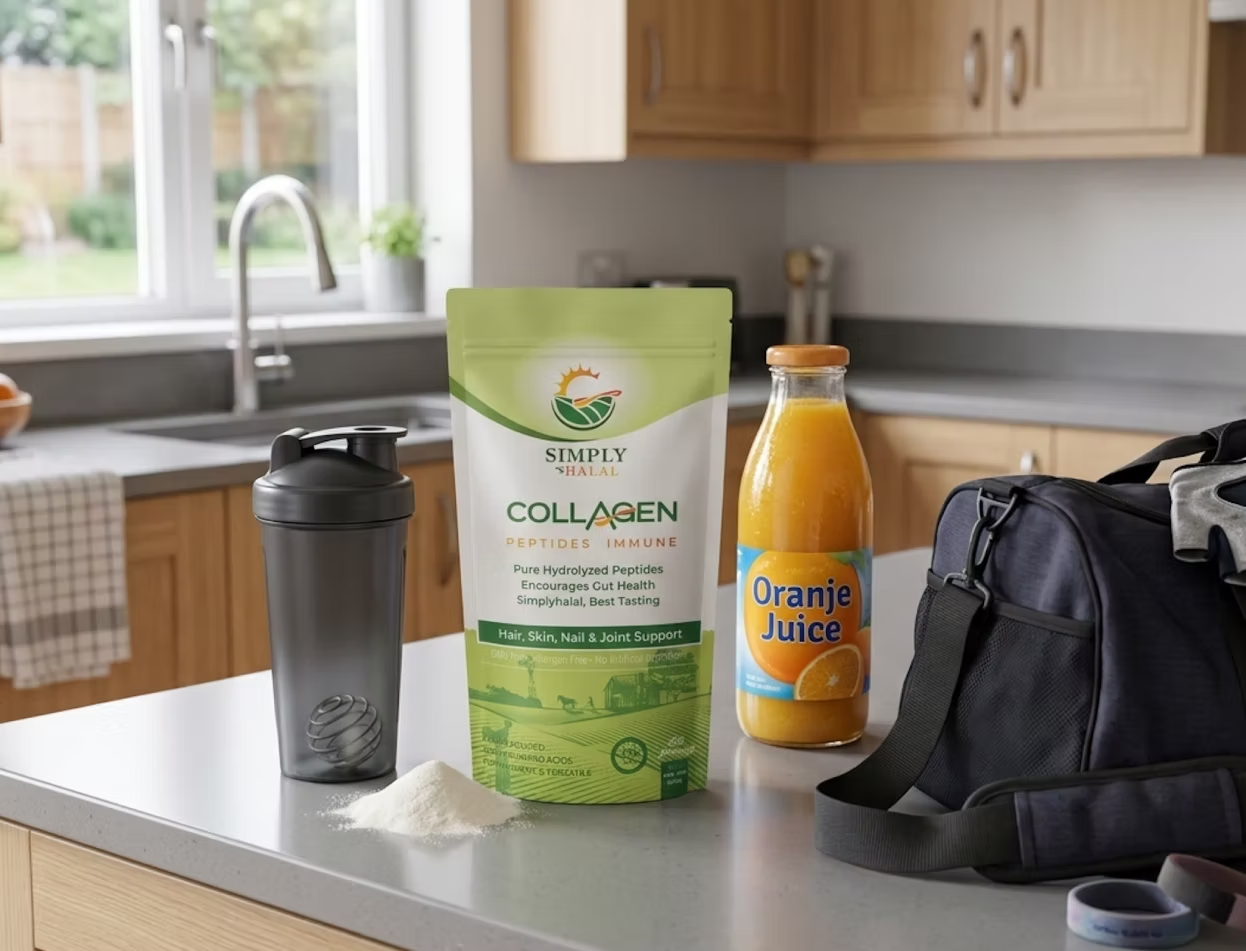
If you have ever picked up a tub of protein powder and tried to read the ingredient label, you already know something is off. The list goes on and on — artificial sweeteners, natural flavors, sucralose, lecithin, maltodextrin, stabilizers, emulsifiers — and somewhere buried in there is the actual protein. Collagen as a food supplement works completely differently. It comes from one source, contains no synthetic fillers, and delivers amino acids your body uses for far more than muscle tissue. This post explains exactly what separates collagen from protein powder — and why that difference matters more than most people realize.
✅ Direct Answer
Collagen is a food supplement derived directly from animal connective tissue — bones, skin, and cartilage — through a natural hydrolysis process. Conventional protein powder is typically a dairy byproduct (whey) that undergoes heavy industrial processing and is blended with dozens of additives. Collagen delivers glycine, proline, and hydroxyproline — structural amino acids that support joints, skin, gut lining, and connective tissue. They are not the same product and they do not do the same job.
Why a Master Chef Chose Collagen Food Supplement Over Protein Powder
Before Simply Halal existed, Chef Maher Fawaz spent 28 years working in professional kitchens and food production. When he began researching the supplement industry — spending three years before a single product reached the market — what he found was not a nutrition industry. It was a manufacturing industry focused on isolating protein fractions from cheap dairy byproducts, flavoring them with synthetic compounds, and selling the result in large tubs with impressive-sounding numbers on the front label.
The number on the front — 40g of protein, 50g of protein — tells you nothing about what the protein is made of, how it was processed, what was added to make it palatable, or whether your body can actually use it effectively. Chef Maher calls this the difference between clean protein and what he simply describes as the opposite: protein delivered through a vehicle filled with things that were never food to begin with.
That distinction — real food ingredients versus synthetic formulations — is the entire foundation of Simply Halal’s collagen products. And it is a distinction that the research increasingly supports.
What Is Actually Inside a Commercial Protein Shake?
The protein in most commercial shakes is whey — a liquid byproduct of cheese production. Whey itself is not inherently bad. It contains all nine essential amino acids and is effective for muscle protein synthesis. The problem is not the whey. The problem is everything added to make it shelf-stable, mixable, and sweet enough for consumers to drink.
⚡ Quick Answer
A typical commercial protein powder label contains: whey protein concentrate or isolate, cocoa powder or artificial flavor, sucralose or acesulfame potassium, soy or sunflower lecithin, xanthan gum, maltodextrin, silicon dioxide, and “natural flavors” — a catch-all term that can include alcohol-based carriers and undisclosed animal derivatives. That is not food. That is a manufactured product designed to taste like food.
Scientists have flagged specific additives in protein powders as causes for concern. Sucralose — the most common sweetener in protein powders — has been shown to disrupt gut microbiota and alter insulin response patterns, potentially leading to increased sugar cravings rather than reduced ones. Soy lecithin has been linked in emerging research to chronic inflammatory bowel conditions. Maltodextrin, one of the most common fillers in both protein powders and flavored collagen products, has a glycemic index higher than table sugar and no nutritional value.
For Muslim consumers, the ingredient list raises additional concerns. As we covered in our guide to non-halal ingredients in supplements, natural flavors, gelatin capsule carriers, and animal-derived additives can appear in products with no halal certification whatsoever — and often with no disclosure of animal source at all.
What Is Collagen as a Food Supplement — and How Is It Different?
Hydrolyzed collagen — also called collagen peptides — is produced by taking collagen-rich animal tissue (bones, hides, and connective tissue from halal-certified cattle in Simply Halal’s case) and breaking the protein chains down through a water-based enzymatic process called hydrolysis. The result is short-chain peptides that dissolve completely in liquid, absorb rapidly in the small intestine, and enter the bloodstream within 30 minutes of consumption.
There are no artificial sweeteners required because collagen is naturally neutral in flavor. There is no lecithin needed because it is naturally soluble. There is no sucralose, no maltodextrin filler, no “natural flavor” ingredient list. The simply halal Halal Collagen Bovine contains hydrolyzed bovine collagen peptides — and that is the ingredient list. One ingredient. Verified by ISA halal certification.
✅ Direct Answer
Collagen peptides are a food supplement in the most literal sense — they come from food (specifically, the connective tissues of grass-fed cattle), they are processed using water and enzymes rather than industrial chemical fractionation, and they contain no synthetic additives. A clean collagen product has an ingredient list you can read without a chemistry degree.
The Amino Acid Difference: Why Collagen Does Something Protein Powder Cannot
Whey protein and collagen protein have very different amino acid profiles — and that is not a flaw in collagen. It is by design. They simply do different jobs in the body.
Whey is high in leucine, isoleucine, and valine — the branched-chain amino acids (BCAAs) that trigger muscle protein synthesis. If your only goal is maximizing muscle mass after a resistance training session, whey delivers what your muscles are looking for in that window.
Collagen is high in glycine, proline, and hydroxyproline — three amino acids found in almost no other dietary source in significant quantities. Glycine is essential for joint cartilage, gut lining integrity, and sleep quality. Proline and hydroxyproline are the specific building blocks your body uses to synthesize new collagen — the protein that makes up your skin, tendons, ligaments, bone matrix, and intestinal wall. Research published in the International Journal of Sport Nutrition and Exercise Metabolism found that adding even 5 grams of collagen to whey protein prevented the post-exercise decline in plasma glycine — something whey alone cannot do regardless of dose.
In other words: whey builds the muscle. Collagen builds everything that holds the muscle together — and everything else in your body that protein powder completely ignores.
⚡ Quick Answer
Collagen amino acids (glycine, proline, hydroxyproline) support skin elasticity, joint cartilage, gut lining, bone density, tendon repair, and sleep quality. Whey amino acids (leucine, BCAAs) support muscle fiber synthesis. These are complementary tools, not competing ones — but only collagen addresses the full structural needs of the body. No protein shake does that.
What Happens to Your Body When You Replace Whole-Food Protein With Synthetic Supplements
This is the part the supplement industry does not advertise. A 2024 narrative review published in Healthcare examining 21 studies on whey protein supplementation found associations between chronic, unsupervised whey use and adverse effects on kidney and liver function, gut microbiota disruption, increased acne severity, and behavioral changes. The review was careful to note these effects are most pronounced with excessive, long-term use without professional guidance — but the pattern is clear: the body processes synthetic supplementation differently from whole-food protein.
This does not mean whey protein is dangerous for healthy adults who use it appropriately. What it does mean is that the supplement industry’s promise — that you can replace food with a powder and expect equivalent results — is not supported by the science. Your body evolved to absorb nutrition from food, not from fractionated dairy isolates blended with sucralose and lecithin.
As Chef Maher puts it: God created the body natural. How do you give it a synthetic product and expect it to benefit?
That is not a religious argument. It is a nutritional one — and the research increasingly agrees.
How to Make a Real Protein Shake at Home Using Halal Collagen
One of the most practical things about collagen as a food supplement is how easily it replaces commercial protein powder in everyday use. Because it is flavor-neutral and dissolves completely in both hot and cold liquid, collagen works in virtually any base without additives or artificial sweeteners to make it palatable.
✅ Direct Answer
A clean homemade protein shake: blend 1–2 scoops of Halal Collagen Bovine or Halal Collagen Broth with your choice of coconut milk, almond milk, or oat milk. Add a frozen banana, a handful of berries, and a tablespoon of almond butter for natural flavor and macronutrients. No sucralose. No maltodextrin. No artificial flavors. You know every ingredient because you put it in. That is what clean protein actually looks like.
Those who prefer gluten-free options can use gluten-free oat milk or coconut milk as their base. Those following dairy-free diets have the same flexibility — collagen contains no dairy, no lactose, and no milk derivatives. The result is a shake that provides sustained fullness for 6 to 7 hours because it is built from real food ingredients your body knows how to process — not from synthetic compounds designed in a manufacturing facility.
For more ideas on building real-food meals and drinks with halal collagen, visit our recipes page or explore our best halal collagen powder guide for a breakdown of what to look for when choosing a product.
Collagen vs Protein Powder: Who Should Use Each
This is not an either/or conversation for most people. Understanding what each does well helps you make an informed decision rather than defaulting to whatever has the biggest marketing budget.
Collagen as a food supplement is the right choice if you want to support skin elasticity, joint health, gut lining integrity, bone density, hair and nail strength, or recovery from connective tissue injury. It is also the right choice if you want a clean protein source with a minimal ingredient list, halal certification, no dairy, no lactose, and no artificial additives. Learn more about the full range of halal collagen peptide benefits.
Whey protein may be appropriate if you are an athlete specifically targeting maximum muscle protein synthesis in the post-workout window and are not concerned about ingredient additives or halal certification. That is a legitimate use case — but it is a narrow one, and it does not apply to the majority of people purchasing protein shakes.
For most people — those seeking general wellness, joint support, healthy aging, gut health, or a cleaner alternative to supplement powders filled with synthetic ingredients — collagen is the more appropriate, more versatile, and more honest choice.
For Muslim consumers specifically, the question is even more straightforward. No commercial whey protein carries ISA certification. No commercial protein shake has had a Master Chef spend three years verifying every ingredient before it reached the market. Simply Halal exists because that standard did not exist — and it should. Learn more about whether collagen is halal and what to look for in certified products.
The Simply Halal Collagen Health Supplement Difference
Every Simply Halal product — the Halal Collagen Bovine, the Halal Collagen Broth, and the Halal Beef Bone Broth — is grass-fed, free from maltodextrin, MSG, and artificial fillers, and certified by the Islamic Society of America. Not because certification is a marketing checkbox, but because it is what three years of research and 28 years of culinary expertise concluded was the only acceptable standard.
If you have been relying on commercial protein shakes and wondering why the results do not match the promises on the label, the answer is usually in the ingredient list — not in the protein number on the front. Real nutrition does not need 80 ingredients. It needs the right ones. Explore our full product range or read more about our story to understand why we built Simply Halal the way we did.
Frequently Asked Questions
Is collagen a food supplement or a protein supplement?
Collagen is both — but it functions more like a food supplement than a conventional protein powder. Unlike synthetic protein shakes that isolate protein from dairy byproducts and add dozens of fillers and artificial ingredients, hydrolyzed collagen is derived directly from animal connective tissue. It provides glycine, proline, and hydroxyproline — amino acids that support joints, skin, gut lining, and connective tissue — rather than simply targeting muscle protein synthesis.
What is the difference between collagen and protein powder?
Protein powder (typically whey) is a dairy byproduct processed to isolate protein and usually contains dozens of additives including artificial sweeteners, sucralose, lecithin, maltodextrin, and natural flavors. Collagen is food-derived protein extracted from bones, skin, and connective tissue of animals through hydrolysis. Whey is higher in leucine and BCAAs for muscle building. Collagen is higher in glycine, proline, and hydroxyproline for joints, skin, gut health, and connective tissue repair. They serve different and complementary purposes.
Can I use collagen as a protein shake?
Yes. Blend one to two scoops of halal collagen peptides with coconut milk, almond milk, or oat milk, add a banana, berries, or nut butter, and you have a 100% natural protein shake with no artificial sweeteners, no maltodextrin, and no synthetic fillers. Simply Halal’s Halal Collagen Bovine dissolves completely in hot or cold liquid and is ISA-certified halal with full ingredient transparency.
Is collagen halal?
Collagen can be halal if derived from halal-certified animals and produced without haram additives — but halal status is not guaranteed without third-party verification. Simply Halal’s collagen carries ISA certification, which verifies both the animal sourcing and the full ingredient list. Always look for recognized third-party halal certification rather than self-declared halal labeling. For a full breakdown, read our guide on whether collagen is halal.
You might also like
12 Aug 2026
Halal Collagen Tablets vs Powder: Myth vs Truth
Are collagen tablets worth it? Rarely. A single scoop of collagen powder delivers more
1 Aug 2026
Is Bone Broth Halal? The Complete Answer
Is bone broth halal? Yes, but only when the bones come from an animal
25 Jul 2026
Why Simply Halal – The Chef-Crafted Halal Bone Broth Story
Most bone broth powders on the market start with the cheapest available raw material.
15 Jun 2026
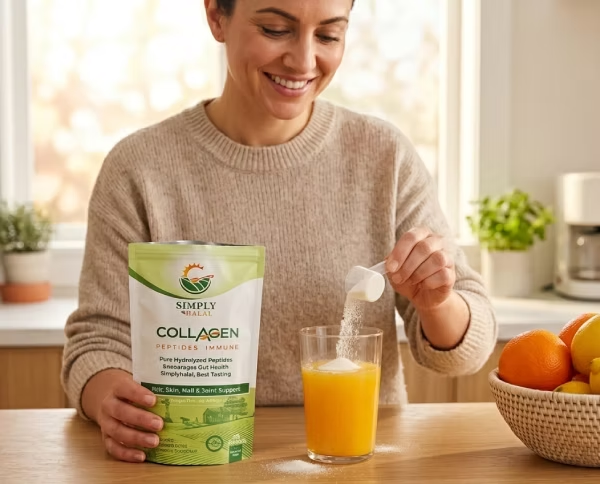
Vitamin C and Collagen: Why Most People Get It Wrong
Vitamin C and collagen have to work together, and most people get this wrong.
13 Jun 2026
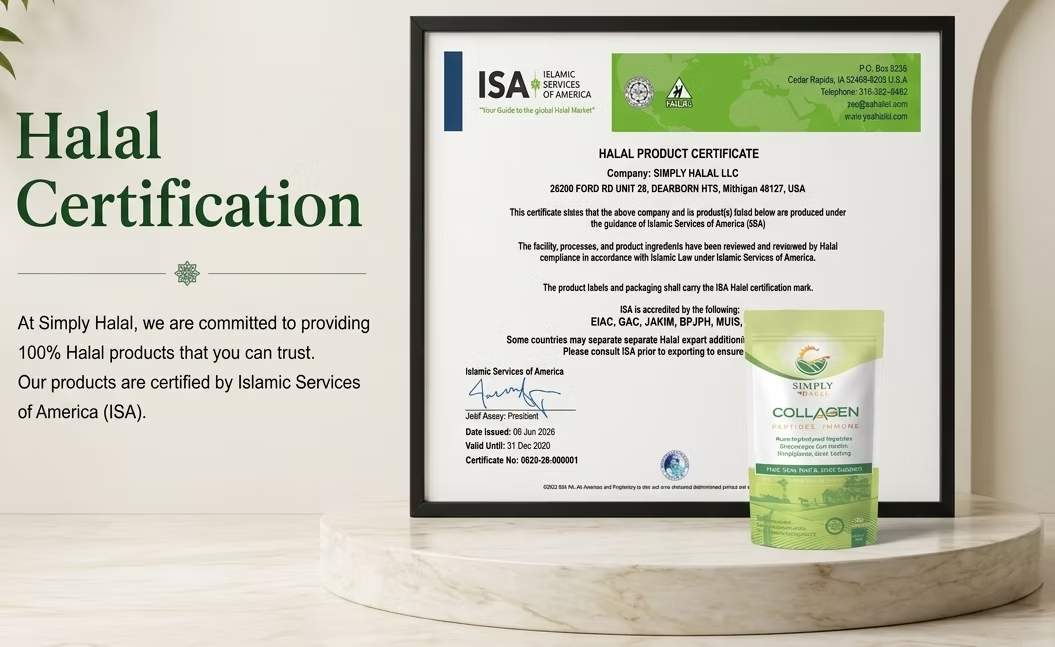
Is Bovine Collagen Halal?
Is bovine collagen halal? Yes, it can be. But that answer only holds true
24 May 2026
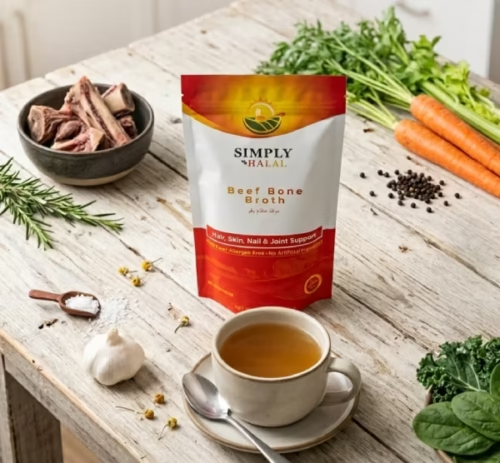
Best Halal Bone Broth Powder for Athletes
Athletes put more stress on connective tissue than almost any other population. Every training
4 May 2026
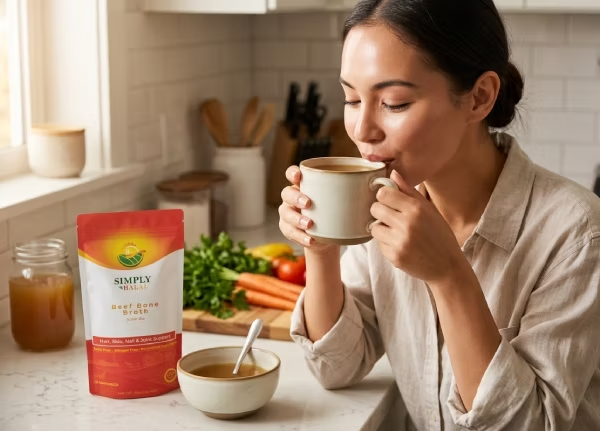
Best Halal Bone Broth Powder for Skin
Skin health supplements are one of the most crowded categories in the wellness market.
3 May 2026
Best Halal Bone Broth Powder for Keto
If you are on a ketogenic or low-carb diet, bone broth powder is one

2 May 2026
Best Halal Bone Broth Powder for Joints
Joint pain is one of those problems that announces itself slowly. A knee that
2 May 2026
Best Halal Bone Broth Powder for Weight Loss
The bone broth and weight loss space is full of dramatic claims. Detox diets.