Halal Collagen: The Complete Trusted Guide

Halal collagen is one of the fastest-growing searches in clean nutrition. If you’ve been searching for a trustworthy guide to halal collagen, what it is, whether it actually works, how to verify it’s truly halal, and which type is right for your body, this guide covers everything. It’s backed by real science and built on three years of research by Chef Maher Fawaz, co-founder of Simply Halal.
✅ DIRECT ANSWER
Halal collagen is collagen sourced from animals slaughtered according to Islamic law, certified by a recognized halal authority such as ISA (Islamic Services of America). Bovine (beef) collagen from grass-fed, zabiha-slaughtered cattle is the most widely accepted and bioavailable form for Muslims. Shop Halal Collagen Bovine →
⚡ QUICK ANSWER
Simply Halal Halal Collagen Bovine: 16g grass-fed protein per serving, ISA certified, zero fillers. Check simplyhalal.co for current promotions and shipping offers.
📋 KEY TAKEAWAYS
- Halal collagen requires zabiha slaughter AND third-party certification. Neither alone is sufficient.
- Collagen and gelatin are treated differently under Islamic law. Collagen’s source stays legally relevant; gelatin’s does not.
- Clinical dose depends on your goal: 2.5g for skin, 5g for bone density, 10g for joint comfort, 15g for muscle and body composition.
- Bovine collagen delivers Type I and III together. Marine collagen is Type I only.
📋 TABLE OF CONTENTS
- What Is Halal Collagen?
- Is Regular Collagen Halal?
- Types of Halal Collagen: Marine vs Bovine
- What Does Halal Collagen Do for Your Body?
- Halal Collagen for Women Over 40
- Collagen on HRT and Hashimoto’s
- Collagen for Spinal Discs and High Cortisol
- Why Grass-Fed Sourcing Changes Everything
- How to Verify Halal Certification
- Dosage and How to Take It
- The Simply Halal Difference
- I Am Not Muslim. Does This Apply to Me?
- Frequently Asked Questions
- Related Reading
What Is Halal Collagen?
It is not enough for a product to simply come from a cow. The slaughter method and processing must both be verified.
Collagen is the most abundant protein in the human body. It forms the structural foundation of your skin, joints, bones, gut lining, and connective tissue. Your body produces it naturally, but production slows significantly starting in your mid-20s and drops sharply after 40.
Halal collagen is collagen that meets Islamic dietary law at every stage, from the animal’s feed and living conditions, to the method of slaughter, to the processing facility. The animal must be slaughtered by a Muslim, with the name of Allah invoked, and the process must be verified by a certified halal authority.
⚡ QUICK ANSWER
Halal collagen must be sourced from a halal-slaughtered animal AND certified by a recognized authority like ISA, JAKIM, or IFANCA. A product claiming to be halal without third-party certification cannot be verified.
Once certified, bovine collagen is typically hydrolyzed, broken into smaller peptide chains, so your body absorbs it efficiently through the gut lining and delivers amino acids like glycine, proline, and hydroxyproline directly to your tissues.
Is Regular Collagen Halal?
Most collagen sold in mainstream stores is not halal, and the reason requires more nuance than most brands provide.
✅ DIRECT ANSWER
Most collagen sold in mainstream stores is NOT halal. It is either porcine (pig-derived), sourced from non-zabiha cattle, or produced in facilities that do not maintain halal integrity. Always look for third-party halal certification on the label.
There is also an important Islamic ruling that many people are unaware of: collagen and gelatin are not treated the same under Islamic law. Gelatin undergoes a chemical transformation (istihalah) that some scholars consider to change its essential nature, making it permissible regardless of source. Collagen does not undergo this transformation, meaning its source and slaughter method remain legally relevant. This is why halal certification at the source matters, not just at the manufacturing level.
A product can be processed in a halal-certified facility while still containing collagen peptides sourced from non-halal animals. Certification must cover both the raw material and the processing.
For a deeper dive into this topic, read our post: Is Collagen Halal? What Every Muslim Needs to Know
Types of Halal Collagen: Marine vs Bovine
Two sources dominate the halal collagen market, and they differ on more than just origin.
⚡ QUICK ANSWER
Marine collagen comes from fish and is considered halal by most scholars without slaughter requirements. Bovine collagen from grass-fed, zabiha cattle provides Type I and III collagen, the types most relevant to skin, gut, and joint health, and is the form used by Simply Halal.
| Factor | Marine Collagen | Bovine Collagen |
|---|---|---|
| Source | Fish skin/scales | Grass-fed cattle hides/bones |
| Collagen Types | Primarily Type I | Type I and Type III |
| Halal Status | Generally accepted (no slaughter required) | Requires zabiha slaughter + certification |
| Bioavailability | High (small peptide size) | High when hydrolyzed |
| Best For | Skin elasticity | Skin, joints, gut, hair, nails |
| Taste | Can have fishy undertone | Neutral, mixes easily |
For a full breakdown, read: Best Halal Collagen Powder 2026: The Complete Buying Guide
What Does Halal Collagen Do for Your Body?
Collagen’s benefits are well documented in peer-reviewed research, and the effective dose is different for each one.
Skin Health
A randomized, placebo-controlled trial in Nutrients (2019) found that just 2.5g of collagen peptides daily significantly improved skin hydration, elasticity, and density over 12 weeks. (PubMed: 31627309)
Joint and Cartilage Support
A randomized controlled trial in Current Medical Research and Opinion gave 147 athletes 10g of collagen hydrolysate daily and found significantly reduced joint pain during activity. (PubMed: 18416885)
Gut Lining Integrity
Glycine, the primary amino acid in collagen, plays a key role in maintaining the integrity of the intestinal lining. A 2024 systematic review and meta-analysis of clinical trials found glutamine and related amino acid supplementation measurably supports intestinal permeability and gut barrier function. (PubMed: 39397201)
Bone Density
A 12-month randomized controlled trial in Nutrients (2018) gave postmenopausal women 5g of specific collagen peptides daily and found significantly increased bone mineral density compared to placebo. (PubMed: 29893586)
✅ DIRECT ANSWER
Halal bovine collagen supports skin elasticity, joint comfort, gut lining integrity, and bone density. The effective dose depends on the goal: 2.5g for skin, 5g for bone, 10g for joints. Benefits typically become noticeable after 8 to 12 weeks of consistent daily use.
See also: Halal Collagen Peptides: Benefits Explained
Halal Collagen for Women Over 40
Collagen production drops by roughly 1% per year after 40, and the decline accelerates after menopause.
Falling estrogen levels play a direct role, since estrogen stimulates collagen synthesis in the skin and connective tissue. Research published in Skin Pharmacology and Physiology found that postmenopausal women who supplemented with collagen peptides for 12 weeks showed measurable improvement in skin elasticity compared to placebo. (PubMed: 23949208)
⚡ QUICK ANSWER
Women over 40 benefit most from Type I and III bovine collagen, which directly supports the skin, joints, and connective tissue most affected by estrogen decline. Consistent daily use, not occasional supplementation, is what the research supports.
Joint pain, stiffness in the morning, thinning hair, and slower wound healing are all signs that collagen production is declining. Supplementing with a clean, certified halal collagen helps replace what your body is producing less of, without fillers, maltodextrin, or unknown sourcing.
Can I Take Collagen on HRT? Does It Help Hashimoto’s?
Collagen is a food-derived protein with no known interaction with HRT, and it plays a supporting, not treating, role for Hashimoto’s.
Collagen on HRT
There are no known interactions between hydrolyzed collagen peptides and hormone replacement therapy. Collagen is a food-derived protein, not a pharmaceutical compound. Many women on HRT supplement with collagen to support the skin and joint benefits that HRT alone does not address. As always, consult your healthcare provider for guidance specific to your protocol.
Collagen and Hashimoto’s
Hashimoto’s thyroiditis is an autoimmune condition affecting the thyroid. There is growing research interest in the gut-thyroid connection, specifically how intestinal permeability (“leaky gut”) may contribute to autoimmune activity. Collagen’s role in supporting gut lining integrity makes it a relevant nutritional consideration for those with Hashimoto’s.
Glycine and proline, the dominant amino acids in collagen, are key building blocks for the tight junctions that maintain gut barrier function. A well-sealed gut lining reduces the entry of undigested proteins into the bloodstream, one mechanism researchers believe contributes to autoimmune flares.
This is not a treatment claim. It is nutritional support for an area of the body directly relevant to autoimmune health. Speak with your endocrinologist or functional medicine practitioner before making changes to your supplement protocol.
Collagen for Spinal Discs and High Cortisol
Both spinal discs and stress hormones depend on the same connective tissue that collagen helps maintain.
Spinal Discs
Intervertebral discs are approximately 70% collagen by dry weight. As collagen production declines with age, disc integrity can decrease, contributing to stiffness, reduced height, and in some cases, disc-related pain. Type II collagen is specifically associated with cartilage and disc tissue, while Type I provides structural support to the surrounding connective tissue.
High Cortisol
Chronically elevated cortisol, the stress hormone, degrades collagen in the skin and connective tissue. This is why high-stress periods often coincide with accelerated skin aging, joint discomfort, and slower healing. Supplementing with collagen does not lower cortisol directly, but it can help replenish the collagen that stress-driven cortisol is breaking down.
Glycine, abundant in collagen, also has calming neurological properties. A randomized crossover trial found that glycine taken before bedtime improved subjective sleep quality and sleep efficiency, confirmed by polysomnography. Better sleep is one of the most effective ways to regulate cortisol naturally. (Yamadera et al., Sleep and Biological Rhythms, 2007)
Why Grass-Fed Sourcing Changes Everything
Not all bovine collagen is equal, and the difference starts before the animal is ever slaughtered.
✅ DIRECT ANSWER
Grass-fed bovine collagen contains a cleaner amino acid profile and avoids the hormones, antibiotics, and GMO corn feed common in factory-farmed cattle. Simply Halal sources exclusively from grass-fed, non-GMO South American cattle, personally verified by Chef Maher Fawaz.
The majority of collagen peptides sold globally are sourced from China, where cattle are primarily corn-fed, often GMO corn. Corn-fed cattle produce collagen with a different nutritional profile, and the supply chain is far harder to verify for halal integrity.
South American grass-fed cattle are raised on open pasture, without the routine antibiotic use common in factory farming. The supply chain is traceable, and the halal slaughter process is conducted under ISA oversight, from the animal to the final powder.
This is not a marketing claim. It is the reason Chef Maher spent three years and conducted over 160 lab tests before Simply Halal sold a single bag.
How to Verify Halal Collagen Certification
This is where most consumers get misled. Here is exactly what to look for.
1. Look for a Named Certification Body
The label should name a specific halal authority, not just print the word “halal” or display a generic crescent symbol. Recognized bodies include:
- ISA — Islamic Services of America (isahalal.com), Simply Halal’s certifier. Verify our certification directly on ISA’s site, or on our own halal certification page.
- IFANCA — Islamic Food and Nutrition Council of America
- JAKIM — Malaysia’s Department of Islamic Development (international standard)
2. Verify Certification Covers the Raw Material
Ask: is the collagen peptide itself certified, or just the facility that packages it? These are different things. Simply Halal’s ISA certification covers both the animal source and the final processing.
3. Check the Source Animal and Country
Look for “bovine” or “marine” on the label, and ideally the country of origin. If a brand does not disclose where their collagen comes from, that is a red flag.
4. No Porcine By-Products
Some collagen capsules use gelatin-based capsules derived from pork. If the product is in capsule form, confirm the capsule material is also halal-certified. Read more: Halal Collagen Tablets vs Powder
⚡ QUICK ANSWER
A large share of collagen products on store shelves cannot be verified as truly halal. The only way to be certain is third-party certification from a named authority that covers the raw material, not just the packaging facility.
Dosage and How to Take Halal Collagen
There is no single “right” dose. The amount that works depends on what you’re trying to achieve.
Research supports 2.5g daily for skin benefits, 5g for bone density over the long term, 10g for joint comfort, and 15g for muscle and body composition goals. Simply Halal’s Halal Collagen Bovine provides 16g of clean protein per serving, clearing every one of these thresholds in a single scoop, with no maltodextrin, no MSG, and no fillers.
Timing
- Morning on an empty stomach: maximizes absorption before food competes for digestive resources
- Post-workout: collagen peptides support connective tissue repair after exercise stress
- Before bed: glycine in collagen supports sleep quality and overnight tissue repair
Pair With Vitamin C
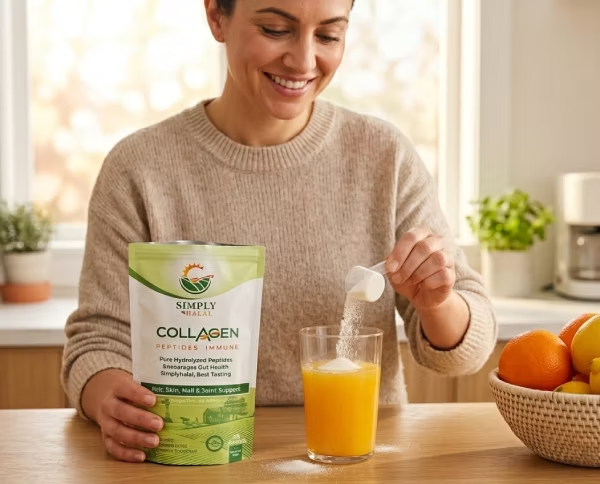
Vitamin C is a required cofactor for collagen synthesis. Taking your halal collagen with a Vitamin C source, citrus juice, berries, or a supplement, enhances your body’s ability to convert the peptides into new collagen fibers. This is not optional for optimal results. Read more: Vitamin C and Collagen: Why the Source Matters
Consistency Over Everything
Collagen is not a one-week supplement. Clinical studies showing meaningful results typically run 8 to 24 weeks of daily use. The benefit is cumulative, each day builds on the last.
✅ READY TO START?
Shop Halal Collagen Bovine → Check simplyhalal.co for current promotions and shipping offers.
The Simply Halal Difference
Simply Halal is not a supplement company. It is a holistic nutrition brand built by a family that refused to compromise.
Co-founder Fatima Hammoud healed her own chronic sinus infections in 2002 using homemade bone broth, ginger, turmeric, onions, beef bones, lamb feet, without surgery or antibiotics. Her family has been allergy-free since January 2003. That is the origin of this brand. Not a lab. A kitchen. Read the full story: Why Simply Halal
Chef Maher Fawaz brought 28 years of culinary expertise and spent three years in R&D, 160+ lab tests, a partnership with Michigan State University’s Product Center Innovation, and personal sourcing verification trips to South America, before Simply Halal sold its first bag in November 2025.
Every product is:
- ISA-certified halal, verified at isahalal.com and on our certification page
- Grass-fed, non-GMO bovine sourced from South America
- Free from maltodextrin, MSG, fillers, and artificial ingredients
- Produced in a GMP-certified halal facility in Dearborn Heights, Michigan
- Recommended by Dr. Youssef Dakka, a physician based in Dearborn, Michigan
“
You are not paying for marketing. You are paying for 3 years of carefully researched product development, hand-picked ingredients chosen to maximize your nutritional benefit, and grass-fed sourcing that most supplement brands avoid because it cuts into their profit margins. Simply Halal was built for your health, not our bottom line.
Chef Maher Fawaz, Founder
Halal certification is not a restriction. It is a quality standard, one that verifies sourcing, traceability, and integrity at every stage. That is exactly what health-conscious consumers of every background are looking for.
Shop Simply Halal Collagen:
- Halal Collagen Bovine — 16g protein, grass-fed, ISA certified
- Halal Collagen Broth — 14g Type I & III collagen, organic ingredients
- Halal Beef Bone Broth — 13g protein, slow-simmered flavor
- Wellness Bundle — all three products, best value
I Am Not Muslim. Does This Apply to Me?
Is halal collagen only for Muslims?
No. Halal certification is not a religious restriction on who may use the product. It provides independent verification that the product meets the halal requirements covered by the certifier’s review. The nutritional role of protein and amino acids does not depend on a person’s religious background.
Frequently Asked Questions
What makes collagen halal?
Collagen is halal when it is sourced from an animal slaughtered according to Islamic law (zabiha), with the name of Allah invoked, and certified by a recognized halal authority that covers both the raw material and the processing facility.
Is bovine collagen halal?
Bovine collagen can be halal if it comes from zabiha-slaughtered cattle and is certified by a trusted halal body such as ISA, IFANCA, or JAKIM. Bovine collagen that is not certified cannot be assumed to be halal.
What type of collagen is best for skin?
Type I collagen, the most abundant in the human body, is the primary type responsible for skin structure and elasticity. Both marine and grass-fed bovine collagen are rich in Type I. Bovine additionally provides Type III, which supports skin firmness and gut lining integrity.
Can I take collagen while on HRT?
There are no known interactions between hydrolyzed collagen peptides and hormone replacement therapy. Collagen is a food-derived protein. Consult your healthcare provider for guidance specific to your health protocol.
Does collagen help Hashimoto’s?
Collagen supports gut lining integrity, which is relevant to autoimmune conditions like Hashimoto’s thyroiditis given research into the gut-thyroid connection. This is nutritional support, not a treatment. Consult your endocrinologist or functional medicine practitioner.
What type of collagen is best for spinal discs?
Intervertebral discs are primarily collagen by dry weight. Type I and Type II collagen are most relevant to disc and cartilage health. Hydrolyzed bovine collagen provides Type I, which supports the connective tissue surrounding spinal structures.
Is collagen good for high cortisol?
Collagen does not lower cortisol directly. However, it helps replenish connective tissue that chronic cortisol elevation degrades. Glycine in collagen also supports sleep quality, and better sleep is one of the most effective natural strategies for cortisol regulation.
How much halal collagen should I take daily?
It depends on your goal: 2.5g for skin, 5g for bone density, 10g for joint comfort, and 15g for muscle and body composition. Simply Halal’s Halal Collagen Bovine provides 16g per serving, clearing every threshold in one scoop.
How long does it take for halal collagen to work?
Most clinical studies run 8 to 24 weeks before measuring results. Skin hydration improvements are often reported first (6 to 8 weeks), followed by joint comfort and bone density changes (12 weeks to 12 months). Consistency is the single most important factor.
What is the difference between halal collagen and regular collagen?
The protein structure is identical. The difference is sourcing and certification. Regular collagen may come from porcine sources, non-zabiha cattle, or unverified supply chains. Halal collagen is third-party certified to confirm the animal source, slaughter method, and processing integrity.
Is Vital Proteins Collagen Peptides halal?
It depends on the region. Standard tubs sold in North America carry Kosher certification, not Halal certification. Vital Proteins does produce a separately labeled Halal-certified version distributed in Middle Eastern and select international markets. A Kosher label alone, while it aligns closely with many halal dietary principles, is not the same as third-party halal certification. Always check the specific package for a named halal certifying authority rather than assuming based on the brand or region you’re used to seeing. Simply Halal is ISA halal certified from production to bag on every product, everywhere it ships, with no regional variation to track down.
Is Vital Proteins collagen halal?
Not automatically, and this is a common point of confusion. The standard Vital Proteins Collagen Peptides tub sold in the United States and Canada carries Kosher certification, not Halal certification. A separately labeled Halal-certified version, sourced from grass-fed bovine hides, is produced and distributed specifically for Middle Eastern and select international markets. Kosher slaughter practices share some similarities with Islamic requirements, but the two certifications are not interchangeable. If you’re shopping in North America, check the specific package for a named halal certifying body rather than assuming halal status from the brand name or a Kosher symbol. Simply Halal Collagen Bovine is ISA halal certified from production to bag everywhere it’s sold.
You might also like
17 Oct 2026
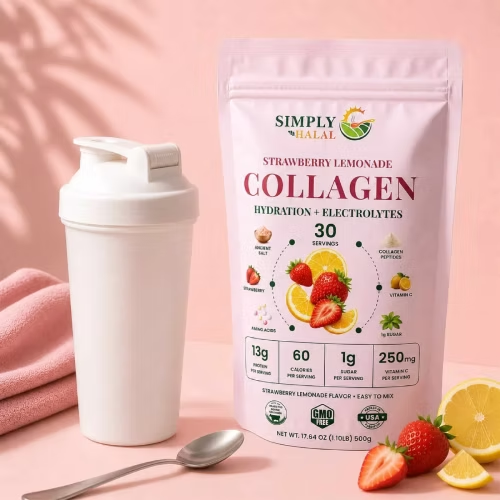
Collagen and Electrolytes: Can You Take Them Together?
Yes, you can take collagen and electrolytes together, and combining them in one drink
12 Aug 2026
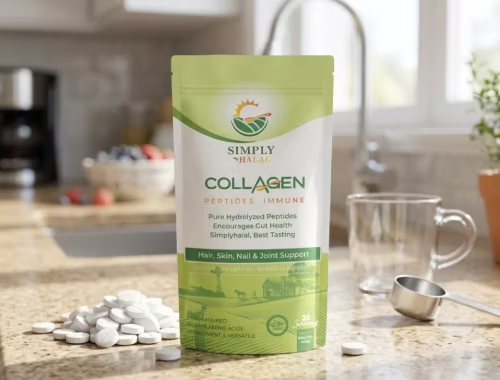
Halal Collagen Tablets vs Powder: Myth vs Truth
Are collagen tablets worth it? Rarely. A single scoop of collagen powder delivers more
1 Aug 2026
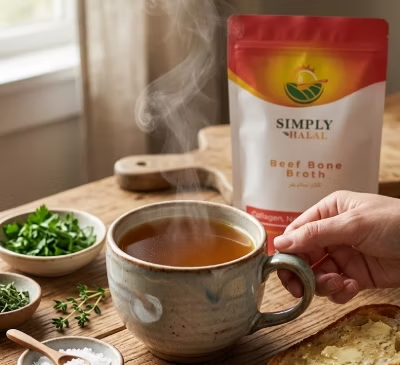
Is Bone Broth Halal? The Complete Answer
Is bone broth halal? Yes, but only when the bones come from an animal
25 Jul 2026
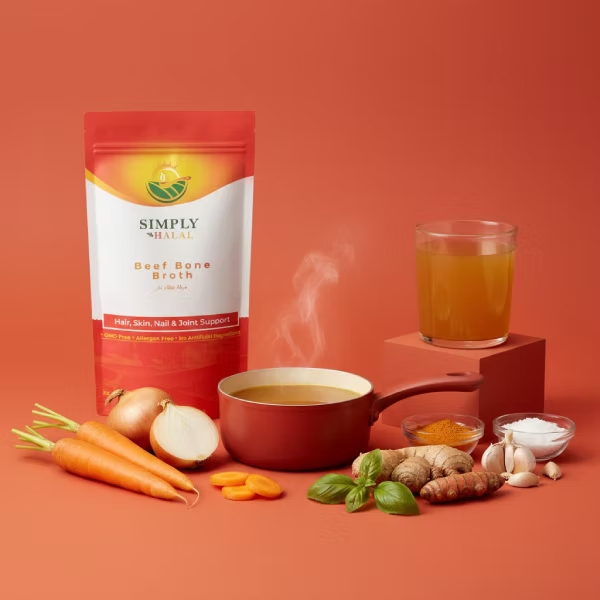
Why Simply Halal – The Chef-Crafted Halal Bone Broth Story
Most bone broth powders on the market start with the cheapest available raw material.
15 Jun 2026
Vitamin C and Collagen: Why Most People Get It Wrong
Vitamin C and collagen have to work together, and most people get this wrong.
13 Jun 2026
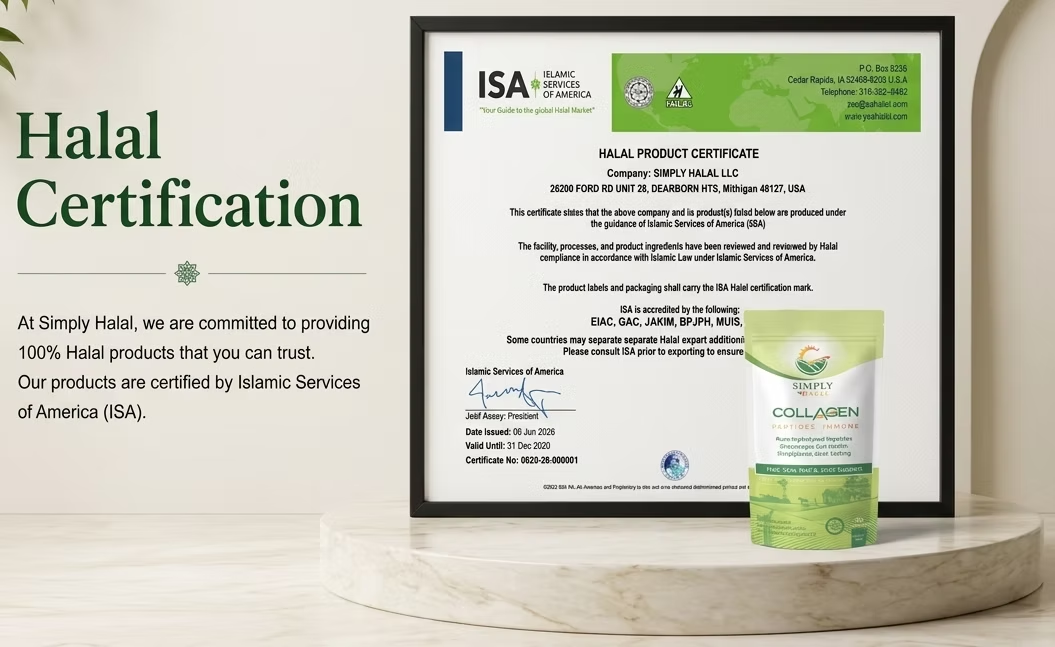
Is Bovine Collagen Halal?
Is bovine collagen halal? Yes, it can be. But that answer only holds true
24 May 2026
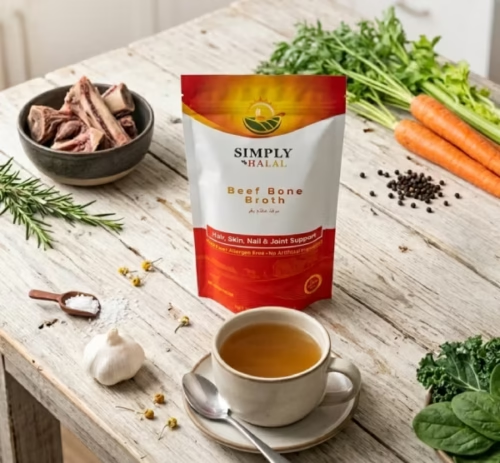
Best Halal Bone Broth Powder for Athletes
Athletes put more stress on connective tissue than almost any other population. Every training
4 May 2026
Best Halal Bone Broth Powder for Skin
Skin health supplements are one of the most crowded categories in the wellness market.
3 May 2026
Best Halal Bone Broth Powder for Keto
If you are on a ketogenic or low-carb diet, bone broth powder is one
2 May 2026
Best Halal Bone Broth Powder for Joints
Joint pain is one of those problems that announces itself slowly. A knee that