
Halal Collagen and Menopause: What the Science Shows

Collagen and menopause are connected in ways most women aren’t told about. As estrogen declines during perimenopause and post-menopause, collagen production drops with it, affecting your bones, joints, sleep, gut, and energy simultaneously. This guide covers what the clinical research actually shows, what to look for in a supplement, and how halal certification fits into a daily protocol you’re trusting with your health.
✅ DIRECT ANSWER
Collagen production drops by up to 30% in the first five years after menopause due to falling estrogen. Clinical research supports daily collagen peptide supplementation for bone density, joint comfort, sleep quality and fatigue, and gut lining health during this transition. Consistent daily use at 5-15g, depending on your goal, is what the evidence supports. Shop Halal Collagen Bovine →
📋 KEY TAKEAWAYS
- Estrogen directly activates the fibroblast and osteoblast cells that produce collagen and bone. When estrogen drops, collagen synthesis slows across your whole body at once, not just your skin.
- Two real randomized trials, in 131 and 102 postmenopausal women, found 5g of collagen peptides daily significantly improved bone mineral density at the spine and femoral neck, with benefits continuing over a 4-year follow-up.
- A real randomized trial found 10g of collagen daily for 8 weeks significantly reduced fatigue, likely through improved sleep quality via glycine, collagen’s most abundant amino acid.
- Starting during perimenopause is more effective than waiting, your collagen-producing cells are still active. But clinical trials confirm it’s never too late to start.
📋 TABLE OF CONTENTS
- Why Collagen Drops During Menopause
- Bone Density: The Strongest Evidence
- Joint Comfort and Cartilage
- Fatigue and Sleep Quality
- Gut Lining Integrity
- Starting in Perimenopause vs. Later
- What to Look for in a Supplement
- How to Take It
- The Simply Halal Approach
- I Am Not Muslim. Does This Apply to Me?
- Frequently Asked Questions
Why Collagen Drops During Menopause
This is a whole-body structural shift, not a cosmetic issue confined to skin.
Estrogen directly stimulates the fibroblast cells in your skin and the osteoblasts responsible for building new bone. When estrogen declines in perimenopause and drops sharply after menopause, collagen synthesis slows across bone, cartilage, tendons, and the gut lining simultaneously, all tissues that depend on collagen as their structural foundation.
Women lose up to 30% of skin collagen in the first five years after menopause, with an ongoing loss of roughly 2% per year after that.
⚡ QUICK ANSWER
Estrogen directly stimulates collagen production. When estrogen drops during perimenopause and menopause, collagen drops with it, affecting bones, joints, gut lining, and sleep simultaneously. Supplementing with hydrolyzed collagen peptides provides the amino acids your body needs when natural production slows.
Bone Density: The Strongest Evidence
This is where the clinical case for collagen in menopausal women is most consistent.
A randomized, placebo-controlled trial in 131 postmenopausal women found 5g of specific collagen peptides daily for 12 months significantly increased bone mineral density at the spine and femoral neck compared to placebo, alongside increased bone-formation markers. (PubMed: 29337906) A follow-up of the same cohort after 4 years found continued, clinically relevant increases in spinal bone density with long-term use. (PubMed: 34520654)
A 2025 meta-analysis in Frontiers in Nutrition confirmed this pattern across the broader literature, finding collagen peptide supplementation, particularly combined with calcium and vitamin D, significantly increased bone mineral density at the femoral neck and spine. (PubMed: 41049371)
✅ DIRECT ANSWER
Multiple randomized controlled trials and a 2025 meta-analysis confirm collagen peptides significantly improve bone mineral density in postmenopausal women at the spine and femoral neck, the two sites most vulnerable to osteoporotic fractures. Benefits are measurable at 12 months and continue with long-term use.
Joint Comfort and Cartilage
Joint stiffness is a common perimenopause symptom, rarely discussed alongside hot flashes and sleep disruption.
As estrogen declines, synovial fluid thins and cartilage repair slows. Collagen peptides provide glycine, proline, and hydroxyproline, the amino acids cartilage is primarily built from. A 24-week randomized trial in athletes found 10g of collagen hydrolysate daily significantly reduced activity-related joint pain. (PubMed: 18416885)
For a full breakdown of joint-specific research, see: Best Halal Bone Broth for Joint Pain and Recovery
Fatigue and Sleep Quality
This is the benefit most collagen content skips entirely, and it’s real, measured research, not a marketing claim.
Sleep disruption is one of the most debilitating symptoms of the menopausal transition. Collagen is the richest dietary source of glycine, and a randomized trial found 3g of glycine before bedtime significantly reduced fatigue and daytime sleepiness following sleep restriction. (PubMed: 22529837) A related trial found glycine before bedtime also shortened the time to reach slow-wave sleep and improved subjective sleep quality, confirmed by polysomnography.
Separately, a randomized, placebo-controlled trial found 10g of collagen peptides daily for 8 weeks significantly reduced fatigue and improved mood and vigor in fatigue-prone adults. (Journal of the American College of Nutrition, 2024, DOI: 10.1080/19390211.2024.2399343)
The mechanism is specific: glycine lowers core body temperature by increasing peripheral blood flow, and a drop in core temperature is one of the physiological signals that initiates sleep. For menopausal women whose thermoregulation is already disrupted by hot flashes, this is particularly relevant.
✅ DIRECT ANSWER
Collagen doesn’t provide energy by being burned as fuel. It reduces fatigue indirectly, through improved sleep quality via glycine, and directly, through measured mood and vigor improvements in real clinical trials at 10g daily.
Gut Lining Integrity
Declining estrogen affects the gut in ways most women aren’t warned about.
Menopause is associated with increased intestinal permeability and shifts in gut microbiome diversity, contributing to bloating and digestive discomfort many women notice for the first time in their 40s. Glycine, collagen’s dominant amino acid, supports the tight junctions that keep the gut barrier intact.
For the full science on collagen and gut health: Best Halal Bone Broth for Gut Health
Starting in Perimenopause vs. Later
Think of it as structural maintenance versus structural repair. Both work, but maintenance is easier.
Starting during perimenopause, which can begin 8-10 years before your final period, is likely more effective than waiting. Your collagen-producing cells are still active and responsive, and providing a consistent amino acid supply helps maintain production during the transition rather than rebuilding it afterward.
That said, the bone density research above was conducted in postmenopausal women, meaning it’s never too late. The body retains the ability to respond to collagen supplementation at every stage of the transition.
What to Look for in a Supplement
Source, processing, and ingredient integrity determine whether what’s in the bag matches what’s in the studies.
Grass-fed bovine. Type I and Type III collagen covers bone, gut, and connective tissue, and is the form used in most trials cited here.
Hydrolyzed peptides. Non-hydrolyzed collagen passes through largely intact. Confirm the label says “hydrolyzed collagen peptides.”
No maltodextrin. A high-glycemic filler that contributes to gut inflammation, the opposite of what you want when supporting bone and gut health during menopause. Read: Side Effects of Maltodextrin
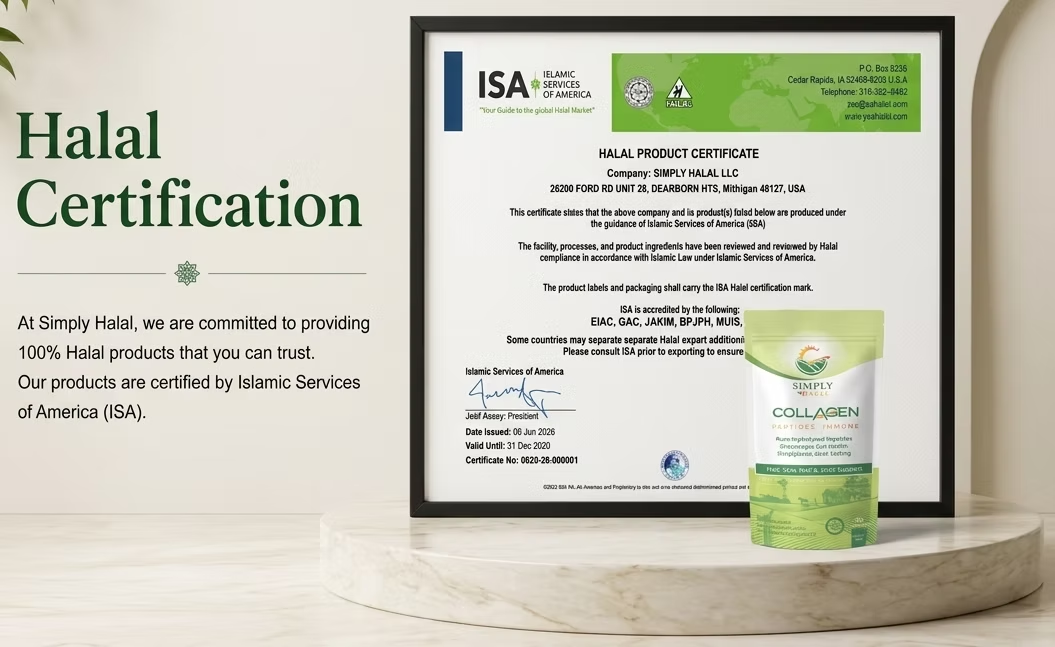
Third-party halal certification. Confirms animal source, processing facility cleanliness, and ingredient integrity. For a supplement you’re taking daily, knowing exactly what you’re consuming matters. Read: Is Collagen Halal?
How to Take It
Daily dose depends on your goal: 5g for bone, 10g for joints and the documented fatigue reduction.
Simply Halal’s Halal Collagen Bovine provides 16g per serving, covering the full clinical range in one scoop.
Pair with Vitamin C. A required cofactor for collagen synthesis. Read: Vitamin C and Collagen
Take before bed for sleep benefits. Take 30-60 minutes before bedtime to maximize the glycine-sleep connection. Mixed into warm water or herbal tea, it doubles as a calming evening ritual.
Consistency above everything. Research showing meaningful results runs 12-24 weeks minimum.
The Simply Halal Approach
Built in a kitchen, not a lab, by a family that spent three years researching what clean nutrition actually looks like.
Co-founder Fatima Hammoud healed her own chronic sinus infections in 2002 using homemade bone broth, without surgery or antibiotics. That healing story, rooted in the belief that all disease begins in the gut, is why gut and connective tissue health have always been at the center of what Simply Halal makes. Read the full story: Why Simply Halal
Every product is halal certified, grass-fed South American bovine, free from maltodextrin and artificial additives, and chef-crafted by Master Chef Maher Fawaz with 28 years of culinary expertise.
- Halal Collagen Bovine — 16g Type I & III hydrolyzed collagen per serving
- Halal Wellness Bundle — collagen and bone broth together at the best available value
“
You are not paying for marketing. You are paying for 3 years of carefully researched product development, hand-picked ingredients chosen to maximize your nutritional benefit, and grass-fed sourcing that most supplement brands avoid because it cuts into their profit margins. Simply Halal was built for your health, not our bottom line.
Chef Maher Fawaz, Founder
✅ READY TO START?
Shop Halal Collagen Bovine → Check simplyhalal.co for current promotions and shipping offers, ships worldwide.
I Am Not Muslim. Does This Apply to Me?
Does collagen and menopause science apply to me if I’m not Muslim?
Yes. Halal certification is not a religious restriction on who may use the product. It provides independent verification that the product meets the halal requirements covered by the certifier’s review. The science covered here applies the same way regardless of your background.
Frequently Asked Questions
Does collagen help during menopause?
Yes. Clinical research supports collagen supplementation for bone density loss, joint pain, sleep disruption and fatigue, and gut lining integrity during menopause. Benefits are most consistent with daily use at 5-15g depending on your goal, for a minimum of 8-12 weeks.
Can collagen help with bone loss after menopause?
Yes. A randomized controlled trial found postmenopausal women taking 5g of specific collagen peptides daily for 12 months showed significantly higher bone mineral density in the spine and femoral neck compared to placebo. A 4-year follow-up showed continued improvement.
Can collagen help with menopause fatigue?
A real randomized trial found 10g of collagen daily for 8 weeks significantly reduced fatigue, likely through improved sleep quality from glycine. Perimenopause is a period when disrupted sleep is extremely common, making this mechanism especially relevant.
How much collagen should I take during menopause?
Clinical studies use 5g for bone density and 10g for joint comfort and fatigue. Simply Halal’s Halal Collagen Bovine provides 16g per serving, covering both thresholds in one scoop.
When should I start taking collagen for menopause?
Starting during perimenopause is more effective since your collagen-producing cells are still active and responsive. That said, the bone density trials were conducted in postmenopausal women, so it’s never too late. Start at whatever stage you’re in.
Is halal certified collagen different from regular collagen for menopause?
The molecular structure is identical. What certification verifies is sourcing, animal husbandry, and processing standards, including confirming no prohibited additives like maltodextrin entered the product. For daily therapeutic supplementation, that transparency is a meaningful quality advantage.
Where can I buy halal certified collagen for menopause in the USA?
Simply Halal offers halal certified collagen sourced from grass-fed cattle, available directly at simplyhalal.co. Ships worldwide.
You might also like
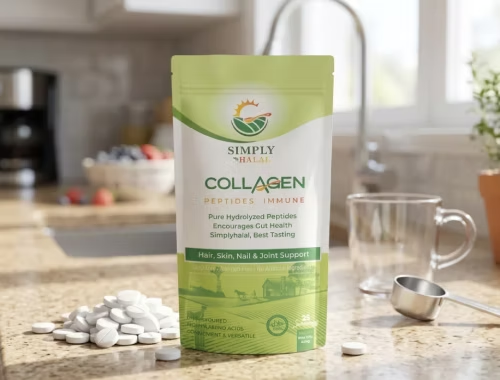
12 Aug 2026
Halal Collagen Tablets vs Powder: Myth vs Truth
Are collagen tablets worth it? Rarely. A single scoop of collagen powder delivers more
1 Aug 2026
Is Bone Broth Halal? The Complete Answer
Is bone broth halal? Yes, but only when the bones come from an animal
25 Jul 2026
Why Simply Halal – The Chef-Crafted Halal Bone Broth Story
Most bone broth powders on the market start with the cheapest available raw material.
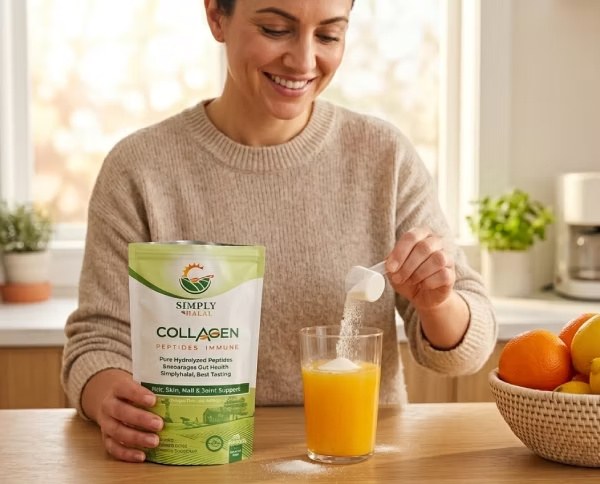
15 Jun 2026
Vitamin C and Collagen: Why Most People Get It Wrong
Vitamin C and collagen have to work together, and most people get this wrong.
13 Jun 2026
Is Bovine Collagen Halal?
Is bovine collagen halal? Yes, it can be. But that answer only holds true
24 May 2026
Best Halal Bone Broth Powder for Athletes
Athletes put more stress on connective tissue than almost any other population. Every training
4 May 2026
Best Halal Bone Broth Powder for Skin
Skin health supplements are one of the most crowded categories in the wellness market.
3 May 2026
Best Halal Bone Broth Powder for Keto
If you are on a ketogenic or low-carb diet, bone broth powder is one
2 May 2026
Best Halal Bone Broth Powder for Joints
Joint pain is one of those problems that announces itself slowly. A knee that
2 May 2026
Best Halal Bone Broth Powder for Weight Loss
The bone broth and weight loss space is full of dramatic claims. Detox diets.