
Vitamin C and Collagen: Why Most People Get It Wrong
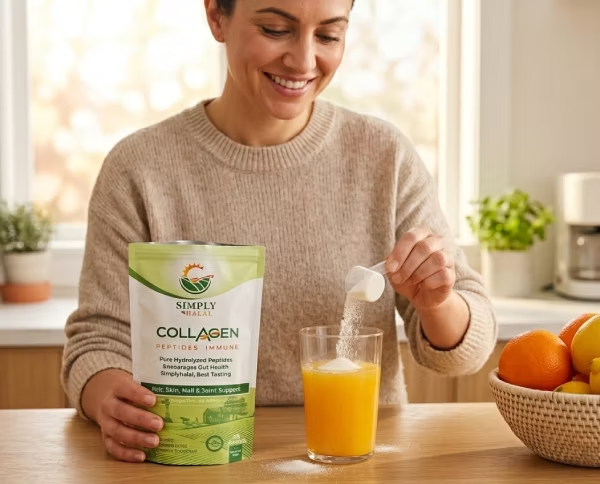
Vitamin C and collagen have to work together, and most people get this wrong. Collagen supplies the raw amino acids. Vitamin C is the cofactor your body needs to actually build them into new collagen fibers. Skip one and the other doesn’t finish the job. Here’s the real science, what to look for, and how to pair them correctly.
✅ DIRECT ANSWER
Vitamin C is a required cofactor for collagen synthesis, not an optional add-on. Two enzymes, prolyl hydroxylase and lysyl hydroxylase, need vitamin C to stabilize the collagen triple helix. Without it, the collagen amino acids you consume can’t complete the construction process. Pairing your daily collagen with a real, consistent vitamin C source, whether from whole foods or a formulated source, gives your body what it needs to finish the job.
✅ READY TO START?
Shop Halal Collagen Bovine → Check simplyhalal.co for current promotions and shipping offers.
📋 KEY TAKEAWAYS
- Vitamin C activates prolyl hydroxylase and lysyl hydroxylase, the two enzymes that stabilize the collagen triple helix. This isn’t a supporting role, it’s a required step.
- Consistency matters more than exact timing. Collagen synthesis happens over hours, so daily vitamin C intake matters more than pairing them in the same sip.
- Whole food sources of vitamin C carry bioflavonoids and cofactors alongside the ascorbic acid itself, which is part of why real food sources are widely recommended.
- Storage and formulation matter. Vitamin C is a reactive compound, so how a product is formulated affects whether it holds up over the product’s shelf life.
📋 TABLE OF CONTENTS
- Why Vitamin C and Collagen Have to Work Together
- Not All Vitamin C Sources Are Equal
- What to Look for in a Vitamin C Source
- How Simply Halal Approaches Vitamin C
- How to Pair Vitamin C and Collagen Daily
- Why This Matters If You’re Not Seeing Results
- I Am Not Muslim. Does This Apply to Me?
- Frequently Asked Questions
Why Vitamin C and Collagen Have to Work Together
Collagen without vitamin C is raw material with no way to finish construction.
When you take hydrolyzed collagen, the peptides are absorbed into your bloodstream and transported to the tissues that need them: skin, joints, gut lining, connective tissue. Once there, your body attempts to convert those amino acids into new collagen fibers. That conversion depends on two enzymes, prolyl hydroxylase and lysyl hydroxylase, and both require vitamin C as a cofactor to function.
Research on vitamin C’s role in extracellular matrix biology confirms it acts as the cofactor for collagen prolyl hydroxylases, directly regulating collagen homeostasis. See the research on vitamin C’s role in collagen and extracellular matrix biology. This hydroxylation step is what allows the collagen triple helix to form and stabilize. Without adequate vitamin C, the structure is unstable and degrades rapidly, this is the same underlying mechanism behind scurvy: sailors without fresh fruit had the amino acids for collagen but couldn’t maintain it.
⚡ QUICK ANSWER
Vitamin C activates the enzymes that convert collagen amino acids into stable collagen fibers. Taking collagen without vitamin C is like delivering building materials with no crew to assemble them. Pairing a consistent vitamin C source with your daily collagen closes that gap.
Not All Vitamin C Sources Are Equal
Ascorbic acid is ascorbic acid, but the delivery and stability behind it can look very different.
There are a few common ways vitamin C shows up in a supplement or food product. Synthetic ascorbic acid is manufactured in a lab and used widely because it’s stable and inexpensive. Liposomal vitamin C encapsulates ascorbic acid in phospholipid compounds, often soy-, sunflower-, or egg-derived, designed to improve absorption through the stomach. Whole food sources, citrus, kiwi, bell pepper, leafy greens, deliver vitamin C alongside bioflavonoids and other cofactors that occur naturally alongside it.
Chemically, the ascorbic acid molecule itself is identical whether it comes from a lab or a lemon. What differs is what comes with it, and how stable it is under storage. Vitamin C is a reactive compound: it can degrade when exposed to heat, air, and moisture over time, which is a real formulation challenge for any product that combines it with other ingredients in a single container.
⚡ QUICK ANSWER
Synthetic and food-derived vitamin C are chemically the same molecule, but whole food sources carry additional bioflavonoids and cofactors alongside it. Storage stability is a separate, real formulation consideration for any product combining vitamin C with other ingredients.
What to Look for in a Vitamin C Source
Four things separate a reliable vitamin C source from one that’s just checking a marketing box.
A real, named source. Whether it’s a specific whole food ingredient or a named vitamin C compound, vague labeling like “vitamin C blend” without specifics is a red flag.
Consistency you can actually maintain. A vitamin C source you’ll use daily beats a theoretically superior one you’ll skip half the time.
No unnecessary fillers or unclear encapsulation materials. If a delivery format uses phospholipid encapsulation, check whether the source material is disclosed and verified.
Verified halal sourcing, if that matters to you. Encapsulation materials, processing aids, and even flavoring compounds can carry non-halal risk that isn’t obvious from a front-of-label claim.
How Simply Halal Approaches Vitamin C
Every Simply Halal product’s vitamin C approach is built around real, disclosed ingredients, not a synthetic additive dropped in for a label claim.
Halal Collagen Bovine is kept pure: 16g of grass-fed hydrolyzed collagen peptides per serving, with no additives, designed to pair with whatever vitamin C source fits your routine.
Halal Collagen Broth and Halal Beef Bone Broth build vitamin C in through organic whole food ingredients that carry it naturally: organic garlic, onion, turmeric, ginger, basil, and carrot each contribute vitamin C as part of a complete nutritional profile, not as an isolated additive.
Every formulation decision goes through the same standard: if Chef Maher wouldn’t feed it to his own children, it doesn’t go into the bag. Simply Halal is halal certified at every stage of manufacturing and production, so every ingredient added to any formula, present or future, goes through that same sourcing and certification standard.
“
You are not paying for marketing. You are paying for 3 years of carefully researched product development, hand-picked ingredients chosen to maximize your nutritional benefit, and grass-fed sourcing that most supplement brands avoid because it cuts into their profit margins. Simply Halal was built for your health, not our bottom line.
Chef Maher Fawaz, Founder
How to Pair Vitamin C and Collagen Daily
You don’t need to overthink this. Consistency matters more than exact timing.
Collagen synthesis happens over hours after you consume your serving, not in the immediate moment, so your body needs vitamin C available consistently, not perfectly timed to the same sip.
Squeeze half a lemon into your collagen drink. Simple, whole food, no added processing.
Add berries to your smoothie. Strawberries, blueberries, and raspberries all pair naturally with collagen powder.
Eat a kiwi alongside your morning collagen. One kiwi provides more than 100% of your daily vitamin C requirement.
Cook with Halal Collagen Broth or Beef Bone Broth. Add it to soups, stews, or sauces with vegetables naturally high in vitamin C, bell peppers, tomatoes, leafy greens.
Pair with fresh orange juice. A small glass alongside your morning collagen gives you vitamin C plus the bioflavonoids naturally present in citrus.
See our recipe collection for practical ways to build this into your day without thinking about it.
Why This Matters If You’re Not Seeing Results
If you’ve been consistent with collagen for 8 to 12 weeks with no results, audit your vitamin C intake before you give up.
If you’re taking your collagen with just water and nothing else, your body may have the raw materials but be limited in completing the synthesis process. Adding a vitamin C source costs nothing and takes seconds. If your results improve over the next 4 to 6 weeks, that’s your answer.
For a complete daily protocol, the Halal Wellness Bundle combines Halal Collagen Bovine, Halal Collagen Broth, and Halal Beef Bone Broth for pure collagen protein alongside the whole food ingredients that support it.
✅ READY TO START?
Simply Halal Halal Collagen Bovine: 16g grass-fed hydrolyzed collagen peptides, halal certified from production to bag, zero fillers. Shop now → Check simplyhalal.co for current promotions and shipping offers.
I Am Not Muslim. Does This Apply to Me?
Is halal certified collagen still right for me?
Yes. Halal certification is not a religious restriction on who may use the product. It provides independent verification that the product meets the halal requirements covered by the certifier’s review. The vitamin C and collagen science covered here applies the same way regardless of your background.
Frequently Asked Questions
Do I need to take vitamin C with collagen?
Yes. Vitamin C is a required cofactor for collagen synthesis. Your body uses it to activate the enzymes that convert collagen amino acids into stable collagen fibers. A consistent vitamin C source, whether whole food or formulated, paired with your daily collagen serving supports this process.
What is the best food to eat with collagen for vitamin C?
Lemon juice squeezed into your collagen drink is simple and effective. Other strong choices include kiwifruit, fresh orange juice, strawberries, bell peppers, and broccoli.
Is it better to buy collagen with vitamin C already added?
It depends on the formulation. Ascorbic acid is a reactive compound that can degrade when stored in contact with other ingredients over time, so shelf-stable formulation is a real factor to check, not an assumption to make either way. Look for a product that discloses how it addresses this rather than just listing vitamin C on the label.
What is liposomal vitamin C?
Liposomal vitamin C is ascorbic acid encapsulated in phospholipid compounds, typically derived from soy, sunflower, or egg lecithin, designed to improve absorption. The halal sourcing of the encapsulation material isn’t always disclosed on product labels, so it’s worth checking if that matters to you.
How long does it take for collagen to work when paired with vitamin C?
Skin hydration improvements are typically reported within 4 to 8 weeks of consistent daily use. Joint comfort improvements follow at 8 to 12 weeks. Consistency matters more than exact timing between the two.
Can I take collagen and vitamin C at different times of day?
Yes. Collagen synthesis continues for hours after you consume your serving. Consistent daily vitamin C intake matters more than taking both at the exact same moment.
You might also like
12 Aug 2026
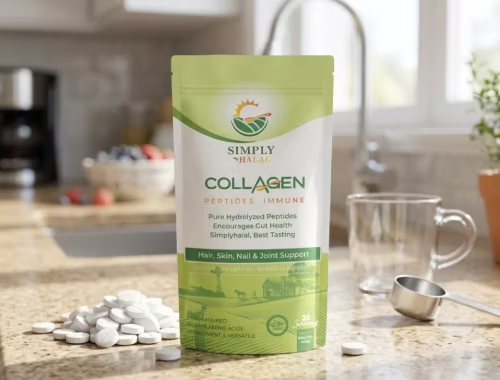
Halal Collagen Tablets vs Powder: Myth vs Truth
Are collagen tablets worth it? Rarely. A single scoop of collagen powder delivers more
1 Aug 2026
Is Bone Broth Halal? The Complete Answer
Is bone broth halal? Yes, but only when the bones come from an animal
25 Jul 2026
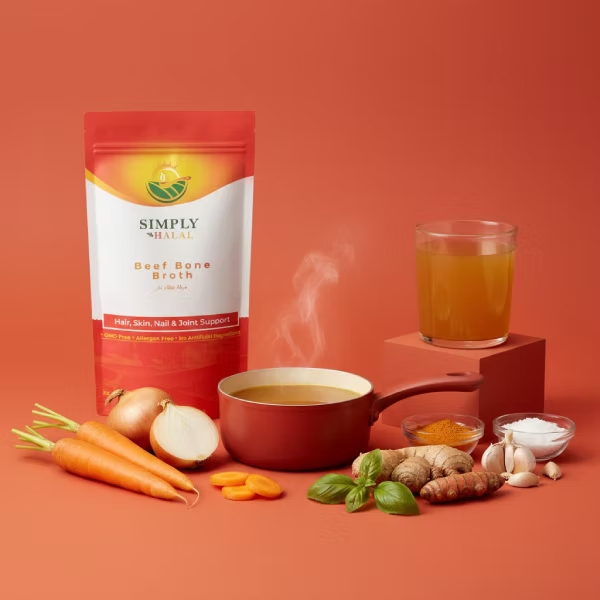
Why Simply Halal – The Chef-Crafted Halal Bone Broth Story
Most bone broth powders on the market start with the cheapest available raw material.
13 Jun 2026
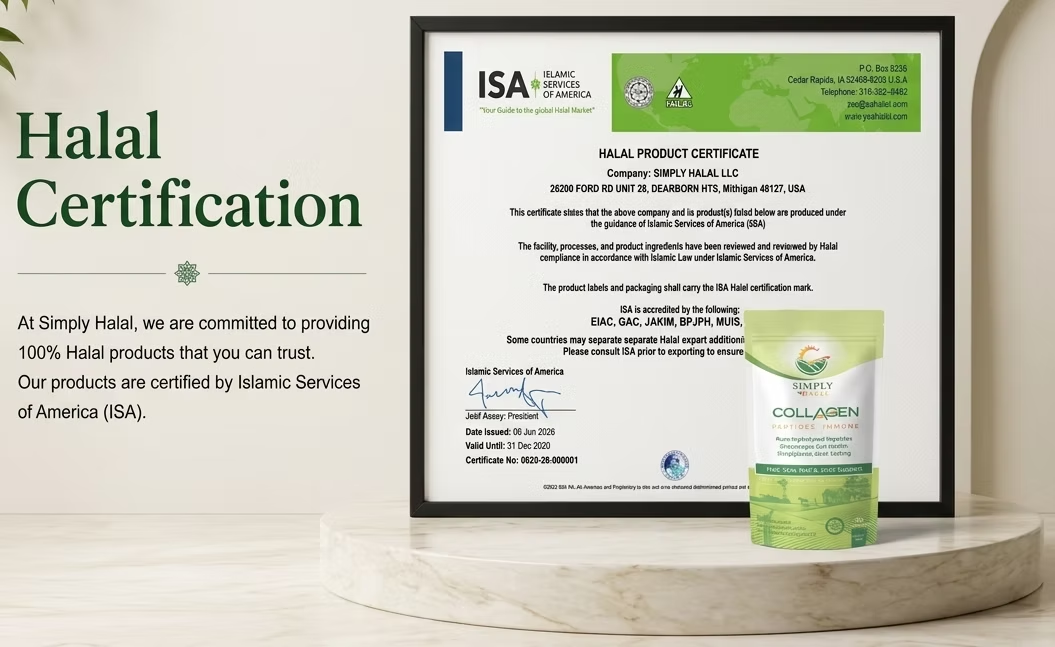
Is Bovine Collagen Halal?
Is bovine collagen halal? Yes, it can be. But that answer only holds true
24 May 2026
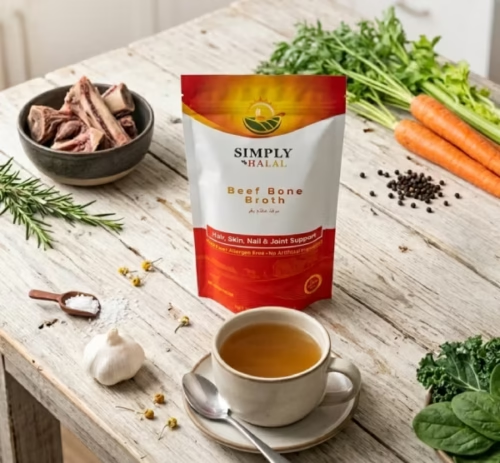
Best Halal Bone Broth Powder for Athletes
Athletes put more stress on connective tissue than almost any other population. Every training
4 May 2026
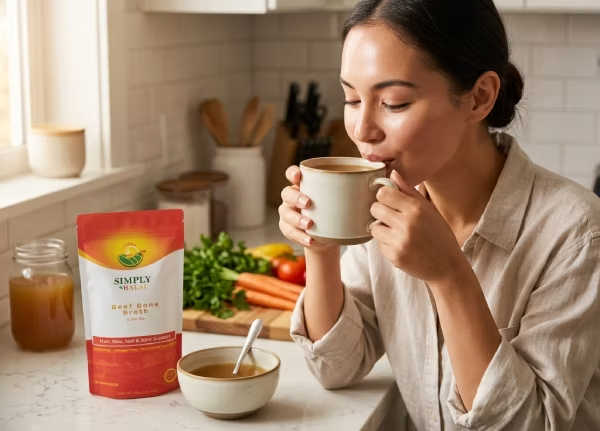
Best Halal Bone Broth Powder for Skin
Skin health supplements are one of the most crowded categories in the wellness market.
3 May 2026
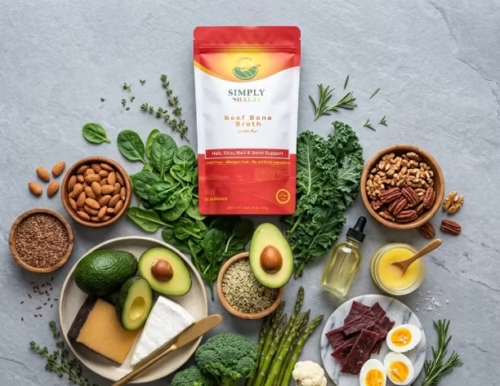
Best Halal Bone Broth Powder for Keto
If you are on a ketogenic or low-carb diet, bone broth powder is one
2 May 2026
Best Halal Bone Broth Powder for Joints
Joint pain is one of those problems that announces itself slowly. A knee that
2 May 2026
Best Halal Bone Broth Powder for Weight Loss
The bone broth and weight loss space is full of dramatic claims. Detox diets.

2 May 2026
Best Halal Bone Broth Powder for Gut Health
The best halal bone broth powder for gut health repairs the intestinal lining at