
Foods That Boost Collagen Production — 13 Incredibly Easy Ingredients
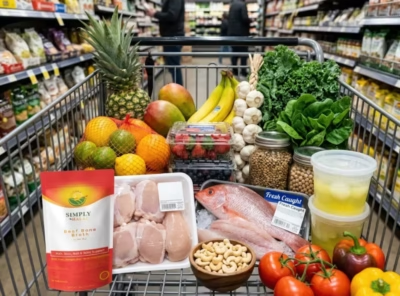
The foods that boost collagen production are the foundation of natural collagen nutrition — but most people researching this topic end up more confused than when they started. Yes, certain foods that boost collagen synthesis exist. Yes, your diet matters enormously. But there is an honest gap between what food can deliver and what your body actually needs after 40 — and understanding that gap is what separates good intentions from real results. This guide covers all 13 foods that boost collagen naturally, exactly what each one does, and the science behind why food alone rarely delivers a therapeutic dose.
✅ Direct Answer
The 13 foods that boost collagen most effectively include halal bone broth, chicken, fish, egg whites, citrus fruits, berries, tropical fruits, garlic, leafy greens, beans, cashews, tomatoes, and bell peppers. These provide either collagen amino acids directly or the cofactors — vitamin C, zinc, copper — your body needs to synthesize new collagen. The honest caveat: getting a consistent therapeutic dose from food alone is difficult, which is why a clean ISA-certified halal collagen supplement is the most reliable daily foundation.
Table of Contents
- Foods That Boost Collagen vs Supplements — What the Science Says
- Halal Bone Broth
- Chicken
- Fish
- Egg Whites
- Citrus Fruits
- Berries
- Tropical Fruits
- Garlic
- Leafy Greens
- Beans
- Cashews
- Tomatoes
- Bell Peppers
- The Gap — Why Foods That Boost Collagen Are Not Always Enough
- Simply Halal — The Clean Supplement Solution
- Frequently Asked Questions
Foods That Boost Collagen vs Supplements — What the Science Actually Says
Before covering the 13 foods that boost collagen, it helps to understand how collagen actually works in the body — because this context changes how you read every item on this list.
Your body cannot absorb collagen in whole form. Whether you eat a bowl of bone broth or take a collagen supplement, the protein must first be broken down into amino acids and small peptides before it can enter your bloodstream. What matters is how efficiently that breakdown happens and how much of the bioactive material actually reaches your tissues.
This is where hydrolyzed collagen peptides have a measurable advantage over food sources. A randomized crossover clinical study published in Frontiers in Nutrition found that hydrolyzed collagen achieved significantly higher plasma concentrations of the key bioactive peptides Pro-Hyp and Hyp-Gly compared to non-hydrolyzed sources. These peptides signal fibroblasts — your collagen-producing cells — to synthesize new collagen. (Frontiers in Nutrition, 2024)
A separate review noted that while homemade bone broth may have higher amino acid content than some supplements, absorption is slower due to fat content — and commercial bone broths often contain far less collagen than homemade versions due to shorter simmer times and lower bone quality. (Nutritional Medicine Institute)
The conclusion is not “food is useless.” It is “food builds the foundation, supplements ensure the dose.” The 13 foods that boost collagen below are genuinely valuable. The supplement gap section explains honestly when food alone is not sufficient.
⚡ Quick Answer
Your body needs amino acids — glycine, proline, hydroxyproline — from collagen-rich foods AND cofactors — vitamin C, zinc, copper — from fruits and vegetables to synthesize new collagen. Foods that boost collagen provide both, but inconsistently. Clinical trials showing measurable benefits use 5–15g of hydrolyzed collagen peptides daily, a dose that is difficult to achieve reliably from food alone.
Halal Bone Broth
Halal bone broth is the most direct food that boosts collagen available. Made by slow-simmering halal-certified grass-fed beef bones for 12–24 hours, a quality bone broth releases collagen, gelatin, glycine, proline, hydroxyproline, and naturally occurring glycosaminoglycans into the liquid — the exact compounds your joints, gut, and skin need.
Quality is everything here. Homemade bone broth from ISA-certified grass-fed bones delivers the richest amino acid profile. Commercial carton broths are often made with shorter simmer times and lower quality bones — producing a fraction of the collagen content. And many commercial powders use maltodextrin as a carrier, which undermines the gut health benefits entirely.
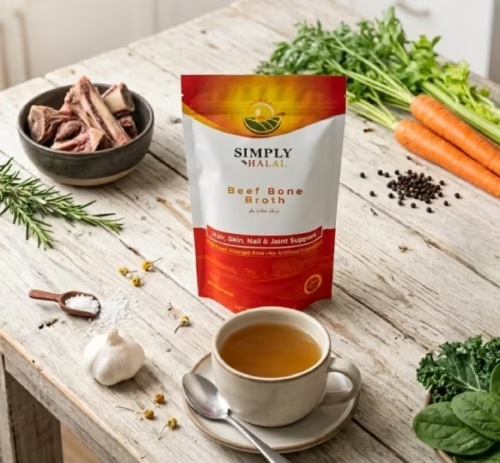
Simply Halal’s Halal Beef Bone Broth is slow-simmered, ISA-certified, grass-fed, and completely free from maltodextrin — the closest thing to homemade in a shelf-stable powder. For recipes using bone broth as a food base, visit our recipes page.
Chicken
Chicken is one of the richest whole-food sources of collagen — which is why many collagen supplements are derived from it. The connective tissue, skin, and cartilage of chicken contain high concentrations of Type II collagen, which specifically supports joint cartilage. Thigh meat contains more collagen than breast meat, and slow-cooking with the bones and skin on extracts the most collagen into your meal.
For halal consumers, ensure your chicken carries certification from a named halal authority. Zabiha-slaughtered chicken from a certified source is the standard to look for — both for religious compliance and for supply chain integrity.
Fish
Fish provides marine collagen — primarily Type I — which research suggests is highly bioavailable. A 2023 review found marine collagen particularly beneficial for skin health and elasticity. The catch: collagen is concentrated in the parts most people don’t eat — scales, skin, and bones. The flesh alone provides relatively little collagen.
If you eat fish regularly with the skin on, you are getting meaningful collagen support. If you prefer fillets, the collagen benefit is limited. For a full comparison of marine vs bovine collagen sources, read: Bovine vs Marine Collagen — Which Is Better for Halal Diets?
Egg Whites
Egg whites don’t contain collagen directly but are rich in proline — one of the three primary amino acids required for collagen synthesis. Proline gives collagen its structural stability and helps form the tight junctions in your gut lining. A diet consistently including egg whites provides the raw material your body needs to build new collagen fibers daily.
Citrus Fruits
Oranges, grapefruits, lemons, and limes are among the best sources of vitamin C — a required cofactor for collagen synthesis. Without adequate vitamin C, your body cannot convert collagen amino acids into new collagen fibers regardless of how much collagen you consume from food or supplements.
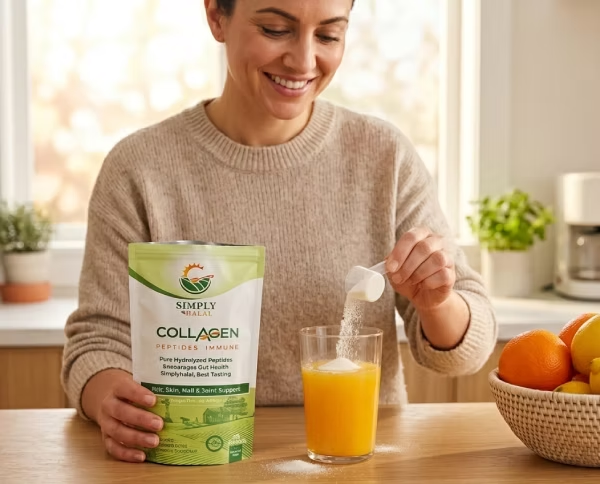
This is why we always recommend pairing your daily collagen supplement with a vitamin C source. A glass of orange juice, a squeeze of lemon in your collagen water, or a handful of berries — any of these ensures your body has the cofactor it needs to put the collagen peptides to work.
✅ Direct Answer
Vitamin C is not optional for collagen production. It is the essential cofactor that converts collagen amino acids into new collagen fibers in your skin, joints, and bones. Always pair your collagen intake — whether from foods that boost collagen or from a supplement — with a vitamin C source for maximum benefit.
Berries
Strawberries, blueberries, raspberries, and blackberries are excellent vitamin C sources — often containing more per gram than citrus fruits. They also deliver antioxidants that protect existing collagen from oxidative damage. Free radicals degrade collagen over time, and antioxidants are your defence. A handful of berries daily provides both the collagen synthesis cofactor and the protective antioxidant layer your skin and joints need.
Tropical Fruits
Mango, kiwi, pineapple, and guava round out the vitamin C-rich fruit category. Guava also contains zinc — another cofactor in collagen production. Pineapple contains bromelain, an enzyme that supports anti-inflammatory processes in connective tissue. These fruits are easy to incorporate into smoothies, breakfast bowls, or alongside your morning collagen supplement to maximize the collagen synthesis effect.
Garlic
Garlic is high in sulfur — a trace mineral that plays a role in collagen synthesis and helps prevent its breakdown. Sulfur supports the cross-linking of collagen fibers, giving collagen its structural strength. You need meaningful amounts of garlic regularly to see a collagen-specific benefit, but used consistently in cooking it is a genuine ally for collagen support and one of the most accessible foods that boost collagen indirectly.
Leafy Greens
Spinach, kale, Swiss chard, and other dark leafy greens contain chlorophyll — the compound that gives them their deep green color and that research has linked to increased pro-collagen precursors in the skin. Leafy greens are also rich in vitamin C and antioxidants, making them a triple-action entry on this list of foods that boost collagen. They are among the most nutrient-dense foods available and universally halal.
Beans
Beans are a significant source of lysine — the third key amino acid for collagen synthesis alongside glycine and proline. Many varieties are also rich in copper, another essential cofactor in collagen production. For anyone following a halal diet, beans are an accessible and affordable way to ensure the complete amino acid profile needed for collagen synthesis is consistently present in the diet.
Cashews
Cashews contain both zinc and copper — two minerals that function as cofactors in collagen production. Zinc supports the activity of the enzymes that build collagen fibers, while copper helps cross-link collagen and elastin for structural stability. A small handful of cashews daily provides a meaningful contribution to your collagen cofactor intake and makes them one of the most convenient foods that boost collagen passively.
Tomatoes
Tomatoes are a reliable vitamin C source — a medium tomato provides a meaningful portion of your daily requirement. They also contain lycopene, a powerful antioxidant that specifically protects skin collagen from UV-related oxidative damage. Research published in Oxidative Medicine and Cellular Longevity has linked lycopene to reduced collagen degradation in skin cells. (PubMed: 36204551) Eaten raw, cooked, or as a sauce — all formats retain meaningful vitamin C and lycopene content.
Bell Peppers
Bell peppers — particularly red and yellow varieties — are among the highest vitamin C foods available, containing more vitamin C per gram than most citrus fruits. They also contain capsaicin, which has anti-inflammatory properties relevant to joint and connective tissue health. Add them raw to salads for maximum vitamin C content or lightly cooked in stir-fries. They are one of the most potent vitamin C-rich foods that boost collagen synthesis on this entire list.
⚡ Quick Answer
The 13 foods that boost collagen split into two categories: direct sources — bone broth, chicken, fish, egg whites — that provide collagen amino acids, and cofactor sources — citrus, berries, tropical fruits, garlic, leafy greens, beans, cashews, tomatoes, bell peppers — that give your body what it needs to synthesize new collagen. You need both categories working together every day.
The Gap — Why Foods That Boost Collagen Are Not Always Enough
Here is the honest conversation that most food-focused articles avoid having.
The clinical research showing measurable improvements in skin elasticity, bone density, and joint pain uses doses of 5–15g of hydrolyzed collagen peptides per day, taken consistently for 8–24 weeks. A cup of bone broth contains roughly 6–12g of collagen — but with lower bioavailability than hydrolyzed supplements because the collagen is in whole protein form that must be fully broken down before absorption.
To consistently hit the therapeutic threshold from foods that boost collagen alone, you would need to consume large amounts of quality bone broth, chicken with connective tissue, or fish with skin every single day — while also ensuring adequate vitamin C, zinc, and copper intake from the cofactor foods. For most people, this level of dietary consistency is not realistic to maintain long-term.
Hydrolyzed collagen peptides solve this problem. They are pre-broken into small peptide chains — primarily the bioactive dipeptide Pro-Hyp and tripeptide Gly-Pro-Hyp — that are absorbed rapidly and efficiently. Research shows these specific peptides reach the bloodstream within one hour of ingestion and directly signal fibroblasts to produce new collagen. This mechanism is difficult for whole food collagen to replicate at practical daily serving sizes.
The ideal approach is not food OR supplement. It is food AND supplement. The 13 foods that boost collagen above build a strong nutritional foundation. A clean certified halal collagen supplement fills the therapeutic gap that food cannot consistently cover on its own.
For a deeper look at this distinction, read: Collagen Food Supplement vs Protein Powder — The Real Difference. For the complete guide to halal collagen powder options: Best Halal Collagen Powder 2026 Guide.
Simply Halal — The Clean Supplement That Fills the Gap
Most collagen supplements on the market use maltodextrin as a carrier, source their collagen from corn-fed cattle in China, and carry no independent halal certification. You cannot verify what you are actually consuming — which defeats the purpose of choosing a clean supplement over whole foods.
Simply Halal was built to solve exactly this problem. Chef Maher Fawaz spent three years and conducted 160+ lab tests before a single bag was sold — sourcing exclusively from grass-fed cattle in Argentina, partnering with the MSU Product Center Innovation, and achieving ISA certification covering the full supply chain from animal to finished product.
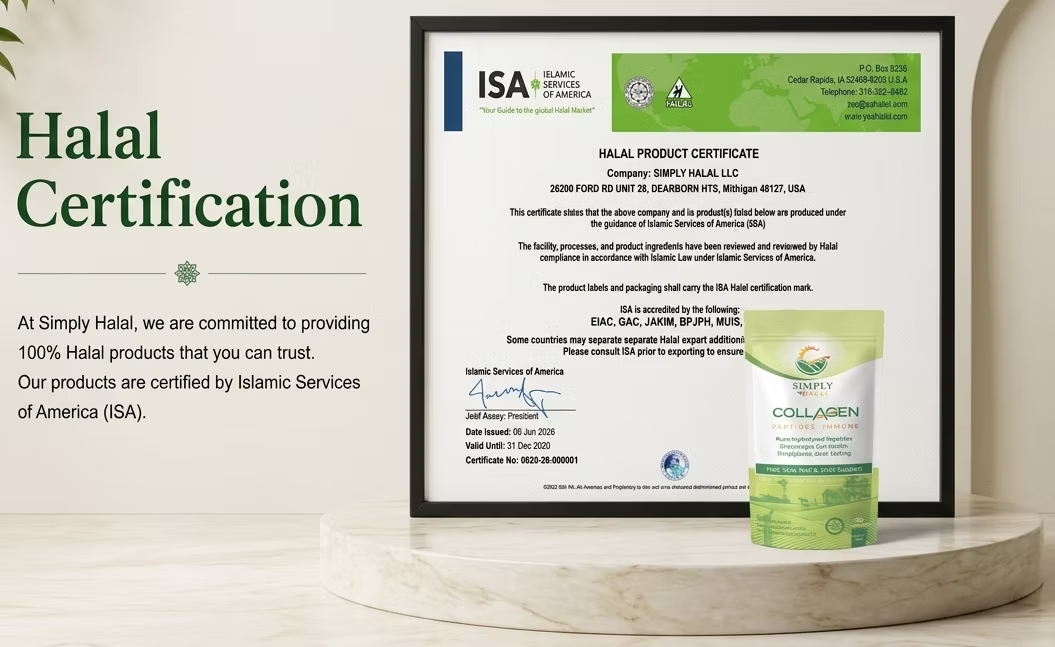
Every Simply Halal product is ISA-certified halal — verifiable at isahalal.com, grass-fed bovine from Argentina, zero maltodextrin, zero MSG, zero fillers, hydrolyzed for maximum bioavailability, and chef-crafted from real food standards rather than lab-created formulas.
The range covers every collagen goal:
- Halal Collagen Bovine — 16g Type I & III hydrolyzed collagen per serving, unflavored, mixes into anything
- Halal Collagen Broth — 14g collagen with organic herbs and vegetables, chef-crafted for sipping or cooking
- Halal Beef Bone Broth — slow-simmered, 13g protein, the whole-food bone broth experience in powder form
- Wellness Bundle — all three products at the best available price, free shipping nationwide
For the complete science on halal collagen peptides: Halal Collagen Peptides: 7 Benefits for Skin, Hair & Joints. For the full halal collagen guide: Halal Collagen: The Complete Guide 2026. To understand why we never use maltodextrin in any product: Side Effects of Maltodextrin.
Frequently Asked Questions — Foods That Boost Collagen
What foods boost collagen production naturally?
The 13 foods that boost collagen production most effectively include halal bone broth, chicken, fish, egg whites, citrus fruits, berries, tropical fruits, garlic, leafy greens, beans, cashews, tomatoes, and bell peppers. These provide either direct collagen amino acids or the cofactors — vitamin C, zinc, copper — required for your body to synthesize new collagen daily.
Can you get enough collagen from food alone?
It is difficult to consistently hit the therapeutic dose. Clinical research uses 5–15g of hydrolyzed collagen peptides daily. A cup of bone broth contains 6–12g of collagen but with lower bioavailability than hydrolyzed supplements. Eating the right foods that boost collagen every day is essential — but a clean certified supplement fills the gap that food alone cannot reliably cover.
Is bone broth a good source of collagen?
Yes — but quality matters enormously. Homemade bone broth from certified halal grass-fed bones is a genuine source of collagen amino acids, glycine, proline, and minerals. Commercial versions often contain far less collagen. Simply Halal’s Halal Beef Bone Broth delivers a consistent measured dose without the variability of homemade or the fillers of commercial brands.
Why is vitamin C important for collagen production?
Vitamin C is a required cofactor for collagen synthesis. Without it, your body cannot convert collagen amino acids into new collagen fibers regardless of how much collagen you consume. Always pair your collagen intake with a vitamin C source — citrus juice, berries, or a vitamin C supplement — for optimal results. This applies to both foods that boost collagen and supplements.
What is the difference between collagen from food and collagen supplements?
Food collagen is whole protein your digestive system breaks down into amino acids before absorption. Hydrolyzed collagen peptides in supplements are pre-broken into smaller chains absorbed more rapidly and efficiently. Research shows hydrolyzed collagen achieves higher plasma concentrations of the key bioactive peptides compared to food sources. Both are valuable — foods that boost collagen build the foundation, supplements ensure the therapeutic dose. See: Halal Bone Broth Powder vs Liquid — Which Actually Works Better?
You might also like
12 Aug 2026
Halal Collagen Tablets vs Powder: Myth vs Truth
Are collagen tablets worth it? Rarely. A single scoop of collagen powder delivers more
1 Aug 2026
Is Bone Broth Halal? The Complete Answer
Is bone broth halal? Yes, but only when the bones come from an animal
25 Jul 2026
Why Simply Halal – The Chef-Crafted Halal Bone Broth Story
Most bone broth powders on the market start with the cheapest available raw material.
15 Jun 2026
Vitamin C and Collagen: Why Most People Get It Wrong
Vitamin C and collagen have to work together, and most people get this wrong.
13 Jun 2026
Is Bovine Collagen Halal?
Is bovine collagen halal? Yes, it can be. But that answer only holds true
24 May 2026
Best Halal Bone Broth Powder for Athletes
Athletes put more stress on connective tissue than almost any other population. Every training
4 May 2026
Best Halal Bone Broth Powder for Skin
Skin health supplements are one of the most crowded categories in the wellness market.
3 May 2026
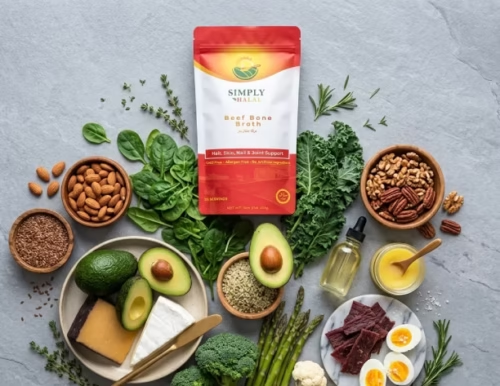
Best Halal Bone Broth Powder for Keto
If you are on a ketogenic or low-carb diet, bone broth powder is one
2 May 2026
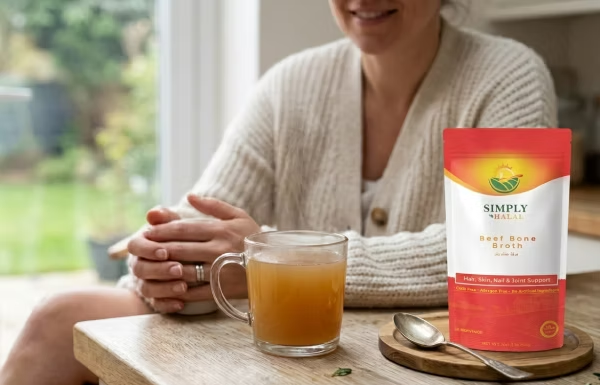
Best Halal Bone Broth Powder for Joints
Joint pain is one of those problems that announces itself slowly. A knee that
2 May 2026
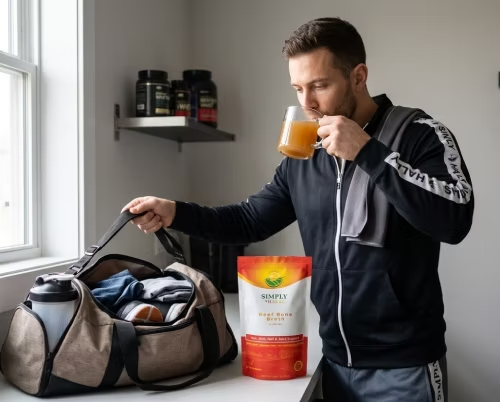
Best Halal Bone Broth Powder for Weight Loss
The bone broth and weight loss space is full of dramatic claims. Detox diets.