
Is Collagen Halal? What Your Supplement Brand Is Hiding
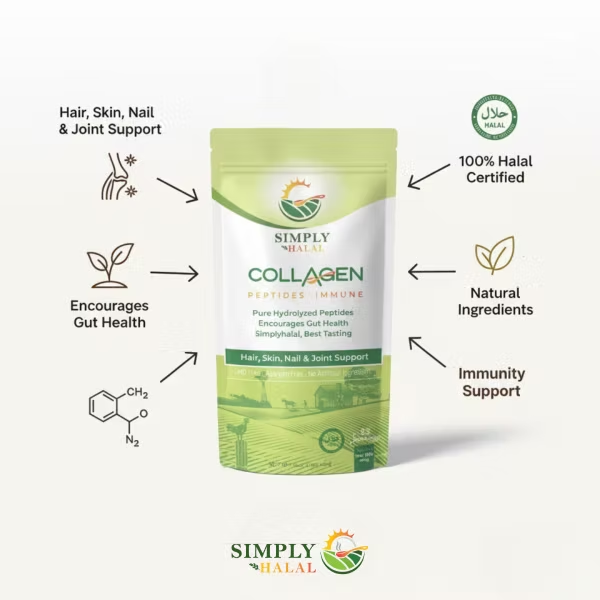
Is collagen halal? It depends entirely on the source animal, how it was slaughtered, and how it was processed. Pork-derived collagen is always haram. Bovine and marine collagen can be halal, but only when certified by an independent body that audits the full supply chain, not just printed on a label.
✅ DIRECT ANSWER
Collagen is halal when it comes from a permissible animal, slaughtered according to Islamic rites, and processed without prohibited solvents or cross-contamination. A self-declared label is not enough. Genuine halal collagen carries third-party certification from a recognized body such as the Islamic Services of America (ISA). Shop Halal Collagen Bovine →
📋 KEY TAKEAWAYS
- Porcine collagen is always haram. Bovine and marine collagen can be halal, but only with verified certification covering the source, slaughter, and processing.
- A halal claim without a named certifying body cannot be verified and should be treated as unconfirmed.
- Even bovine or marine collagen can lose halal status if processed with alcohol-based solvents or cross-contamination, regardless of the animal source.
- “Vegan collagen” and “plant-based collagen” don’t contain actual collagen. They contain precursor ingredients that support the body’s own production.
📋 TABLE OF CONTENTS
- Why Most People Never Think to Ask This Question
- What Is Collagen and Why Do We Need It
- Is Collagen Halal or Haram? The Full Breakdown
- What Third-Party Halal Certification Actually Covers
- Why Halal Certification Matters Beyond Religion
- How to Check If Your Current Collagen Is Halal
- We Are Not Just Another Private Label Brand
- I Am Not Muslim. Does This Apply to Me?
- Frequently Asked Questions
Why Most People Never Think to Ask This Question
Collagen marketing focuses almost entirely on results. Sourcing rarely gets mentioned because it doesn’t sell products on its own.
Collagen has exploded in popularity over the last decade, showing up in protein powders, beauty supplements, bone broths, and coffee creamers. What the label usually doesn’t tell you: collagen is an animal-derived protein, and not all animals are treated equally from a sourcing perspective. The most common and cheapest source is porcine, derived from pig skin and bones. Many mass-market products use porcine collagen without clearly stating it. Others use bovine collagen but source it from animals that weren’t slaughtered according to halal standards or processed in clean facilities.
Even products using bovine or marine collagen may be processed with alcohol-based solvents, a step that violates halal standards regardless of the animal source. The question of whether collagen is halal isn’t as simple as checking the species listed on the label.
What Is Collagen and Why Do We Need It
Collagen is the scaffolding your body runs on, and production slows starting in your mid-twenties.
✅ DIRECT ANSWER
Collagen is the most abundant protein in the human body, making up approximately 30% of total protein mass. It forms the structural foundation of skin, bones, joints, muscles, tendons, and gut lining. After age 25, the body produces less of it naturally.
It keeps skin firm and hydrated, cushions joints, supports bones, and maintains gut lining integrity. When collagen production slows, the effects show up as fine lines, stiff joints, brittle nails, and thinning hair.
Hydrolyzed collagen peptides, the supplemental form, break into small protein chains the body absorbs rapidly. Research in the Journal of Drugs in Dermatology found consistent daily supplementation improves skin hydration and elasticity within 4 to 8 weeks. A trial in Current Medical Research and Opinion found significant joint pain reduction in athletes after 24 weeks of daily supplementation. The science is strong. The sourcing question is what separates a genuinely clean product from one that just looks clean on the label.
Is Collagen Halal or Haram? The Full Breakdown
Permissibility depends on three factors: the source animal, the slaughter method, and the processing environment.
✅ DIRECT ANSWER
Collagen is neither automatically halal nor automatically haram. Porcine collagen is always haram. Bovine and marine collagen can be halal, but only with verified third-party certification confirming compliance at every stage of production.
Porcine Collagen, Always Haram
Pig-derived collagen is strictly prohibited. It’s widely used in the supplement industry because it’s cheap and abundant. Many products don’t clearly identify the source on the front label, you have to read the full ingredients list or contact the manufacturer directly. If a product simply says “collagen” without specifying the source, treat it as unverified.
Bovine Collagen, Halal When Properly Certified
Bovine collagen, derived from cow hides, bones, and connective tissue, contains Type I and Type III collagen supporting skin structure, joint health, and gut integrity. For bovine collagen to be halal, the cattle must be slaughtered according to zabiha standards, and the collagen must be extracted and processed in a facility free from cross-contamination with prohibited substances.
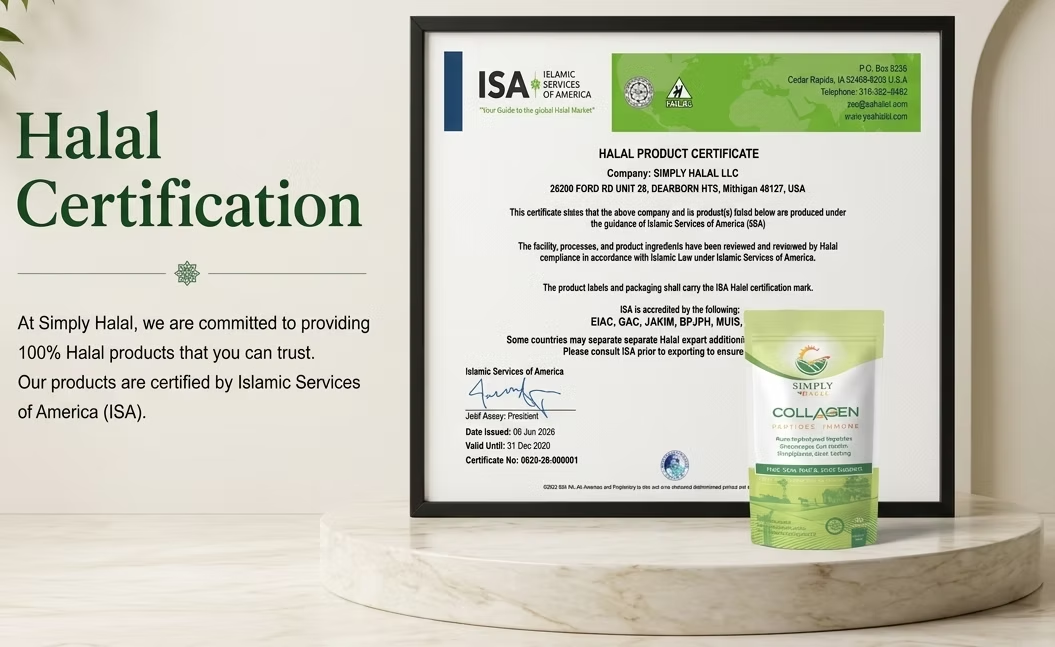
Simply Halal sources its bovine collagen from grass-fed South American cattle and holds certification from the Islamic Services of America (ISA), one of North America’s most respected halal certification bodies. ISA audits the supply chain within the scope of what its certification covers, not just the finished product.
Marine Collagen, Halal With Conditions
Marine collagen, derived from fish scales and skin, is generally considered halal since fish is a permissible species. The processing environment still matters, cross-contamination with pork-derived ingredients or alcohol-based solvents during processing can compromise halal status. Always verify marine collagen carries third-party certification rather than assuming it’s automatically compliant.
Plant-Based Collagen, Not Actual Collagen
Products marketed as “vegan collagen” or “plant-based collagen” don’t actually contain collagen. They contain ingredients that may support the body’s own collagen production, like Vitamin C and amino acid precursors. These are halal by nature but shouldn’t be confused with hydrolyzed collagen peptides, which deliver a fundamentally different nutritional benefit.
What Third-Party Halal Certification Actually Covers
This is the distinction most consumers miss: a brand can print “halal” on packaging without any independent verification whatsoever.
✅ DIRECT ANSWER
Genuine third-party halal certification from a body like ISA covers the source animal, the slaughter method, the extraction process, and the processing facility, within the scope documented by that certifier. Simply Halal is halal certified at every stage of manufacturing and production, including the packaging itself, which is independently certified free of animal byproducts. It’s a supply chain audit, not a label a brand prints on its own packaging.
ISA certification requires the manufacturer to submit to regular audits, maintain documented halal compliance records, and meet standards covering the stages within its certification scope. You can verify Simply Halal’s certification directly on our halal certification page. That level of transparency isn’t available with self-declared labels.
For a complete guide to halal collagen types, benefits, and how to choose, read our Halal Collagen Complete Guide.
Why Halal Certification Matters Beyond Religion
In an industry where labeling regulations are loose, halal certification provides supply chain accountability that benefits everyone.
⚡ QUICK ANSWER
Halal certification is a rigorous sourcing and processing standard within the scope the certifier documents. Processing facilities must maintain strict standards against cross-contamination, and production excludes alcohol-based solvents, something many health-conscious consumers actively avoid regardless of faith. An independent third party verifies this rather than the brand simply making the claim itself.
Simply Halal was built not just for Muslim consumers but for anyone who refuses to compromise on what goes into their body.
How to Check If Your Current Collagen Is Halal
If you’re currently taking a collagen supplement, use this checklist to verify its halal status.
Check the source. The label should clearly state bovine, marine, or another permissible source. If it just says “collagen,” contact the manufacturer.
Look for a named certifying body. The packaging should name the halal authority, such as ISA, ISNA, or HFA. A logo without a named body is not verified certification.
Verify independently. Go to the certifying body’s website and confirm the brand appears in their certified products database.
Check the processing. Contact the manufacturer and ask whether alcohol-based solvents are used in extraction.
Read the full ingredients list. Look for any gelatin listed without a halal source designation, a common red flag in collagen-containing products.
We Are Not Just Another Private Label Brand
Most halal collagen brands online are private label operations, someone buys bulk collagen powder, adds a logo, and calls it a product.
That’s a real, common model in this industry, and it’s not necessarily a problem on its own, but it does mean the brand never touched the sourcing, the formulation, or the manufacturing itself. Simply Halal was built differently, from the ground up, not outsourced at any stage:
Halal certified from production to bag. Not just the finished product, the packaging itself is independently certified free of animal byproducts. That’s a level of specificity most brands in this category don’t make a claim about at all.
Chef Maher personally verified the sourcing. He traveled to South America to confirm the grass-fed cattle sourcing directly, rather than accepting a supplier’s word for it, before a single bag was formulated. He spent three years developing the formulas through 160+ lab tests, and built every recipe from scratch. If he would not feed it to his own children, he will not feed it to the Simply Halal community. Read the full story: Why Simply Halal
Manufactured at a Michigan-based GMP-certified facility. Not a vague “Made in USA” claim with no further detail, a specific, traceable production standard.
✅ DIRECT ANSWER
Simply Halal Collagen Bovine is halal certified from production to bag, sourced from grass-fed South American cattle, processed without alcohol-based solvents, and free from fillers, maltodextrin, and artificial additives. It delivers 16g of hydrolyzed Type I and III collagen per serving.
Three products, different preferences and goals:
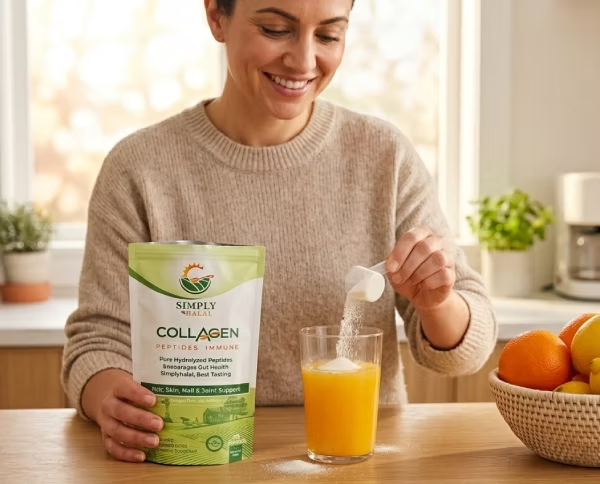
Halal Collagen Bovine is pure unflavored hydrolyzed collagen peptides. Tasteless, dissolves instantly, 16g of protein per serving.
Halal Collagen Broth combines collagen peptides with organic herbs and vegetables for a savory, warming drink.
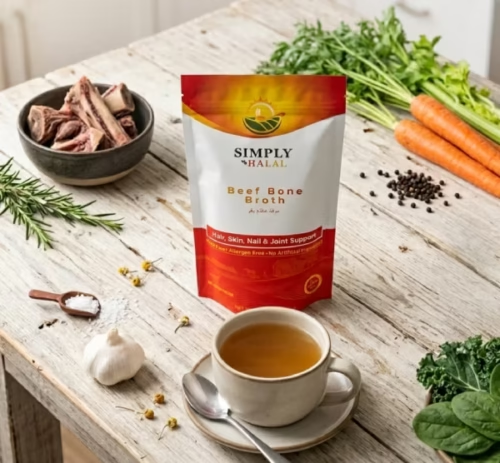
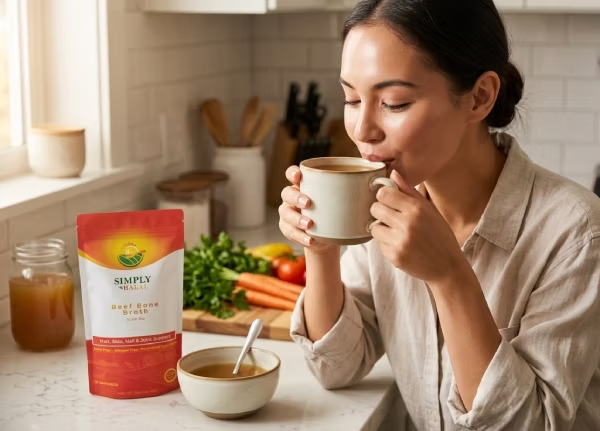
Halal Beef Bone Broth is slow-simmered beef bone broth for gut health, joint recovery, and immune support.
The Halal Wellness Bundle combines collagen and bone broth for a complete daily system. The Joint and Gut Bundle targets joint and gut support specifically, and the Appetite Control Bundle delivers a high protein daily protocol. For real meal ideas, visit our recipe collection.
“
You are not paying for marketing. You are paying for 3 years of carefully researched product development, hand-picked ingredients chosen to maximize your nutritional benefit, and grass-fed sourcing that most supplement brands avoid because it cuts into their profit margins. Simply Halal was built for your health, not our bottom line.
Chef Maher Fawaz, Founder
✅ READY TO START?
Shop Halal Collagen Bovine → Check simplyhalal.co for current promotions and shipping offers. Sign up on simplyhalal.co with your email and phone number for exclusive coupon discounts.
I Am Not Muslim. Does This Apply to Me?
Can non-Muslims use halal collagen?
Yes, and many do. Halal certification is not a religious restriction on who may use the product. It provides independent verification that the product meets the halal requirements covered by the certifier’s review. For health-conscious consumers who care about ingredient transparency and sourcing, halal certification provides exactly the kind of supply chain verification most brands can’t offer, regardless of religious background.
Frequently Asked Questions
Is collagen halal or haram?
Collagen is neither automatically halal nor haram, it depends on the source and processing. Porcine collagen is always haram. Bovine and marine collagen are halal only when sourced from permissible animals slaughtered according to Islamic rites and processed in certified halal facilities. Always look for independent third-party certification rather than a self-declared label.
Is bovine collagen halal?
Bovine collagen can be halal, but only when the cattle are slaughtered according to zabiha standards and the collagen is extracted and processed in a facility certified free from cross-contamination. Simply Halal Collagen Bovine carries certification covering every stage of production, from the farm to the finished product.
Is marine collagen halal?
Marine collagen derived from permissible fish species is generally considered halal. The processing environment still matters, alcohol-based solvents or cross-contamination during processing can compromise halal status. Verify that marine collagen products carry named third-party certification rather than assuming compliance based on source alone.
What makes collagen not halal?
Three things can make collagen not halal: deriving it from a prohibited source such as pork, slaughtering the source animal without following Islamic rites, or processing it in a facility that uses alcohol-based solvents or risks cross-contamination with haram substances. Any one of these is sufficient to compromise halal status.
Is gelatin the same as collagen?
Not exactly. Both come from animal connective tissue, but they’re processed differently. Gelatin forms a gel when dissolved in water. Collagen peptides break down into smaller chains that dissolve completely without gelling, making them easier to absorb. Both require halal certification if sourced from animals.
How do I know if my collagen is genuinely halal certified?
Look for the name of a recognized certifying authority on the packaging, such as ISA, ISNA, or HFA. Then verify the brand appears in that organization’s certified products list. Self-declared halal labels without a named certifying body are not equivalent to genuine third-party certification.
Does halal collagen work as well as regular collagen?
Yes. The clinical benefits of collagen supplementation come from the hydrolyzed peptides themselves, not the certification status. What halal certification adds is assurance the sourcing and processing meet rigorous independent standards. The effective dose depends on your goal: 2.5g for skin, 5g for bone density, 10g for joint comfort, 15g for muscle and body composition. Simply Halal delivers 16g per serving, clearing every threshold. Read more: 7 Science-Backed Benefits of Halal Collagen Peptides.
Is collagen a protein?
Yes, and the most abundant one in the human body, making up approximately 30% of total protein mass. As a supplement, it’s hydrolyzed into smaller peptide chains for easier absorption. Collagen is not a complete protein since it’s low in tryptophan, so it works best alongside a balanced diet rather than as a standalone protein source.
Is collagen bad for your kidneys?
No, for healthy individuals, collagen supplementation is not harmful to kidneys. Collagen peptides are a food-derived protein processed the same way as dietary protein from meat or fish. The concern about protein and kidneys applies primarily to people with pre-existing chronic kidney disease. If you have a diagnosed kidney condition, consult your healthcare provider before adding any protein supplement.
Where can I buy genuinely halal certified collagen in the USA?
Simply Halal ships across the USA with orders processed within 1 to 2 business days. Every product is halal certified, sources from grass-fed bovine cattle, and ships from a Michigan-based GMP-certified facility. Browse the full range at the Simply Halal shop or read our guide on the best halal collagen powder.
Related reading:
- Best Halal Collagen Powder | Halal Certified
- Halal Collagen Peptides Benefits
- Halal Collagen: The Complete Guide
- Halal Collagen Tablets vs Powder: Myth vs Truth
- Bovine vs Marine Collagen: Which Is Better?
- Non-Halal Ingredients in Supplements
- Vitamin C and Collagen: Why Most People Get It Wrong
- Halal Collagen and Menopause: What the Science Shows
- Halal Collagen for Women Over 40: Skin, Hair & Nails
You might also like
12 Aug 2026
Halal Collagen Tablets vs Powder: Myth vs Truth
Are collagen tablets worth it? Rarely. A single scoop of collagen powder delivers more
1 Aug 2026
Is Bone Broth Halal? The Complete Answer
Is bone broth halal? Yes, but only when the bones come from an animal
25 Jul 2026
Why Simply Halal – The Chef-Crafted Halal Bone Broth Story
Most bone broth powders on the market start with the cheapest available raw material.
15 Jun 2026
Vitamin C and Collagen: Why Most People Get It Wrong
Vitamin C and collagen have to work together, and most people get this wrong.
13 Jun 2026
Is Bovine Collagen Halal?
Is bovine collagen halal? Yes, it can be. But that answer only holds true
24 May 2026
Best Halal Bone Broth Powder for Athletes
Athletes put more stress on connective tissue than almost any other population. Every training
4 May 2026
Best Halal Bone Broth Powder for Skin
Skin health supplements are one of the most crowded categories in the wellness market.
3 May 2026
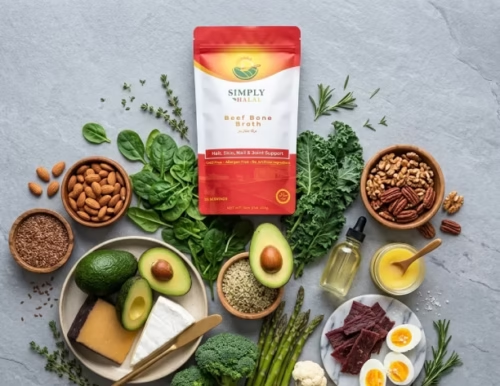
Best Halal Bone Broth Powder for Keto
If you are on a ketogenic or low-carb diet, bone broth powder is one
2 May 2026
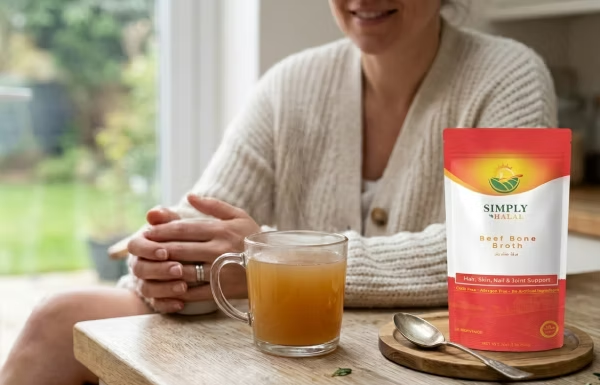
Best Halal Bone Broth Powder for Joints
Joint pain is one of those problems that announces itself slowly. A knee that
2 May 2026
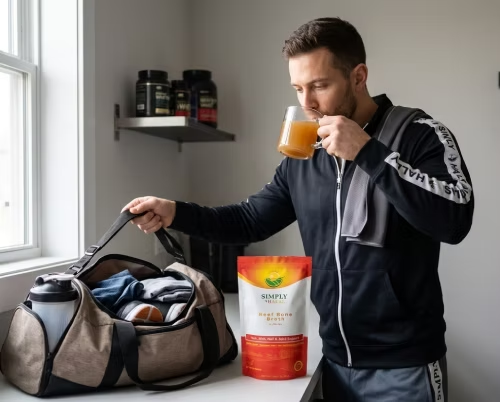
Best Halal Bone Broth Powder for Weight Loss
The bone broth and weight loss space is full of dramatic claims. Detox diets.