
Grass-Fed Halal Collagen: How to Verify the Claim

Grass-fed halal collagen is one of the most claimed, least verified labels in this category. “Grass-fed” has no legal or regulatory definition in the supplement industry. A brand can print it on a bag even if the cattle ate grain for part of their lives, and most buying guides tell you to “look for source transparency” without ever naming a way to actually check. This guide covers what grass-fed sourcing genuinely does and doesn’t guarantee, how to verify the claim instead of trusting it, and why grass-fed and halal are two separate questions that both need answering.
✅ DIRECT ANSWER
“Grass-fed” describes what the animal ate. “Halal” describes how it was slaughtered and processed. A product can be one, both, or neither, and a label claiming both still needs independent verification of each separately. Simply Halal Collagen Bovine is grass-fed South American bovine, halal certified from production to bag. Shop Halal Collagen Bovine →
📋 KEY TAKEAWAYS
- Grass-fed and halal are two independent claims. Neither one implies the other, and each needs its own verification.
- Real, peer-reviewed research confirms grass-fed beef has a meaningfully different fat and antioxidant profile than grain-fed. What’s less established is how much of that carries over into a purified, fat-free hydrolyzed collagen peptide, and most brands don’t address this gap honestly.
- “Grass-fed” has no legal definition in the supplement industry. A brand can print it without any independent audit behind it.
- This guide covers sourcing verification specifically. For how to verify the halal certification itself, see Halal Collagen Supplement: How to Verify What You’re Actually Buying.
📋 TABLE OF CONTENTS
Grass-Fed and Halal Are Not the Same Question
A product can be grass-fed and not halal. It can be halal and not grass-fed. Assuming one implies the other is a real, common mistake.
Grass-fed describes the animal’s diet, whether it grazed on pasture or was raised on a grain-based feedlot diet. Halal describes something entirely different: how the animal was slaughtered and how the collagen was processed afterward, including whether alcohol-based solvents or cross-contamination were involved. A brand can be scrupulously accurate about grass-fed sourcing and still have no halal certification at all, or vice versa.
Both claims deserve independent verification. This guide focuses on grass-fed sourcing specifically. For the halal certification side, including how to check for a named certifying body, see Halal Collagen Supplement: How to Verify What You’re Actually Buying.
What the Science Actually Shows, and Where It Stops
The research on grass-fed beef is real and well-established. Whether it transfers to a purified collagen peptide is a genuinely different question most brands don’t address honestly.
A widely cited review in the Nutrition Journal confirmed that grass-based diets meaningfully improve the fatty acid composition of beef, higher omega-3s, higher conjugated linoleic acid (CLA), and elevated precursors for vitamin A and E, along with antioxidants like glutathione, compared to grain-fed cattle. (Daley et al., 2010, Nutrition Journal)
Here’s the part most collagen marketing skips: those differences are primarily in the animal’s fat. Hydrolyzed collagen peptides are a purified protein extract, the fat is processed out. The well-established omega-3 and antioxidant story for grass-fed beef doesn’t have the same direct, well-established evidence trail for a fat-free peptide powder. That doesn’t mean grass-fed sourcing is meaningless for collagen, it just means the honest answer is more limited than “grass-fed collagen has more omega-3s,” which isn’t a claim the current research actually supports.
⚡ QUICK ANSWER
Grass-fed cattle produce meat with a genuinely different, better-documented fat and antioxidant profile than grain-fed cattle. Whether that translates into a measurable difference in a purified, fat-free collagen peptide isn’t the same well-established science, and claims that it does should be read with that gap in mind.
Why “Grass-Fed” Has No Legal Definition
Unlike halal certification, which is independently audited, “grass-fed” in the US supplement industry is largely unregulated.
There’s no strict, enforced legal definition requiring a brand to prove the claim before printing it. A company can label a product “grass-fed” even if the cattle spent part of their lives on grain, and nothing stops them by default. This is exactly why the claim needs the same kind of verification as a halal claim, a name behind it, not just the words on the bag.
Real, independent verification does exist for this specific claim. The American Grassfed Association is a recognized third-party certifier that audits pasture-based, grass-only feeding practices, if a brand names this or a comparable certifier, that’s a genuinely checkable claim. If a brand just says “grass-fed” with nothing behind it, treat it the same way you’d treat an unverified halal claim: unconfirmed.
How to Verify a Grass-Fed Claim
The same discipline that works for halal certification works here: look for a name, not just a word.
Check for a named agricultural verification. A real grass-fed claim references an independent certifying body or audit standard, not just the word “grass-fed” on the label.
Look for supply chain specifics. A brand confident in its sourcing will state the country or region of origin and, ideally, name its raw material supplier, not just describe the sourcing in vague, unfalsifiable terms.
Treat vague language as a red flag. “Clean,” “natural,” and “pasture-raised” without a specific standard or audit trail attached are marketing words, not verification.
Simply Halal’s Sourcing
Chef Maher personally verified the grass-fed sourcing in South America rather than accepting a supplier’s word for it.
Simply Halal Collagen Bovine is sourced from grass-fed South American bovine, verified directly rather than assumed from a supplier’s claim. This is a separate fact from, and in addition to, the product’s halal certification, which covers slaughter method and processing, not diet. Both are documented, both are checkable, and neither one is assumed to cover the other.
✅ DIRECT ANSWER
Simply Halal Collagen Bovine is grass-fed South American bovine, halal certified from production to bag, 16g of hydrolyzed Type I & III collagen per serving, zero fillers.
For the full halal certification verification, including how to check for a named certifying body, see Halal Collagen Supplement: How to Verify What You’re Actually Buying.
“
You are not paying for marketing. You are paying for 3 years of carefully researched product development, hand-picked ingredients chosen to maximize your nutritional benefit, and grass-fed sourcing that most supplement brands avoid because it cuts into their profit margins. Simply Halal was built for your health, not our bottom line.
Chef Maher Fawaz, Founder
✅ READY TO START?
Shop Halal Collagen Bovine → Check simplyhalal.co for current promotions and shipping offers, ships worldwide.
I Am Not Muslim. Does This Apply to Me?
Does verified sourcing matter if I’m not buying for halal reasons?
Yes, more than most people realize. Whether a “grass-fed” claim is independently verified or just printed on a label affects every buyer, not just halal-conscious ones. For anyone who cares about ingredient transparency and knowing exactly what they’re taking, verified sourcing is a clean-label benefit that applies to everyone, regardless of why you’re checking.
Frequently Asked Questions
What does grass-fed collagen mean?
It means the collagen was derived from cattle raised on a pasture-based grass diet rather than a grain-based feedlot diet. On its own, the term says nothing about halal status, only about what the animal ate.
What is grass-fed collagen made from?
It’s made the same way as any bovine collagen, hydrolyzed from the hide and connective tissue of cattle, the difference is specifically in how those cattle were raised and fed, not in the extraction process itself.
Grass-fed vs marine collagen: which is better?
They’re not directly comparable on the “grass-fed” axis, grass-fed is a bovine-specific sourcing question, while marine collagen comes from fish and doesn’t have a feed-diet distinction at all. The real comparison is bovine vs. marine collagen generally, including collagen type, halal verification complexity, and bioavailability. See our full breakdown: Bovine vs Marine Collagen: Which Is Better?
Does grass-fed mean the collagen is halal?
No. Grass-fed describes what the animal ate. Halal describes how it was slaughtered and processed. A product needs to be verified on both counts separately, one doesn’t imply the other.
Is grass-fed collagen actually more nutritious than regular collagen?
The evidence is genuinely strongest for grass-fed beef as a whole food, higher omega-3s, CLA, and antioxidants are well documented. Whether that carries over into a purified, fat-free hydrolyzed collagen peptide is a less established question, and claims that it directly does should be read with that gap in mind rather than taken as settled fact.
How do I know if a “grass-fed” claim on a collagen label is real?
Look for a named third-party agricultural verification, such as the American Grassfed Association, rather than the word “grass-fed” alone. Also check whether the brand names a specific country or region of origin. Vague language like “clean” or “pasture-raised” with no standard attached is a marketing claim, not verification.
Does the country of origin matter for a grass-fed collagen claim?
Yes, significantly. South America has some of the strongest grass-fed cattle traditions in the world. Uruguay has pursued genuine international certification specifically for its grass-fed production, tied to a national cattle-tracking system, one of the most rigorously verified grass-fed industries anywhere. Brazil is one of the largest grass-fed beef exporters globally. New Zealand and Ireland round out the countries with the strongest pasture-based standards. The takeaway: where your collagen comes from is one of the clearest signals of quality you can check, and South America leads on this by a wide margin.
Why does Simply Halal source grass-fed cattle specifically?
Chef Maher personally verified the grass-fed South American sourcing before building the formula, rather than accepting a supplier’s claim. This is documented separately from, and in addition to, the product’s halal certification.
Where can I buy grass-fed, halal certified collagen in the USA?
Simply Halal Collagen Bovine is grass-fed South American bovine, halal certified from production to bag, available directly at simplyhalal.co. Ships worldwide.
Related reading:
Sign up on simplyhalal.co with your email and phone number for exclusive coupon discounts.
You might also like
12 Aug 2026
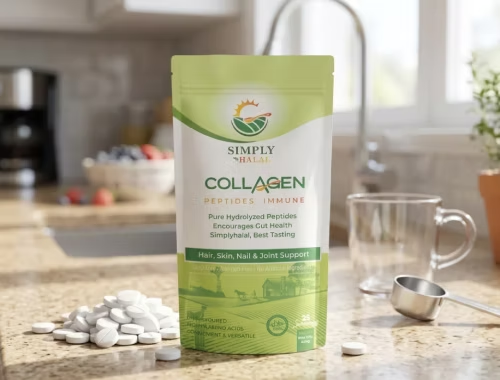
Halal Collagen Tablets vs Powder: Myth vs Truth
Are collagen tablets worth it? Rarely. A single scoop of collagen powder delivers more
1 Aug 2026
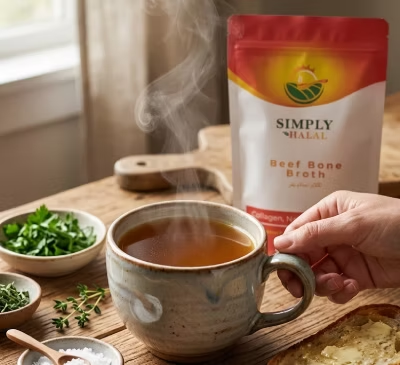
Is Bone Broth Halal? The Complete Answer
Is bone broth halal? Yes, but only when the bones come from an animal
25 Jul 2026
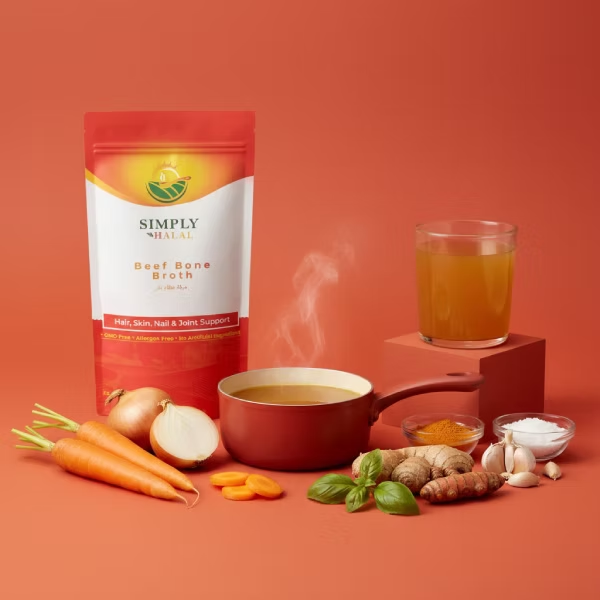
Why Simply Halal – The Chef-Crafted Halal Bone Broth Story
Most bone broth powders on the market start with the cheapest available raw material.
15 Jun 2026
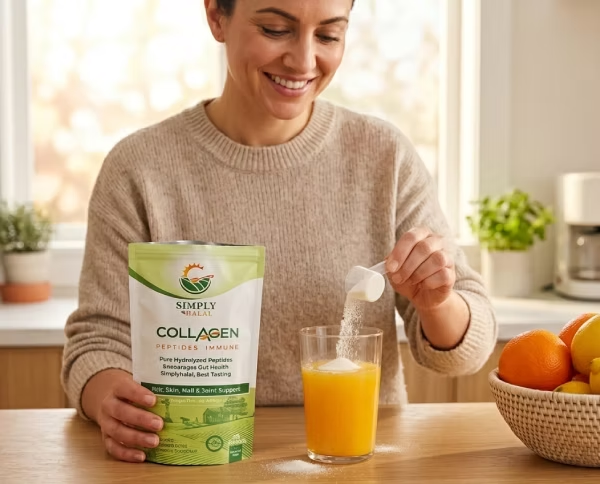
Vitamin C and Collagen: Why Most People Get It Wrong
Vitamin C and collagen have to work together, and most people get this wrong.
13 Jun 2026
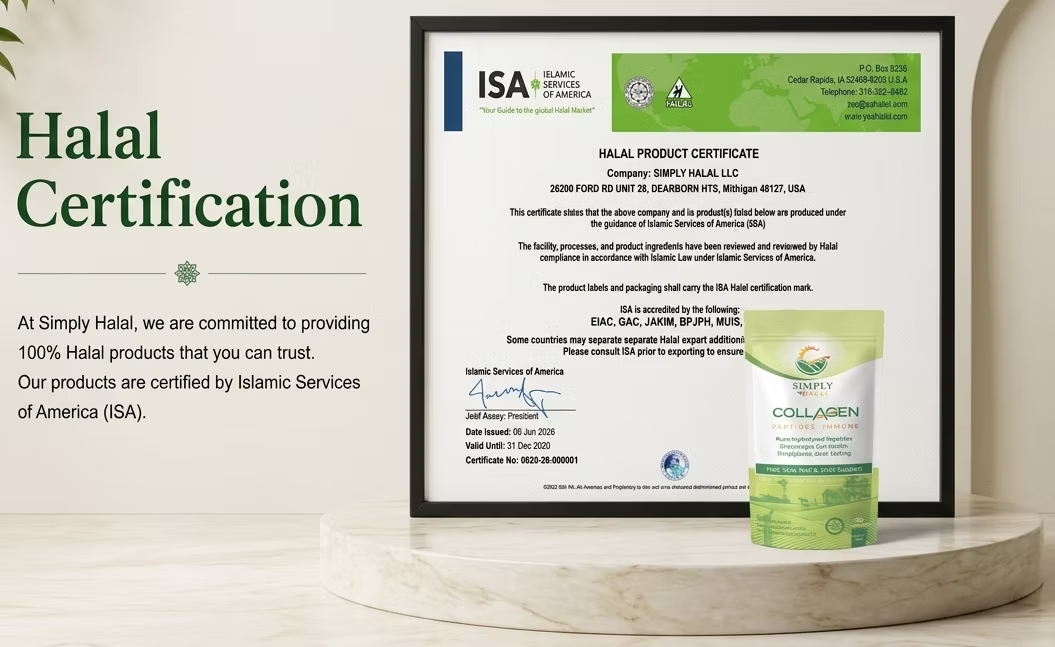
Is Bovine Collagen Halal?
Is bovine collagen halal? Yes, it can be. But that answer only holds true
24 May 2026
Best Halal Bone Broth Powder for Athletes
Athletes put more stress on connective tissue than almost any other population. Every training
4 May 2026
Best Halal Bone Broth Powder for Skin
Skin health supplements are one of the most crowded categories in the wellness market.
3 May 2026
Best Halal Bone Broth Powder for Keto
If you are on a ketogenic or low-carb diet, bone broth powder is one
2 May 2026
Best Halal Bone Broth Powder for Joints
Joint pain is one of those problems that announces itself slowly. A knee that
2 May 2026
Best Halal Bone Broth Powder for Weight Loss
The bone broth and weight loss space is full of dramatic claims. Detox diets.