
Best Halal Collagen for Hair Loss: 3 Real Studies, Explained Honestly

The best halal collagen for hair loss and thinning is one of the most searched, least transparently answered questions among Muslim women, whether from postpartum shedding, hormonal changes after 40, nutritional gaps, or the daily traction of hijab wearing. The supplement market offers a flood of collagen products making bold claims with almost no transparency about the science behind them, or what’s actually inside. This guide explains what collagen actually does at the follicle level, what real research confirms (and doesn’t), the specific mechanical concern hijab wearers face, and what to look for in a genuinely halal product.
✅ DIRECT ANSWER
The best halal collagen for hair loss is a hydrolyzed bovine collagen supplement, halal certified, with no fillers. Real 2024 research found bovine collagen peptides specifically help preserve hair follicle stem cells, while a separate 12-week trial found real, measurable improvements in hair count and collagen structure. The science is genuine. The source and certification are what make it verifiable. Shop Halal Collagen Bovine →
📋 KEY TAKEAWAYS
- A 2024 study found bovine and marine collagen peptides work differently, bovine specifically helps preserve hair follicle stem cells in the bulge, the structure that anchors future hair growth.
- A 12-week clinical trial found a real, measurable 27.6% increase in hair count and 44.6% reduction in dermal collagen fragmentation.
- Hijab-related thinning has a distinct mechanical cause, chronic traction and friction, that compounds with age-related collagen decline rather than replacing it.
- Certification that names a real certifying body is what separates a verified halal product from a marketing claim.
📋 TABLE OF CONTENTS
Why Hair Thins, the Collagen Connection
Hair loss is rarely about the hair itself, it begins in the follicle, the structure beneath the scalp that anchors and generates each strand.
Every hair follicle is surrounded by a collagen-rich matrix that determines how well it can anchor, regenerate, and hold on to the hair it produces. Collagen production begins declining around age 25, and by the time most women notice visible thinning, often in their 30s, 40s, or after a major hormonal event like childbirth, that decline has usually been underway for years. The follicle matrix weakens, the growth (anagen) phase shortens, and the resting (telogen) phase extends. The practical result is more hair on your brush and less on your head.
This is structural, not just cosmetic, and it’s addressable at the nutritional level through the specific amino acids the follicle matrix is built from.
Two Different Causes, Two Different Answers
Not all hair thinning has the same cause, and it’s worth knowing which one applies to you.
General Age-Related and Hormonal Thinning
This is the gradual decline described above, driven by age, hormonal shifts, or nutritional gaps. It affects the follicle’s ability to regenerate and maintain the growth phase, and it responds to consistent, adequate collagen and amino acid supply over months, not days.
Hijab-Related Traction Thinning
For women who wear hijab, there’s an additional, distinct mechanical cause the mainstream wellness industry rarely acknowledges. Chronic tension and friction on the hair shaft, particularly at the hairline and temples, creates a well-documented condition dermatologists call traction alopecia. Unlike age-related thinning, this is driven by physical stress on the hair, not just declining collagen production, though the two compound each other: a follicle with a weaker collagen matrix is less able to withstand repeated mechanical stress in the first place.
A stronger follicle matrix holds hair more securely and produces strands with greater tensile strength, making them less vulnerable to friction from daily wear. This is exactly the mechanism our co-founder Fatima Hammoud recognized in her own community, and part of why Simply Halal was built around real, whole-food nutrition rather than synthetic supplements. Read our founder story here.
What the Science Actually Shows
Three real studies, each measuring something different, and each worth understanding for what it actually found.
Bovine Collagen and Hair Follicle Stem Cells
A 2024 study in the Journal of Functional Foods directly compared bovine and marine collagen peptides on human hair follicles. Both forms showed real benefits, but through different mechanisms: bovine collagen peptides significantly increased a specific stem cell marker (K15+) in the follicle bulge, the structure that anchors and regenerates future hair growth, while marine peptides worked by extending the follicle’s active growth phase. This is a genuine, bovine-specific finding, not a borrowed result from a different collagen source. (Pappelbaum et al., 2024, Journal of Functional Foods)
Real, Measured Hair Count and Collagen Improvements
A 2024 randomized, double-blind, placebo-controlled trial measured real, quantifiable changes after 12 weeks of daily hydrolyzed collagen supplementation. (Reilly et al., 2024, Dermatology Research and Practice)
Hair count per unit area
+27.6%
Dermal collagen fragmentation
-44.6%
Both changes measured vs. placebo, using confocal microscopy and
clinical trichoscopy, in a randomized, double-blind, placebo-controlled trial.
Telogen Effluvium (Postpartum-Type Shedding)
A 2025 study found real improvement in the anagen-to-telogen ratio, meaning more follicles stayed in active growth, in women with telogen effluvium. One honest detail worth knowing: the tested product combined hydrolyzed collagen with vitamin B5, B6, and zinc, not collagen in isolation, so this supports collagen as part of a broader nutritional approach rather than proving collagen alone drove the result. (Arias et al., 2025, International Journal of Trichology)
What to Look for in the Best Halal Collagen for Hair Loss
Four things separate a genuinely effective, verifiable product from a marketing claim.
Hydrolyzed peptides, not whole collagen. Hydrolyzed collagen peptides are broken into short-chain amino acids the body absorbs rapidly. Look for “hydrolyzed” or “collagen peptides” on the label, not just “collagen protein.”
A meaningful daily dose. Simply Halal delivers 16g of hydrolyzed Type I and III collagen per serving with zero fillers diluting the active dose.
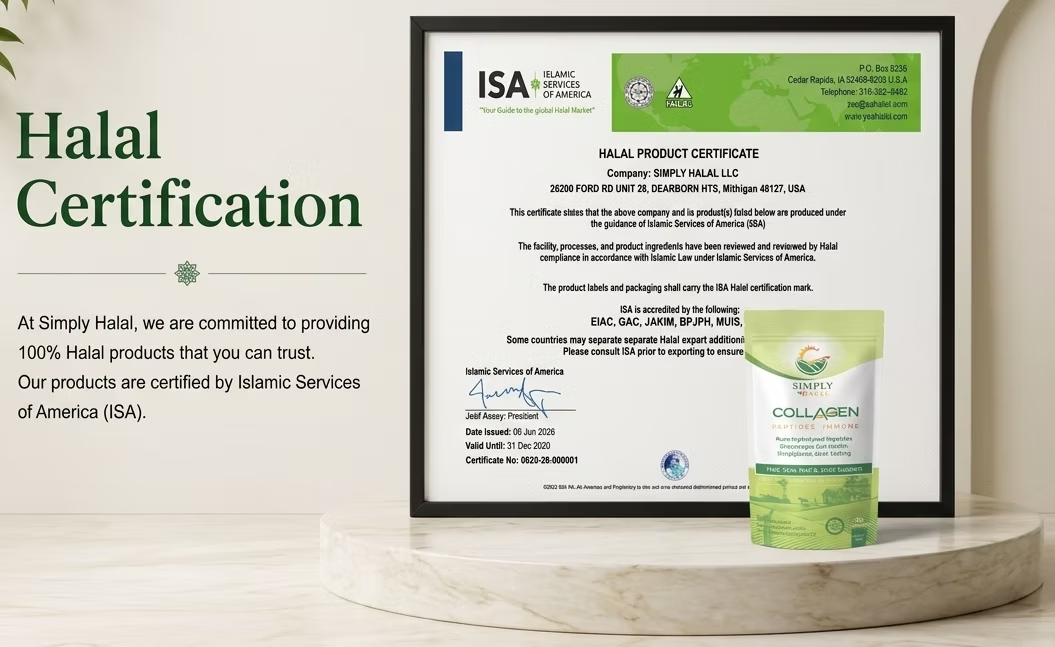
A named halal certifying body. Self-declared labels aren’t verification. See how Simply Halal is halal certified.
No maltodextrin or fillers. A gut-disrupting filler in a supplement meant to support your body’s structural health works against the goal.
How to Use It
Consistency matters more than any single serving, hair follicle cycles are long, and results build over months.
Take one scoop daily, dissolved in coffee, tea, or water, alongside a Vitamin C source, a required cofactor for your body to convert collagen peptides into functional structural collagen. Reduced shedding is often noticed within 4-6 weeks. Visible improvements in density are more consistent at 12-24 weeks, matching the timelines in the studies above. Set a minimum 12-week commitment before evaluating results.
For comprehensive support, pair with Halal Beef Bone Broth, which provides complementary glycine and gut-supportive amino acids. The Halal Wellness Bundle combines both at the best available price.
Why Simply Halal Is Built for This
Simply Halal was not built in a lab. It was built by a chef and a family who witnessed what real food did for their own community.
Chef Maher Fawaz spent three years and 160+ lab tests developing a formula sourced from grass-fed bovine in South America, halal certified from production to bag, with zero maltodextrin and zero fillers. The result is 16g of hydrolyzed Type I and III collagen peptides per serving, real, verifiable, and built without shortcuts.
“
You are not paying for marketing. You are paying for 3 years of carefully researched product development, hand-picked ingredients chosen to maximize your nutritional benefit, and grass-fed sourcing that most supplement brands avoid because it cuts into their profit margins. Simply Halal was built for your health, not our bottom line.
Chef Maher Fawaz, Founder
✅ READY TO START?
Shop Halal Collagen Bovine → Check simplyhalal.co for current promotions and shipping offers, ships worldwide. For complete hair, skin, gut, and joint support, explore the Halal Wellness Bundle.
I Am Not Muslim. Does This Apply to Me?
Does the hair science apply to me too?
Yes. Halal certification is not a religious restriction on who may use the product. It provides independent verification that the product meets the halal requirements covered by the certifier’s review. The amino acids and collagen mechanisms described here work the same way regardless of your background, and for anyone who values ingredient transparency, that verification is a clean-label benefit that applies to everyone.
Frequently Asked Questions
My hair has been thinning under my hijab, will collagen actually help?
It can help with the underlying collagen matrix, but it’s worth understanding the mechanism honestly. Hijab-related thinning is often driven by traction alopecia, physical stress on the hair shaft, not just collagen decline. A stronger follicle matrix, supported by consistent collagen intake, helps hair better withstand that stress, but reducing friction (rotating fabrics, gentler styles) matters alongside nutrition, not instead of it.
What type of collagen is best for hair?
Bovine collagen has a real, distinct, verified benefit: a 2024 study found it specifically helps preserve hair follicle stem cells in the bulge region. Simply Halal Collagen Bovine delivers Type I and Type III hydrolyzed peptides, covering the connective tissue support system your follicles depend on.
How long does collagen take to work for hair?
Most people notice reduced shedding within 4-6 weeks. A 2024 clinical trial measured real improvements in hair count and dermal collagen structure at 12 weeks. Visible density and regrowth improvements are more consistent at 12-24 weeks. Hair follicle cycles are long, so a minimum 12-week commitment is realistic before evaluating results.
Can collagen help with postpartum hair loss?
Postpartum hair loss is a form of telogen effluvium, a rapid shift of follicles from growth into shedding phase triggered by post-birth hormonal changes. A 2025 study found real improvement in this ratio using a hydrolyzed collagen-based formula that also included B vitamins and zinc. Combined with the nutritional demands of recovery and breastfeeding, this is a reasonable, targeted approach, always consult your healthcare provider before supplementing postpartum.
Is halal collagen safe to take every day for hair?
Yes. Hydrolyzed collagen peptides are a whole-food protein source with a strong safety profile in the clinical literature. Simply Halal contains no synthetic additives, artificial flavors, or maltodextrin. Daily use is recommended for results, since the follicle matrix rebuilds progressively with consistent amino acid supply.
Where can I buy the best halal collagen for hair loss in the USA?
Simply Halal’s Collagen Bovine, 16g of grass-fed Type I and III hydrolyzed collagen peptides per serving, zero fillers, is available directly at simplyhalal.co. Ships worldwide.
You might also like
12 Aug 2026
Halal Collagen Tablets vs Powder: Myth vs Truth
Are collagen tablets worth it? Rarely. A single scoop of collagen powder delivers more
1 Aug 2026
Is Bone Broth Halal? The Complete Answer
Is bone broth halal? Yes, but only when the bones come from an animal
25 Jul 2026
Why Simply Halal – The Chef-Crafted Halal Bone Broth Story
Most bone broth powders on the market start with the cheapest available raw material.
15 Jun 2026
Vitamin C and Collagen: Why Most People Get It Wrong
Vitamin C and collagen have to work together, and most people get this wrong.
13 Jun 2026
Is Bovine Collagen Halal?
Is bovine collagen halal? Yes, it can be. But that answer only holds true
24 May 2026
Best Halal Bone Broth Powder for Athletes
Athletes put more stress on connective tissue than almost any other population. Every training
4 May 2026
Best Halal Bone Broth Powder for Skin
Skin health supplements are one of the most crowded categories in the wellness market.
3 May 2026
Best Halal Bone Broth Powder for Keto
If you are on a ketogenic or low-carb diet, bone broth powder is one
2 May 2026
Best Halal Bone Broth Powder for Joints
Joint pain is one of those problems that announces itself slowly. A knee that
2 May 2026
Best Halal Bone Broth Powder for Weight Loss
The bone broth and weight loss space is full of dramatic claims. Detox diets.